Aurangabad civic body bans use of fresh water for construction activities
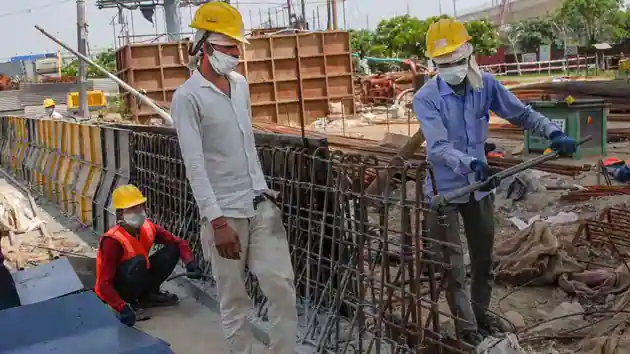
Aurangabad, May 9: The civic body in Aurangabad in Maharashtra has decided to ban the use of fresh water for construction activities in order to tide over water scarcity in Marathwada's largest city, an official said on Monday.
The Aurangabad Municipal Corporation will also seek three million litres per day (MLD) addition water supply from the Maharashtra Industrial Development Corporation (MIDC), Commissioner Aastik Kumar Pandey told reporters.
Pandey said a 30-point programme will be implemented to manage water supply, adding that not much had been done to augment the city's water supply mechanism as well as capacity over the last three to four years.
"To tide over water scarcity, we have decided to ban use of fresh water for construction activity in AMC limits. It will be mandatory to use water from sewage treatment plants for at least the next to two to three months," he said.
Restrictions can be brought on swimming pools if needed, but the civic body does not want to disturb the gradual return of the city to normalcy post the COVID-19 pandemic, he added.
"The administration has initiated a plan to acquire private and government-controlled wells. Guardian officers will be appointed to keep a watch on linemen who are responsible for proper water supply," Pandey said.
Aurangabad Divisional Commissioner Sunil Kendrekar, meanwhile, issued instructions to speedily complete the water supply works at Harsul Lake.
A Shiv Sena delegation had met Pandey during the day over the water woes of people in the city.
Let the Truth be known. If you read VB and like VB, please be a VB Supporter and Help us deliver the Truth to one and all.
Congress using hijab issue to pacify minority anger, alleges Karnataka LoP R Ashoka
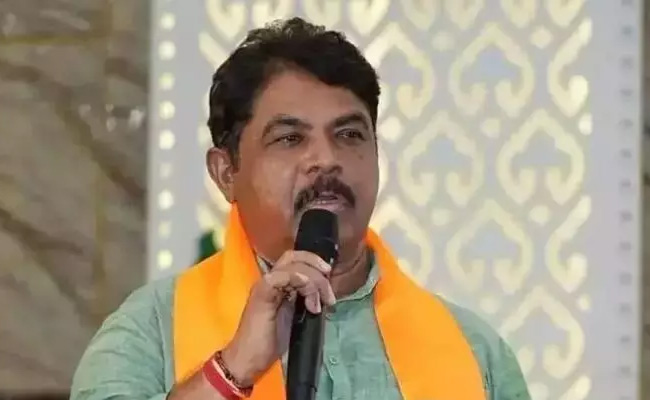
Bengaluru: Leader of Opposition in the Assembly R. Ashoka has accused the Congress government of using the hijab issue to placate what he described as discontent among minority voters after the Davanagere by-election.
In a post on X on Wednesday, Ashoka alleged that the state government, instead of addressing issues such as price rise, corruption, farmers’ distress and law and order, was attempting to retain its minority vote base by reviving the hijab issue.
Referring to the 2022 dress code introduced by the BJP government, which prohibited hijab in schools and colleges, Ashoka said the Karnataka High Court had upheld the policy and emphasised the importance of discipline in educational institutions.
He questioned the Congress government’s move to revisit the issue and asked whether setting aside the court-backed policy to benefit one community could be described as secularism.
Ashoka further alleged that while the government was willing to permit hijab, it continued to prohibit saffron shawls.
He accused the government of dividing students on religious lines rather than treating schools and colleges as spaces of equality.
Drawing a comparison with Mamata Banerjee’s government in West Bengal, Ashoka claimed that excessive appeasement politics had harmed the state and warned that the Congress in Karnataka could face a similar political response.
He said voters in Karnataka would teach the Congress a lesson for what he termed “vote-bank politics” and for compromising constitutional and judicial principles.