Ayodhya verdict back in debate: Chandrachud’s remark sparks fresh questions
_vb_51.jpeg)
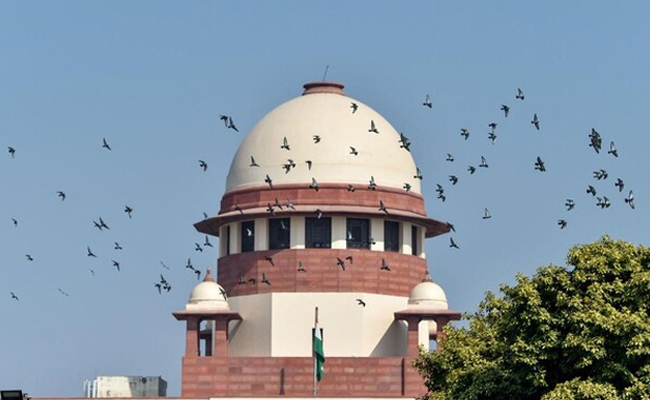
New Delhi: The Ayodhya verdict of 2019, which was once seen as having settled one of the country’s most prolonged disputes, is again in the spotlight. A remark by former Chief Justice of India DY Chandrachud has triggered a fresh round of debate on the integrity of the judgment and the processes that led to it. Former judges, legal scholars and political voices are now openly questioning whether the final word has really been spoken on the Ram Janmabhoomi-Babri Masjid case.
At the centre of this renewed controversy is Justice Chandrachud’s description of the Babri Masjid’s construction as a “fundamental act of desecration.” The remark is striking because, in the 2019 judgment itself which Chandrachud is widely believed to have authored the five-judge Bench had held that there was no evidence to prove the mosque had been built after demolishing a temple. The ruling had allowed the land to be handed over for the construction of a Ram temple while noting that Muslims had failed to prove exclusive possession, but it stopped short of endorsing any claim of demolition.
This contrast between what the judgment recorded and what Justice Chandrachud has now said is what makes the debate unavoidable.
Even before Chandrachud’s recent words, former Allahabad High Court judge Justice Govind Mathur while speaking in Mangaluru at the BV Kakkilaya Memorial Lecture, had drawn attention to a key aspect of the case. Speaking weeks ago, he had underlined that the Ayodhya dispute was essentially a civil suit. Unlike writ petitions, which are summary proceedings based on affidavits, civil suits require the adjudication of every single issue raised.
In his view, this never really happened. Justice Mathur pointed out that the Allahabad High Court, in its 2010 verdict, was candid enough to admit that it was not deciding all issues and was merely trying to curtail the dispute with the material available. But once the case went up to the Supreme Court, the main argument was that every issue of title must be adjudicated in a civil suit of this nature.
According to Justice Mathur, the Supreme Court avoided this core requirement and instead moved towards what he called a resolution based on emotions. His blunt assessment was that the top court had “resolved the dispute without touching the actual dispute.”
Now, Professor Dr. Mohan G. Gopal, noted academic and former director of the National Judicial Academy, has gone a step further. Speaking at the CH Mohammed Koya National Seminar at the University of Calicut, he suggested that Justice Chandrachud’s own words may provide sufficient grounds to seek a curative petition before the Supreme Court.
For Prof. Gopal, the contradiction is glaring: the same judge who had signed off on a judgment that specifically noted the absence of proof of demolition now speaks of the mosque’s construction as desecration. To him, this inconsistency does not merely weaken the judgment it risks eroding public trust in the judiciary itself.
“The ultimate responsibility of a court is to deliver judgments that inspire trust,” he said. “Justice must not only be done but also be seen to be done, especially by those who lose the case.” In his personal opinion, he added, the Ayodhya verdict was “wrongly decided.”
Describing the judgment as “contrived” and “unreasoned,” Prof. Gopal also questioned the unsigned addendum that accompanied the ruling, calling it “pure theocracy.” He stressed that transparency in ideology was essential in the judiciary, pointing out that Justice Chinnappa Reddy had once openly declared himself a Marxist, and that even in recent cases like the EWS quota, judges had displayed candour about their initial doubts before arriving at their final conclusions.
His suggestion is clear: if Justice Chandrachud held such a belief about the Babri Masjid’s construction, he should have recused himself from the case. Otherwise, it raises questions about integrity and transparency on the bench.
Prof. Gopal believes that the Ayodhya judgment now stands “vitiated” by the former Chief Justice’s subsequent remarks. He urged that this be used as an opportunity to mould public opinion and possibly demand a rehearing of the entire case through a curative petition. “Let us turn Justice Chandrachud’s remarks into an opportunity to convince people of what really happened in that case and hopefully even approach the Court to get a rehearing,” he said.
For years, the 2019 verdict was treated as the final chapter in the Ayodhya dispute. Its 1,085 pages were rarely read in full; most relied on selected passages. But today, two developments Justice Mathur’s reminder that civil suits require full adjudication of issues, and Prof. Gopal’s charge that the judgment was internally inconsistent have ensured that the case is again part of the national conversation.
The debate goes beyond the legal technicalities. At stake is a larger concern about judicial integrity, transparency of ideology, and the kind of reasoning that underpins verdicts in cases of such historic and communal sensitivity.
That is why the Ayodhya judgment five years after being delivered is once again the talk of the town.
Let the Truth be known. If you read VB and like VB, please be a VB Supporter and Help us deliver the Truth to one and all.
Strictest action promised after students forced to remove sacred thread at Bengaluru CET exam centre
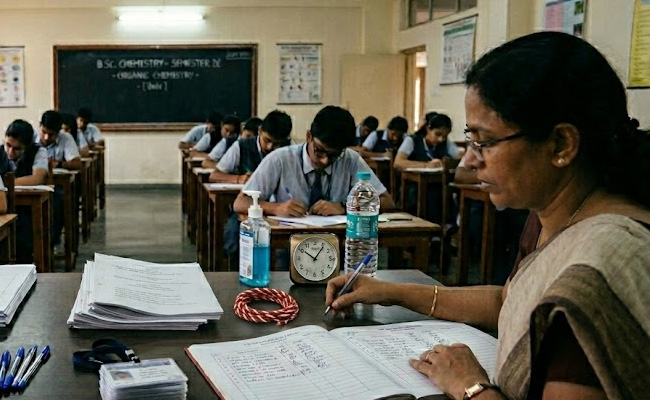
Bengaluru (PTI): Bengaluru Urban Deputy Commissioner Jagadeesha G on Monday said the government has decided to take the “strictest possible action” against those responsible for allegedly forcing some students to remove their ‘janivara’ (sacred thread) before entering the venue of the CET exam last week.
He said a committee of senior officials constituted to inquire into the incident reported that, prima facie, it appears the students were “intentionally” made to remove the ‘janivara’.
The city police have already booked three staff members of a private college in Bengaluru for allegedly forcing some students to remove their ‘janivara’ before entering the venue of the Common Entrance Test (CET-2026) last week.
Similar incidents last year in Shivamogga and Bidar had triggered controversy, following which the Karnataka Examinations Authority (KEA) issued clear directions not to force students to remove any religious identification or symbol during exams.
“Despite KEA taking measures such as appointing dress code officials and providing training on dos and don’ts to prevent such incidents from recurring after last year’s cases, there has been a dereliction of duty this time,” Jagadeesha told reporters here.
“To take strict action against those responsible, an FIR has been registered, and arrests have been made. An inquiry has been conducted by senior officials, and those responsible have been suspended,” he added.
Stating that the inquiry report has been submitted at the district level, he said it will be forwarded to the government.
Based on the findings, it has also been decided that KEA will not conduct CET exams at the institution where the incident occurred, he added.
“The strictest possible action is being taken by the district administration and the government,” he added.
The deputy commissioner had constituted a committee headed by the additional deputy commissioner to investigate the incident and submit a report within two days.
“Exams have been held at several centres across the state, and nowhere else has this issue occurred. If students were forced to remove ‘janivara’ at this centre, it appears that it was intentional. We have taken it seriously,” he said, adding that strict action has been recommended to ensure such incidents do not recur.
Noting that senior officials were appointed for the inquiry, the DC said that after a thorough investigation and verification—which included statements from students, the school principal, exam observers, CCTV footage, and documents—it prima facie appears that students were intentionally made to remove the ‘janivara’.
“We are recommending strict action. The government has also ordered a detailed police investigation, and an FIR has been registered in connection with the incident,” he added.