Ayushman Bharat a channel to transfer public money into private hands: Doctors at AIIMS event
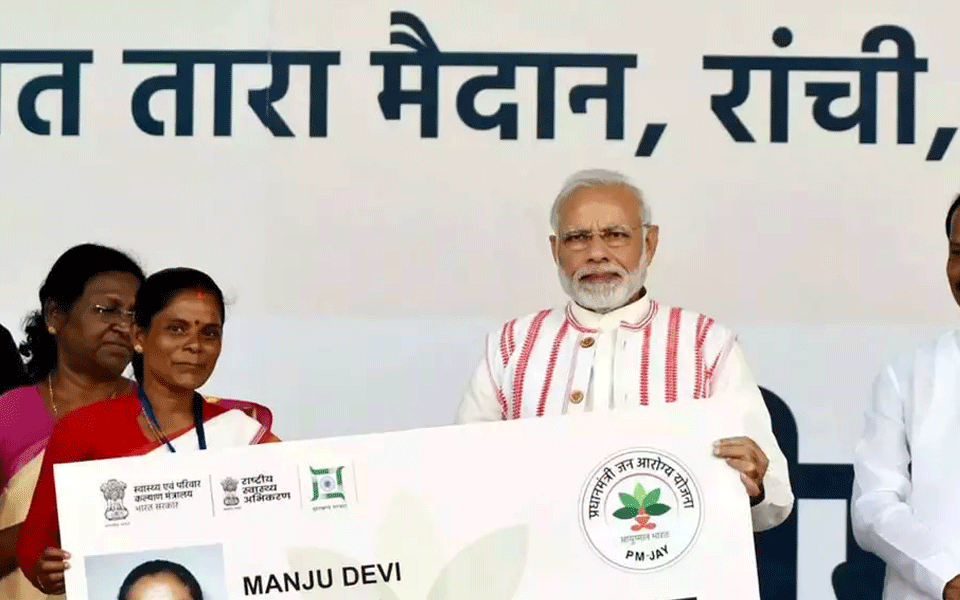
New Delhi, Mar 20: Public health experts, including doctors from the AIIMS, Wednesday questioned the potential of government's flagship healthcare scheme, Ayushman Bharat, claiming it was an "official channel" through which public money will go to the private sector.
Referring to implementation of such healthcare schemes in the past, sector experts pressed for urgent need to strengthen publicly funded hospitals to offer universal health care, while speaking at a panel discussion on 'Ayushman Bharat: Fact and Fiction', organised by AIIMS Front for Social Consciousness in the campus of country's premiere medical institution here.
The Ayushman Bharat scheme was nothing but an old wine in a new bottle, said Dr Vikas Bajpai, professor at the Centre for Social Medicine and Community Health of Jawaharlal Nehru University.
He stressed on the need to analyse the "failures" of the various publicly-funded health insurance schemes, including the Rashtriya Swasthya Bima Yojana or RSBY, to ensure that "inadequacies" in their implementation were not repeated.
"Apart from lack of desire to commit the required financial resources, the scheme is oblivious and irrespective of the real causes of ill-health of the people, especially the poor," he said.
"This was the creation of just another official channel through which public money will go to private set-ups," Dr Bajpai added.
Subrato Sinha, head of the department of Biochemistry at AIIMS, said Ayushman Bharat does not provide out-patient department care support, which is a major component of health expenditures and is as expensive as the in-patient care.
"Also, the main thrust of any healthcare programme should always be on improving and strengthening the public health infrastructure as insurance is always less efficient than direct provision of health services by the government," he said.
Dr Pratap Sharan, professor in the department of Psychiatry at AIIMS, said the government is shifting its stance from providing services to purchasing services mostly from the private sector and "it is an abdication of its basic responsibility."
Dr Shah Alam Khan, professor in the department of Orthopaedics at AIIMS, referring to a recent report released by the WHO, which showed that the out-of-pocket expenditure on health in two countries India and Pakistan was the maximum, said, "This means people were spending more money in these two nations, which almost went to war after the Pulwama attack. This shows that both the countries do not care about what is happening to the health of their people."
He pointed out the hurdles people face to avail the benefits once they enrol into the scheme and stressed on the need for identification of those hindrances.
"The crux of the problem is in the very first Budget presented by the current government in May 2014, they slashed the budget for health by 20 per cent. The only way you can help the poor and the needy is by increasing spending on healthcare in public hospitals and that is not happening," Dr Khan said.
Former chief of AIIMS Resident Doctors' Association, Harjit Bhatti, said budget allocations "do not reflect the government's good intentions" because Rs 6,400 crore for 10 crore families comes down to Rs 640 per family and Rs 128 per person, which was "too low" to expect good treatment from hospitals.
"The Ayushman Bharat is an eyewash to hide the incompetence of the government which is not able to provide required healthcare infrastructure effectively," he said.
Imrana Qadeer, faculty at Council for Social Development, said in western countries, where national insurance was successful in providing basic health services, its universality and strong regulatory mechanisms of the state that controlled the private sector were critical.
"Neglect of basic healthcare infrastructures under the National Rural Health Mission by drastically curtailing investments, increases the load on secondary and tertiary care institutions and rationalises partnerships with the private sector, which are waiting to enhance its profits through schemes like RSBY and PMJAY," she said.
Let the Truth be known. If you read VB and like VB, please be a VB Supporter and Help us deliver the Truth to one and all.
Mamata asks TMC nominees not to leave counting centres as EC data shows BJP leading
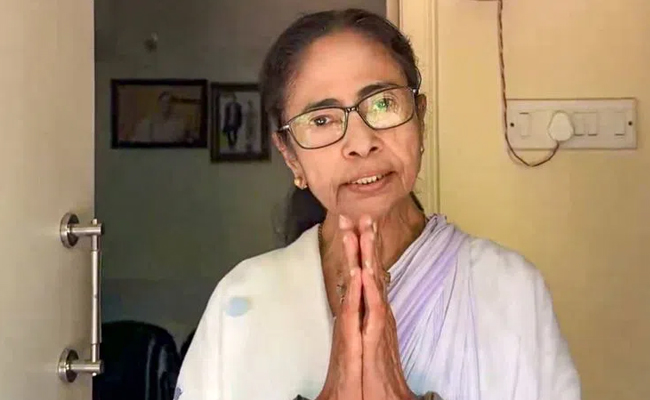
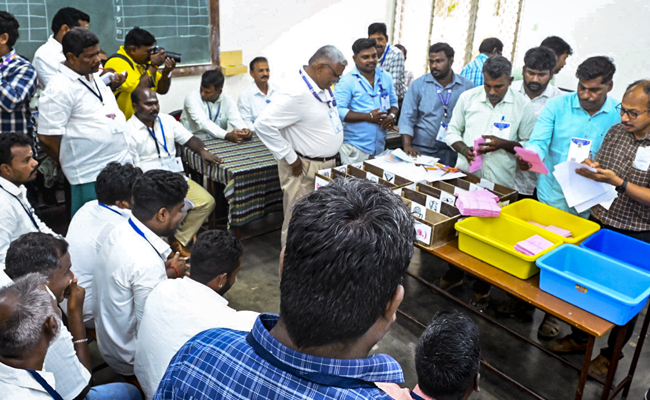
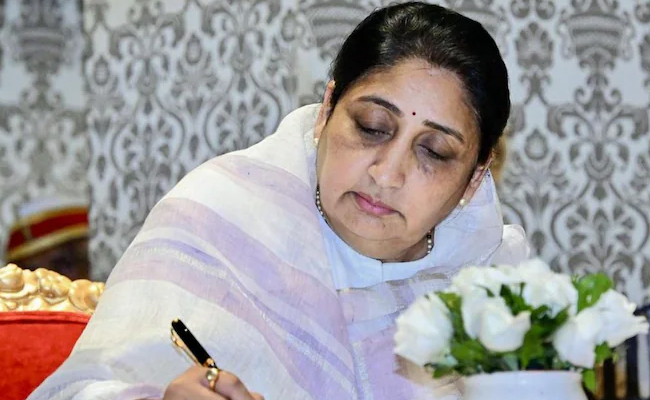
Kolkata (PTI): West Bengal Chief Minister Mamata Banerjee on Monday urged TMC candidates and agents to remain vigilant and not to leave counting centres, alleging that there was a "game plan" by the BJP and the Election Commission to show the saffron party taking a lead in the early trends of counting.
In a video message issued during the counting of votes, the TMC supremo appealed to party workers to stay put and not to lose morale.
"I appeal to everyone that neither TMC candidates nor counting agents should abandon counting centres," she said.
As trends on the Election Commission website indicated the BJP leading in 188 seats against the TMC's 94, Banerjee maintained that her party was still ahead in a significant number of constituencies.
"We are still ahead in 170 seats, but I request everyone not to lose hope," she said, adding that there were "around 70 to 100 seats where we are leading, but they are not sharing the data of those seats".
"A false narrative is being spread," she alleged.
The chief minister accused the Election Commission of "not declaring results or leads" in areas where the TMC was ahead.
"This is a game plan by the EC and the BJP as it (poll panel) is not declaring results or leads in areas where we are leading," she said.
Banerjee also alleged irregularities in the counting process at some locations.
"In several places, counting has been stopped after the first two to three rounds. In Kalyani, we have caught seven machines with severe anomalies," she claimed.
She further alleged that TMC workers were being "harassed with the help of central forces" and that party offices were being "vandalised and forcefully captured".
"With the help of central forces, they are harassing and torturing AITC workers. Our offices have been vandalised," she said, also alleging that voter list revision exercises were "purposefully done to target seats where we were strong".
Seeking to reassure party workers, Banerjee said more rounds of counting were yet to take place and urged them to stay firm.
"Fourteen to eighteen rounds of counting will happen. You will surely emerge victorious. Don't be afraid; fight like tigers," she said.
Her remarks came as counting trends suggested that the BJP was leading in 188 seats and had crossed the halfway mark of 148 in the 294-member assembly, pointing to a potential shift in the state's political landscape.
Counting for 293 constituencies was underway with postal ballots, followed by EVM votes.
Officials cautioned that trends could change as more rounds are counted, and final results would be known later in the day.
জরুরি বার্তা pic.twitter.com/Uc82oihwEL
— Mamata Banerjee (@MamataOfficial) May 4, 2026