B 787 fuel switch issue: AI flight flown after physical checks, no abnormal parameters noticed:DGCA
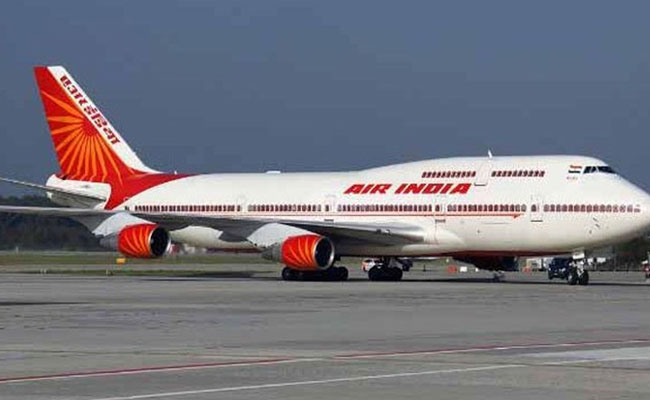
New Delhi (PTI): Aviation regulator DGCA on Tuesday said Air India's Boeing 787-8 Dreamliner, which faced fuel control switch glitch, took off from London on February 1 after the crew carried out a physical check of the switch and that no abnormal parameters were observed during start of the engine or thereafter.
The fuel control switch of the left engine of the aircraft, which operated the flight AI132 to Bengaluru that had more than 200 people on board, did not latch on the 'RUN' position twice during the engine start at London Heathrow and on the third attempt, the switch was properly locked in the 'RUN' position.
The Directorate General of Civil Aviation's (DGCA) detailed statement explaining the sequences related to the Dreamliner also came against the backdrop of concerns in certain quarters on the aircraft operating the flight despite the fuel control switch issue.
On February 1, Air India's Boeing 787-8 Dreamliner VT-ANX faced fuel control switch issue during engine start in London.
"During engine start in London, on two occasions crew observed that the fuel control switch did not remain positively latched in the "RUN" position when light vertical pressure was applied.
"On the third attempt, the switch latched correctly in 'RUN' and subsequently remained stable. Before continuing with the rest of procedure, a physical verification was performed by the crew to confirm that the switch was fully and positively latched in the 'RUN' position," DGCA said in the statement.
The regulator also said that no abnormal engine parameters, cautions, warnings, or related system messages were observed during engine start or at any time thereafter.
"The operating crew member was briefed on the observation, unnecessary contact with the switch was avoided, and engine indications and alerting systems were closely monitored by the crew for the remainder of the flight. The flight was completed without incident," the statement said.
'RUN' and 'CUT OFF' are used to start or shut down engines, respectively.
After the incident was reported, Air India's engineering team made certain observations based on Boeing recommended checks to establish the serviceability of fuel control switch.
Citing the team's observations, DGCA said both the left and right switches were checked and found satisfactory, with the locking tooth/pawl fully seated and not slipping from 'RUN' to 'CUT OFF'.
"When full force was applied parallel to the base plate, the switch remained secure. However, applying external force in an incorrect direction caused the switch to move easily from 'RUN' to 'CUT OFF', due to the angular base plate allowing slip when pressed improperly with finger or thumb," DGCA said quoting the engineering team's observations.
On the basis of Boeing's communication, DGCA said the pull-to-unlock force was checked on the fuel control switch using the recommended procedure on the involved fuel cut off switch, the fuel control unit to be installed and fuel cut off switch of another aircraft.
"In all cases the pull-to-unlock force was found within limits. These inspections were carried out in the presence of DGCA officers," the statement said.
An Air India pilot on Monday reported the defect with the fuel control switch after the aircraft landed in Bengaluru. The airline has grounded the plane for checks.
The functioning of the fuel control switch is in focus following the crash of Air India's Boeing 787-8 aircraft, or Dreamliner, that killed 260 people last June, as the preliminary probe report mentioned about fuel supply being cut off soon after take-off.
In the statement, the DGCA also advised Air India to circulate the procedure recommended by Boeing for the operation of fuel 'CUT OFF' switch to its crew members.
This came against the backdrop of a video, which the DGCA said has demonstrated the procedure for operating the fuel 'CUT OFF' switch was incorrect.
Let the Truth be known. If you read VB and like VB, please be a VB Supporter and Help us deliver the Truth to one and all.
Mumbai family deaths: FDA finds no watermelon vendor in area to check for affected stock

Mumbai (PTI): The Food and Drug Administration team probing the cause of death of four members of a family in south Mumbai's JJ Marg area have not been able to zero in on any watermelon vendor in the vicinity to check if the fruit had a role to play in the ill-fated incident, an official said on Thursday.
The Dokadia family, residents of Ghari Mohalla on Ismail Kurte Road, had hosted a get-together of relatives on the night of April 25. At around 1 am, hours after the guests had left, Abdullah Dokadia (40), his wife Nasreen (35), and daughters Ayesha (16) and Zaineb (13) ate pieces of a watermelon.
They suffered severe bouts of vomiting and diarrhoea in the early hours of April 26 and were rushed to a local hospital before being referred to the government-run J J Hospital where all four died during treatment.
"The FDA team visited the house of Dokadia and collected samples of chicken pulao and watermelon pieces. After two days, the leftover chicken pulao had developed fungus growth. The team also tried to locate watermelon vendors to check for any affected lots," he said.
But no vendors were found in the area for the past two days, preventing the FDA team from getting samples, the official added.
The FDA has requested the Forensic Science Laboratory (FSL) to share the report on the food samples collected by them, he added.
A senior Mumbai police official said the force is waiting for FSL reports in the case, adding that questions on presence of sedatives etc in the fruit could be answered only then.
The statements of the kin of the deceased are being recorded to ascertain if it is a case of mass suicide, and it is being checked if the Dokadia family were in debt or distressed over some issue, the police official said.