Bahraich court sentences main accused in 2024 violence to death, nine others get life terms

Bahraich: A court in Bahraich awarded the death penalty to Sarfaraz, the prime accused in the October 2024 violence that erupted during a Durga Puja idol immersion procession, while nine others were sentenced to life imprisonment and three men were acquitted for lack of evidence on Thursday .
The clashes broke out after the shooting of Ram Gopal Mishra, a young resident who was killed when he allegedly attempted to replace a flag on a house belonging to a member of the minority community. Additional Sessions Judge Pawan Kumar Sharma, delivering the verdict, said the assault was premeditated and intended to create fear and assert dominance. The court described the murder as a deep and lasting blow to Mishra’s family, noting that he had been married only four months earlier.
Special DGC Criminal Pramod Kumar Singh said the prosecution presented eight witnesses and relied on ballistic analysis to establish that Sarfaraz fired the fatal shots. He said the court viewed the killing as a case that met the threshold of the “rarest of rare”, requiring the maximum punishment to uphold justice and reflect society’s conscience.
The prosecution recalled the extent of the violence, noting that Mishra had several gunshot wounds, blunt-force injuries, and evidence of torture. With riots, arson, damage to public property, and the suspension of internet services, the incident triggered unrest in Bahraich. Many police officers were suspended from duty for failing to handle the situation.
Those sentenced to life imprisonment are Abdul Hameed, Faheem, Saif Ali, Javed Khan, Zeeshan alias Raja, Nankau, Maruf Ali, Shoaib Khan and Talib alias Sablu. The court observed that some among them were young and appeared to have acted without provocation, leaving open the possibility of reform.
Let the Truth be known. If you read VB and like VB, please be a VB Supporter and Help us deliver the Truth to one and all.
Vote rigging charges against MLA DN Jeevaraj: HC grants interim stay on FIR
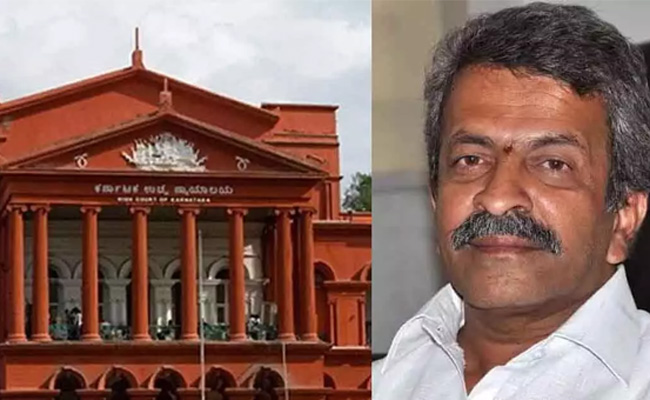
Bengaluru: Karnataka High Court has issued an interim stay on the FIR against Sringeri legislator DN Jeevaraj, who is accused of vote rigging.
A vacation bench consisting of Justice V Sreeshananda heard on Tuesday the BJP MLA’s plea urging the HC to quash the case against him.
After hearing the arguments, the judge granted an interim stay on the case against Jeevaraj.
The hearing of the case has been adjourned to Thursday, May 7.