Bajrangi given bail while Sanjiv Bhatt remains behind bars: Rights’ activists aghast
"What goes for the rule of law recently in our country is very distressing. The slow and surreptitious reduction in sentences to the few convicted of crimes in carnage across the country is very disturbing as are the sedition and other charges against activists”, says renowned dancer-cum-social activist Mallika Sarabhai.
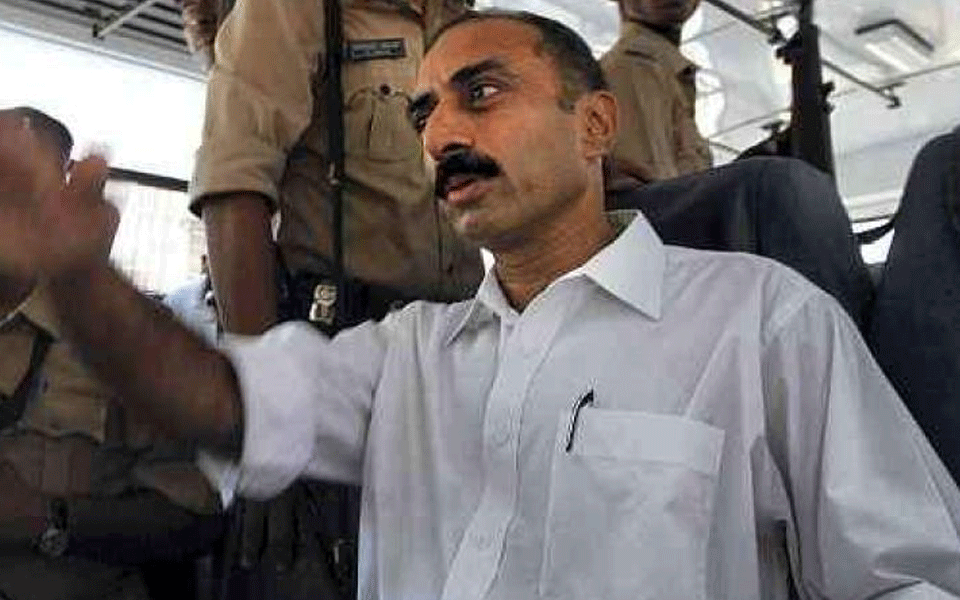
Mallika was referring to the granting of bail to Babu Bajrangi, convicted in post-Godhra carnage, and denial of bail to whistle-blower former IPS officer Sanjiv Bhatt.
Gujarat High Court recently rejected the bail plea of Sanjiv Bhatt and directed the trial court to speed track the hearing of the 23-year-old case against him in six months. Sanjiv Bhatt is lodged in Palanpur district jail since September 5, 2018 after he was picked up from his home for “questioning”.
Mallika calls the high court order as ‘unjust’ and ‘biased’.
Voicing similar concern, human rights activist and veteran journalist Prakash Shah said, “If Babu Bajrangi can be freed and Sanjiv Bhatt remains in jail, it obviously shows the crooked ways of the rulers in Gujarat.”
Eminent economist and political analyst Hemant Shah says, “The judiciary seem to be working under the pressure of the government or a political political party.”
“If the judiciary works in this manner, it would lose credibility. It would then be detrimental to democracy and the idea of free India,” he adds.
Senior lawyer K R Koshti, who had shot to fame by challenging Prime Minister Narendra Modi for having filed false affidavit regarding his marital status, first declaring that he was not married and subsequently revealing the name of Jasodaben as his legally wedded wife, described the high court’s order as a clever move to keep Sanjiv Bhatt in jail for at least another six months.
“Since the high court has now directed the trial court to complete the hearing of the case in six months, the Supreme Court, if appealed, was not likely to intervene in the matter on the ground that the lower court would be hearing the case,” Koshti said.
The case against Sanjiv Bhatt dates back to 1996 when he was the district superintendent of police at Palanpur. A businessman-lawyer from Pali in Rajasthan had accused Bhatt and other policemen of Palanpur to have framed him in a drug peddling case to arm-twist him give up his ownership right over a property in favour of a Gujarat high court judge.
Ironically, it was the Gujarat government which had defended Sanjiv Bhatt in the case and the Supreme Court had stayed the proceeding against him.
Courtesy: National Herald India
Let the Truth be known. If you read VB and like VB, please be a VB Supporter and Help us deliver the Truth to one and all.
Over 1 lakh students appear for NEET across TN
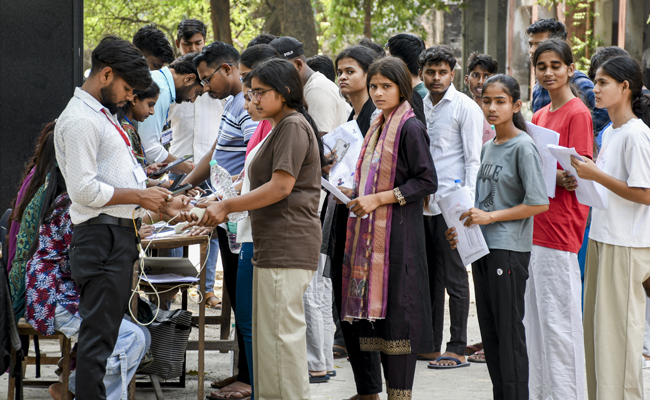
Chennai (PTI): About 1.4 lakh students appeared for the NEET 2026 exam for admission to medical degree courses across 31 centres in Tamil Nadu on Sunday.
Students claimed that the exam paper was easier than the previous year.
Organised by the National Testing Agency (NTA), 22.80 lakh students had registered for the National Eligibility cum Entrance Test (NEET) undergraduate exam nationwide.
NTA sources said that CCTV surveillance was installed at all examination centres, with feeds linked to centralised control rooms.
In view of the large candidate volume and prevailing summer conditions, the NTA ensured reliable power back-up, including generators at all centres, to ensure candidate comfort during the exam. Also, drinking water and on-site medical support were provided to students.
The sources further said that no malpractices were reported, especially in Chennai. The results of NEET are expected to be declared in June, 2026.