Ban on import of fish may be extended: Parrikar
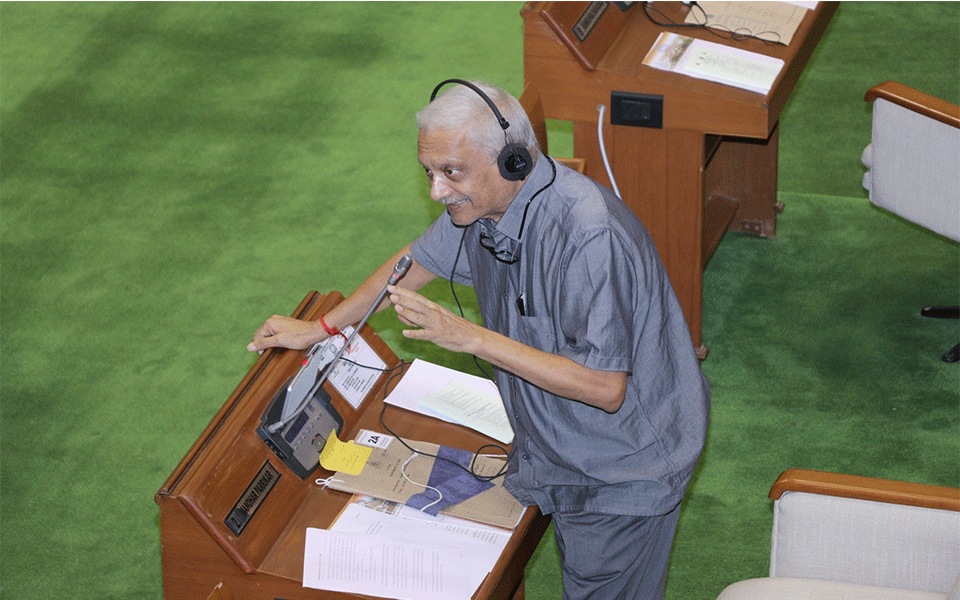
Panaji, July 23 : Goa Chief Minister Manohar Parrikar on Monday said the government is willing to extend the 15-day ban on import of fish "to remove fear and confusion" among people, while urging legislators to stop politicising the issue.
Citing laboratory tests, he also ruled out the use of formalin by traders to preserve fish in the state. More than 116 samples drawn from various markets and different variety of fish since July 14, indicated that no added formaldehyde was used to preserve fish. The reports about its usage to preserve fish had triggered a drop in tourism in the coastal state, Parrikar said.
"The government is ready to consider extending this ban for a further period in the interest of the health of the Goans, if the prevailing circumstances remain the same", he said while replying to a calling attention motion moved by Bharatiya Janata Party MLA Nilesh Cabral in the ongoing monsoon session of the Goa legislative assembly.
The 15-day ban on import of fish from other states was imposed by the Chief Minister on July 18.
Quoting guidelines by the central government's Food Safety and Standards Authority of India (FSSAI), he said that while only additional application of formalin was considered an offence, many commonly consumed foods inherently contained the chemical as part of their natural metabolism.
"Formaldehyde is documented to be naturally present in many common food items, including fruits and vegetables (approximately 20 to 60 mg per kg in fruits and vegetables), meats (approximately 5-20 mg per kg), fish (approximately 5 to 140 mg per kg), crustacean (approximately 10 to 100 mg per kg) and mushrooms (approximately 60 mg in fresh to as high as 400 mg per kg in dried shitake mushrooms), etc," Parrikar told the Goa legislative assembly in a written reply.
"In most marine fishes, formaldehyde is a natural breakdown product of a chemical known as trimethylamine oxide (TMAO) that exists in their bodies. Once the fish is harvested, TMAO breaks down into formaldehyde and dimethylamine in equal parts during the post mortem. It can also accumulate in certain marine fish and crustacean during frozen storage," he added.
Urging the legislators to speak responsibly on the formalin controversy, Parrikar said the furore caused over alleged use of formalin had even resulted in a drop in the number of tourists visiting the state.
"Irresponsible statements have an impact on tourism. Tourists are refusing to eat fish now," Parrikar said, saying that legislators were making statements out of ignorance. Banning of fish imports will severely impact tourism, he also said.
"Because of our ignorance and political oneupmanship, we are destroying Goa's image," Parrikar said, while promising to set up a "robust mechanism" to check the use of formalin in fish before the temporary ban on import of fish from other states is lifted on August 3.
The BJP-led coalition government in the state has been on the backfoot ever since the controversy erupted, more so after two cabinet ministers, namely Town and Country Minister Vijai Sardesai and Health Minister Vishwajit Rane, tried to downplay the use of formalin in fish, claiming it was within "permissible limits". The claim was disputed by several experts including marine scientists at the Goa-based National Institute of Oceanography.
Let the Truth be known. If you read VB and like VB, please be a VB Supporter and Help us deliver the Truth to one and all.
4 workers die after being buried under coal slurry in Jharkhand's Dhanbad
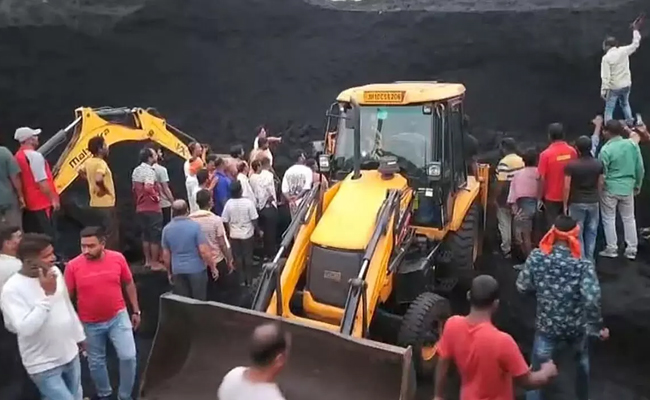
Dhanbad (Jharkhand) (PTI): At least four workers died after being buried under coal slurry in Jharkhand's Dhanbad district on Saturday, a police official said.
The incident took place at Moonidih coal washery in the command area of Bharat Coking Coal Limited (BCCL).
"Bodies of all four workers were dug out of debris during a rescue operation," Putki police station in-charge Waqar Hussain told PTI.
The incident took place when coal slurry was being loaded into trucks by workers, during which a large chunk of slurry fell and trapped several workers underneath, officials said.
The deceased have been identified as Manik Bauri, Dinesh Bauri, Deepak Bauri, and Hemlal Gope.
Meanwhile, the family members of the deceased and local villagers placed the bodies in front of the washery gate and began a protest.
They demanded compensation, jobs for dependents and action against those responsible for the incident.
Police and administration officials are trying to pacify the protesters, an official said.