Ban on PFI cannot be supported: AIMIM chief Asaduddin Owaisi
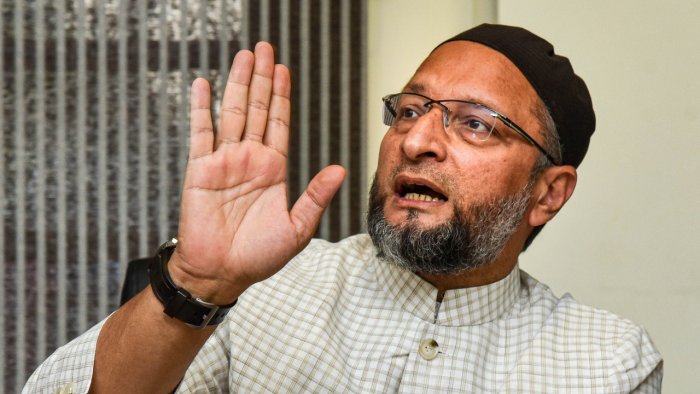
Hyderabad, Sep 28: AIMIM chief Asaduddin Owaisi on Wednesday said though he always opposed the Popular Front of India's approach, the ban on the outfit cannot be supported.
The PFI, which has allegedly been involved in a series of violent incidents and has "links" with global terror groups like ISIS, was on Wednesday banned by the Centre along with its several associates for five years following a crackdown against its leaders.
"While I have always opposed PFI's extreme and radical approach, I have always supported democratic approach. This ban on PFI cannot be supported because actions of some individuals who commit crime do not mean that the organisation itself must be banned. The Supreme Court also has held that mere association with an organisation is not enough to convict someone," he said in a press conference here.
"How come PFI is banned but organisations associated with convicts of Khwaja Ajmeri bomb blasts are not? Why has the government not banned right-wing majoritarian organisations?" Owaisi asked.
The bomb blasts refers to the 2007 bombing in the Dargah of Sufi Saint Khwaja Moinuddin Chishti in Rajasthan's Ajmer that left three pilgrims dead and 15 injured. A special National Investigation Agency (NIA) court in Jaipur later sentenced two former RSS members to life imprisonment for their involvement in the bombing.
A "draconian ban" of this kind is dangerous as it forbids any Muslim who wishes to speak his mind. The way Indian electoral authorities are approaching fascism, every Muslim will now be arrested under the "black law" Unlawful Activities (Prevention) Act (UAPA), he alleged.
"Muslims have spent decades in prison before being acquitted by courts. I always opposed UAPA and continue to do that. Because UAPA goes against the basic structure of our Constitution," he said.
He said the Congress amended UAPA to make it stringent and when BJP amended the law to make it even more draconian, at that time the former also supported it.
Referring to Kerala-based journalist Siddique Kappan's case, he said it takes two years to get bail under the anti-terror law.
Kappan was arrested in October 2020 while on his way to Hathras in Uttar Pradesh where a Dalit woman had died after allegedly being gang-raped.
Meanwhile, BJP chief spokesperson in Telangana K Krishna Sagar Rao alleged that non-BJP state governments over the years "driven by their political compulsion of minority appeasement" have let dangerous organisations like PFI grow nationally.
A strong government under the leadership of Prime Minister Narendra Modi can only take such decisive action of imposing ban on PFI and its affiliate organisations in the interest of national security, he said in a statement.
"This tough, timely and thoughtful action by Modi government will ensure that divisive forces do not build national networks under the guise of social organisations, to further their hateful agenda of creating communal and religious disharmony in India," he said.
Let the Truth be known. If you read VB and like VB, please be a VB Supporter and Help us deliver the Truth to one and all.
Sujit Nair raises concerns over speculation of DMK-AIADMK understanding to block TVK
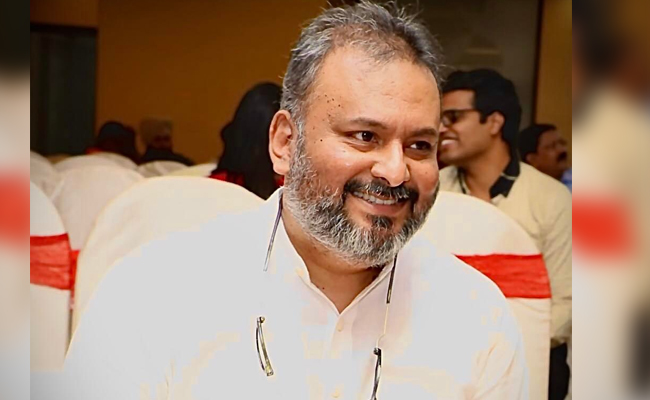
Chennai: Journalist and political commentator Sujit Nair has expressed concern over speculation that the Dravida Munnetra Kazhagam and the All India Anna Dravida Munnetra Kazhagam could explore a post-poll understanding to prevent Vijay-led Tamilaga Vettri Kazhagam from forming the government in Tamil Nadu.
In a social media post, Sujit Nair said the election verdict in Tamil Nadu reflected a clear public demand for political change and argued that the mandate should be respected irrespective of political preferences.
Referring to reports and political discussions surrounding a possible understanding between the DMK and AIADMK, he said he hoped such developments remained only speculative conversations and did not turn into reality.
Nair stated that if such an alliance were to take shape, it would raise serious questions about ideological politics in the country. He said TVK had emerged through a democratic electoral process and that the legitimacy to govern in a parliamentary democracy comes from the people’s verdict.
According to him, attempts to prevent an electoral winner from forming the government through unexpected political arrangements may be constitutionally valid, but many people could view them as politically opportunistic.
He further said that such a move could particularly affect the political image of the DMK, which has historically projected itself around ideology, social justice and opposition politics. Nair said that in ideological terms, the DMK appeared closer to TVK than to the AIADMK, and joining hands with its long-time political rival only to remain in power could weaken its broader political narrative.
He added that the same questions would apply to the AIADMK as well, as the party had spent decades positioning itself against the DMK and such an arrangement could create discomfort among its cadre and supporters.
Drawing a comparison with Maharashtra politics in 2019, Nair said he had expressed similar views when the Shiv Sena formed an alliance with the Indian National Congress and the Nationalist Congress Party after the Assembly elections.
He said post-poll alliances between long-standing political rivals often create a public perception that ideology and electoral mandates become secondary when political power equations come into play.
Nair also said such developments increase public cynicism towards politics and reinforce the belief among voters that ideology is often sidelined after elections.
He maintained that the Tamil Nadu verdict was emphatic and said respecting both the spirit and substance of the mandate was important for the credibility of democratic politics.