Banks wrote off NPAs over 10 lakh crore in last five financial years: FM Nirmala Sitharaman
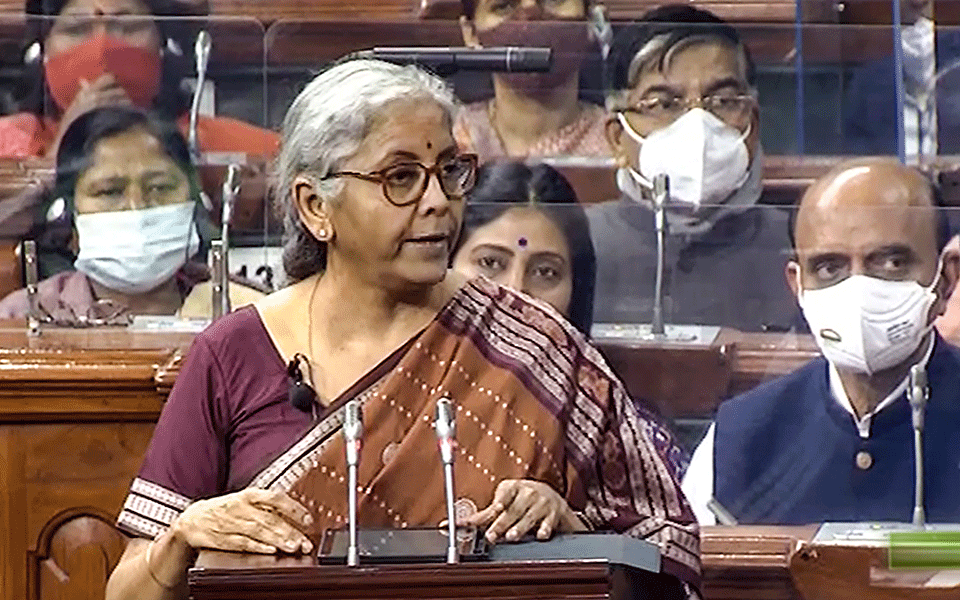
New Delhi, Dec 13 (PTI): Banks have written off bad loans worth Rs 10,09,511 crore during the last five financial years, finance minister Nirmala Sitharaman informed Parliament on Tuesday.
The non-performing assets (NPAs), including those in respect of which full provisioning has been made on completion of four years, are removed from the balance sheet of the bank concerned by way of write-off, she said in a reply to Rajya Sabha.
"Banks write off NPAs as part of their regular exercise to clean up their balance sheet, avail tax benefit and optimise capital, in accordance with RBI guidelines and policy approved by their boards. As per inputs received from RBI, Scheduled Commercial Banks (SCBs) wrote off an amount of Rs 10,09,511 crore during the last five financial years," she said.
As borrowers of written-off loans continue to be liable for repayment and the process of recovery of dues from the borrower in written-off loan accounts continues, write-off does not benefit the borrower, she said.
Banks continue to pursue recovery actions initiated in written-off accounts through various recovery mechanisms available, such as filing of a suit in civil courts or in Debts Recovery Tribunals, filing of cases under the Insolvency and Bankruptcy Code, 2016 and through sale of non-performing assets.
SCBs have recovered an aggregate amount of Rs 6,59,596 crore, including recovery of Rs 1,32,036 crore from written-off loan accounts during the last five financial years, she said.
In cases where it is prima facie found that officials are responsible for the lapses of non-compliance with the laid down systems and procedures or misconduct or non-adherence to the due-diligence norms, action is initiated against the erring officials under the board-approved staff accountability policy, she said.
As per inputs received from public sector banks, she said, staff accountability in respect of NPA cases has been fixed against 3,312 bank officials (of AGM and above rank) during the last five financial years, and suitable punitive actions have been taken commensurate to their lapses.
Replying to another question, Sitharaman said Indian Banks Association (IBA) has informed that at present, only a few banks are using blockchain technology at a small scale.
As such, the issue pertaining to interoperability of such a platform between banks is not present, she said.
Further, she said Indian Banks' Blockchain Infrastructure Company (IBBIC) Private Limited that was incorporated with an objective of providing a platform for exploring, building, and implementing Distributed Ledger Technology (DLT) solutions for the Indian financial services sector, is currently working on scoping the implementation of domestic Letter of Credit (LC) issuance as its first use case through the platform.
The consortium consists of 18 banks comprising leading public and private sector banks of India.
Reserve Bank of India (RBI) has been providing guidance for development of blockchain-based application through its mechanism for testing of innovative technologies, products and services, known as regulatory sandbox.
Blockchain technology has been listed as one of the innovative technologies in this regard, where innovators can apply to test their products through this mechanism, she said.
There is no proposal to set up guidelines or prescribe a model common blockchain technology platform for the banks, she said.
Let the Truth be known. If you read VB and like VB, please be a VB Supporter and Help us deliver the Truth to one and all.
Congress using hijab issue to pacify minority anger, alleges Karnataka LoP R Ashoka
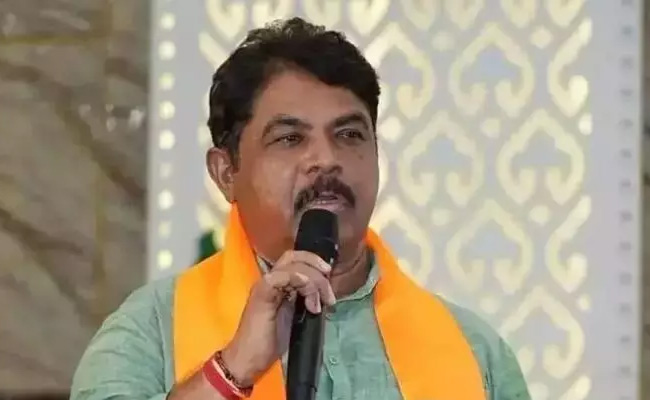
Bengaluru: Leader of Opposition in the Assembly R. Ashoka has accused the Congress government of using the hijab issue to placate what he described as discontent among minority voters after the Davanagere by-election.
In a post on X on Wednesday, Ashoka alleged that the state government, instead of addressing issues such as price rise, corruption, farmers’ distress and law and order, was attempting to retain its minority vote base by reviving the hijab issue.
Referring to the 2022 dress code introduced by the BJP government, which prohibited hijab in schools and colleges, Ashoka said the Karnataka High Court had upheld the policy and emphasised the importance of discipline in educational institutions.
He questioned the Congress government’s move to revisit the issue and asked whether setting aside the court-backed policy to benefit one community could be described as secularism.
Ashoka further alleged that while the government was willing to permit hijab, it continued to prohibit saffron shawls.
He accused the government of dividing students on religious lines rather than treating schools and colleges as spaces of equality.
Drawing a comparison with Mamata Banerjee’s government in West Bengal, Ashoka claimed that excessive appeasement politics had harmed the state and warned that the Congress in Karnataka could face a similar political response.
He said voters in Karnataka would teach the Congress a lesson for what he termed “vote-bank politics” and for compromising constitutional and judicial principles.