Baramati mourns Ajit Pawar’s death, thousands gather chanting ‘Dada, Dada’
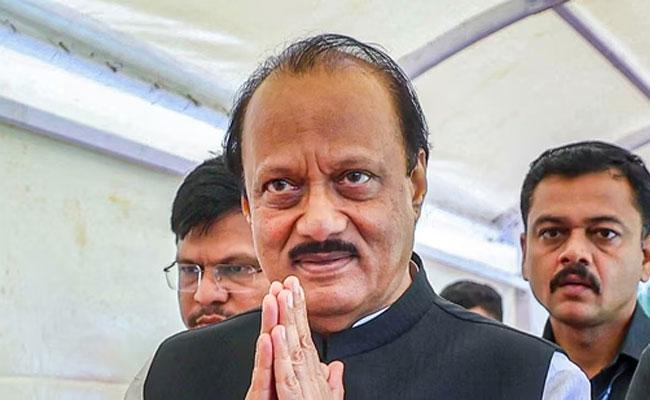
Baramati has been plunged into deep grief following the sudden death of Maharashtra Deputy Chief Minister and Nationalist Congress Party (NCP) chief Ajit Pawar. The city, considered his political stronghold, witnessed an overwhelming outpouring of emotion as thousands of party workers, supporters and local residents gathered to mourn their leader.
Large crowds assembled near the Punyeshlok Ahilyabai Holkar Government Medical College, where scenes of uncontrollable sobbing and grief were reported. People from nearby villages also began arriving in large numbers, swelling the crowds across the city. Many could be heard chanting “Give us back our Dada,” reflecting shock and disbelief over the tragedy.
As a mark of respect, several shops in Baramati remained voluntarily closed. The atmosphere across the town remained tense but peaceful, with grief dominating public spaces.
To maintain law and order amid the massive gathering, heavy police deployment was carried out across Baramati. Pune Rural Superintendent of Police Sandeep Singh Gill confirmed that the aircraft involved in the accident had suffered extensive damage. He said the bodies of Ajit Pawar and others present at the scene were shifted to the hospital for further procedures.
Due to the severity of the crash, officials said identification of the bodies was still underway. “The condition of the bodies is extremely critical. Technical investigations and identification procedures are being conducted at the fastest possible pace,” Gill said.
Despite the emotionally charged situation, police confirmed that no incidents of law and order disturbances had been reported so far. Authorities continue to closely monitor the situation and have appealed to citizens to remain calm and cooperate with officials.
Baramati, long known for its unwavering support for Ajit Pawar, is witnessing one of the largest public expressions of grief in its history. The district administration has urged people to allow authorities to complete all necessary procedures related to the accident and identification of the victims.
VIDEO | Mortal remains of Maharashtra Deputy Chief Minister Ajit Pawar brought to Baramati Medical College following his demise along with five others in an aircraft crash. Visuals from outside the hospital.#AjitPawar
— Press Trust of India (@PTI_News) January 28, 2026
(Full video available on PTI Videos -… pic.twitter.com/6wJrUWARCn
Let the Truth be known. If you read VB and like VB, please be a VB Supporter and Help us deliver the Truth to one and all.
Nursing college student from Kerala dies by suicide at hostel, parents allege foul play
Bengaluru (PTI): A 19-year-old student from Kerala, who was studying at a private nursing college here, allegedly died by suicide in his hostel room, police said on Friday.
The deceased was identified as Adhityan P A, a second-year student at a nursing college in Bommasandra, they said.
On April 29, he was found hanging from a ceiling fan in his hostel room, police said, adding that he left behind a suicide note stating that no one was responsible for his death.
Preliminary investigation suggested that he may have been suffering from depression, and there may have been other issues which are being probed, a senior police officer said.
According to police, in his complaint, the deceased's father, Pradeep S, claimed that a college representative informed him upon his arrival in Bengaluru that his son had died under suspicious circumstances and that it was a case of suicide in the college hostel.
"However, I firmly believe that my son would not have taken such a step. He was of good character and mentally strong. Therefore, I strongly suspect foul play in his death," he claimed.
He also highlighted an incident that occurred approximately 20 days ago, when his son informed him that some of his hostel roommates were involved in drug use and were caught by hostel authorities.
"They were warned along with my son, although he was innocent and not involved in the incident. This situation may be relevant to the present case," he stated.
The complainant has urged the police to conduct a thorough and impartial investigation into the matter and take appropriate legal action.
A case of unnatural death has been registered at Hebbagudi Police Station here. Further investigation is underway, and all allegations are being examined, police said.