Bengal: Fresh overhaul in Suvendu Adhikari administration likely in near future, say officials
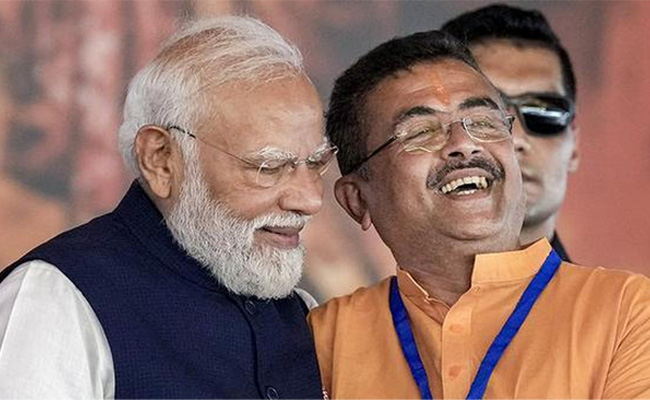
Kolkata (PTI): The police and administrative machinery of the newly installed Suvendu Adhikari-led BJP government in West Bengal seems poised for another sweeping recalibration in the months ahead, clear indications of which were apparent on the very first day, though officials indicated the exercise may unfold in phases.
The transition towards a more stable administrative structure would follow the Election Commission’s unprecedented scale of pre-poll reshuffle across the state bureaucracy and police establishment, they said.
The first unmistakable sign of the impending transition emerged within hours of Adhikari assuming office on May 9, as the government moved swiftly with two key appointments, followed by a series of re-appointments in the state’s mid-level bureaucracy.
Retired IAS officer Subrata Gupta, who had served as the poll panel’s Special Roll Observer during the SIR exercise, was named Advisor to the CM, while Shantanu Bala, Additional District Magistrate of South 24 Parganas, was appointed Private Secretary to the CM – appointments widely viewed within administrative circles as the opening moves of a broader restructuring of the state apparatus.
Gupta replaced two former chief secretaries – Alapan Bandyopadhyay and H K Dwivedi – who tendered their resignations as chief advisors to former chief minister Mamata Banerjee on May 5, a day after poll results confirmed a change of guard in the state.
Bala, on the other hand, substituted career civil servant Gautam Sanyal, the erstwhile principal secretary to Banerjee who held the position as co-terminus with that of the former CM.
Soon after, the state government initiated another significant churn within the administrative establishment, signalling a wider realignment of power corridors in Bengal’s bureaucracy.
In a sweeping order, at least 46 WBCS (Executive) officers – who served as private secretaries and officers on special duty to ministers in the outgoing regime – were reassigned to new postings across the state administration.
The ripples of the transition extended swiftly to the nerve centre of governance itself, with the state also reshuffling 16 officers attached to the Chief Minister’s Office.
“The Mamata Banerjee government never cared for meritorious IAS and IPS officers of the state, isolated them, often forcing them to leave Bengal,” CM Adhikari told reporters on Saturday.
“But, this government will need these officers to implement the policy decisions the new cabinet makes,” he added, hinting at a fresh overhaul in the state’s police and executive network.
In the run-up to the assembly elections announced on March 15, the EC unleashed an unprecedented administrative upheaval across Bengal, transferring as many as 483 officials in one of the most sweeping pre-poll crackdowns the state has witnessed in recent memory.
The reshuffle cut through every tier of governance – from the highest echelons of the bureaucracy and police leadership to district administrations, returning officers, BDOs and hundreds of officers posted at police stations across the state.
The scale of the exercise dwarfed similar actions undertaken in other poll-bound states put together, underscoring the EC’s determination to tighten its grip over Bengal’s volatile and violent electoral landscape.
At the heart of the overhaul lay a dramatic recasting of the state’s power structure. Chief Secretary Nandini Chakravorty was moved out and replaced by Dushyant Nariala, while Home Secretary Sanghamitra Ghosh took charge in place of J C Meena.
Director General of Police Peeyush Pandey was removed, with Siddh Nath Gupta appointed acting DGP, even as Kolkata Police Commissioner Supratim Sarkar was transferred and succeeded by Ajay Kumar Nand. Pandey was later reassigned as the state’s Director (Security), replacing Manoj Kumar Verma.
The administrative tremors did not stop there.
The EC also ordered the removal of 19 senior IPS officers – including six police commissioners and 13 district SPs – besides transferring five DIG-rank officers, 11 district magistrates, 73 returning officers who concurrently served as subdivisional officers, 83 block development officers, and a vast network of police station-level officers.
The Commission maintained that the extensive reshuffles were necessitated by inputs received from poll observers and intelligence agencies regarding prevailing law and order sensitivities, alongside apprehensions about the perceived neutrality of certain officers.
It further underscored that the exercise drew upon hard lessons from the post-poll violence that followed the 2021 state polls, which had cast a long shadow over the credibility of the electoral process.
The moves had triggered strong political reactions from the TMC and prompted legal challenges, including petitions in the Supreme Court, which later declined to interfere with the EC’s authority.
Sources in the state administration, who viewed Saturday’s appointments as an unmistakable effort to recast the administrative architecture under the new BJP dispensation, said this could just be the beginning of many more such orders to come.
Some even felt that IAS and IPS cadres from other states may be brought into Bengal on deputation with reciprocal moves initiated for the state’s own cadres, who could be moved out.
In a meeting chaired by Adhikari, minutes after his swearing-in ceremony and held at the PWD tent in the Maidan area, the chief minister reportedly spoke to the chief secretary and home secretary in the presence of the DGP and CP, Kolkata.
Although no details of what transpired officially emerged, eyewitnesses said officers were seen leaving the venue with files on bureaucrats and police brass.
Interpretations on the meeting’s takeaway largely hovered around the possible recasting of Adhikari’s administrative team.
It’s no accident, the sources said, that the first administrative meeting convened by Adhikari as the CM on Monday will involve the participation of the top brass of the police force, including SPs and senior officials of the districts, where law and order and administrative preparedness are on the discussion agenda.
Let the Truth be known. If you read VB and like VB, please be a VB Supporter and Help us deliver the Truth to one and all.
Deepika Kumari leads Indian recurve archery team to dramatic World Cup gold
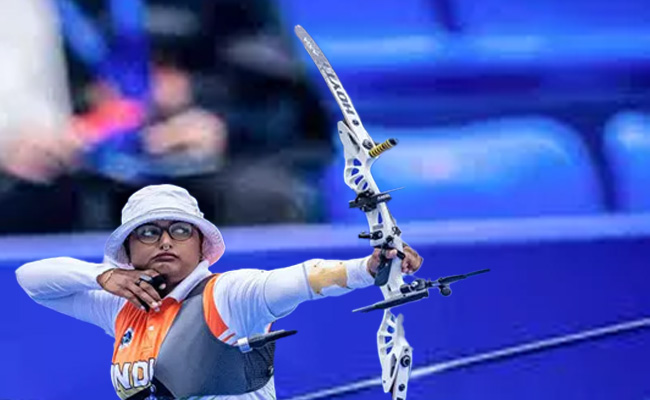
Shanghai (PTI): The Indian trio of Deepika Kumari, Ankita Bhakat and teenager Kumkum Mohod held their nerve in a tense shoot-off to beat home favourites China and clinch the women's recurve team gold medal at the Archery World Cup Stage 2 here on Sunday.
In a final marked by fluctuating fortunes, India edged past the home side 5-4 (28-26) in the shoot-off after the four-set regulation ended 4-4.
The victory was especially sweeter as India had earlier stunned record 10-time Olympic champions South Korea in the semifinals en route to their first World Cup women's team gold since 2021.
Deepika, who was also part of India's World Cup-winning teams in Guatemala City and Paris in 2021, now has seven World Cup team gold medals to her name since 2010.
It was also the Indian women recurve team's first World Cup medal in three years, its previous podium finish coming in Stage 4 in Paris in 2023 where Ankita was a member of the winning team.
India's campaign in Shanghai has thus already yielded two medals after compound archer Sahil Jadhav opened the country's account, securing a bronze on Saturday.
India also remained in contention for another podium finish later in the day with recurve archer Simranjeet Kaur set to compete in the semifinals. She is a win away from her maiden individual World Cup medal.
Travelling without a full-time national coach amid the continuing impasse over appointments, it was the vastly experienced Deepika who led from the front, constantly motivating her teammates during breaks and changeovers.
Prafull Dange, who was the designated women's recurve coach after his ward Kumkum topped the national trials, largely remained in the background as Deepika guided the side through the pressure moments against a hostile home crowd and vocal Chinese support staff.
Against a young Chinese side comprising Zhu Jingyi, Huang Yuwei and teenage archer Yu Qi, who all made their World Cup debuts only last year, India looked in control initially but nearly let the match slip after taking the opening set (54-53).
Shooting last in the Indian order, Deepika set the tone with successive 10s as India edged the first set despite Ankita (8-8) and 17-year-old Kumkum (10-8) putting up an inconsistent show.
Deepika continued her fine rhythm in the second set with another perfect 10 as India briefly held a one-point advantage (28-27) midway through the end. But China responded strongly with two 9s and a 10 in their final three arrows of the second set to post 55.
Ankita replied with a 9, but Kumkum managed only an 8, leaving Deepika needing a 10 to level the set.
The four-time Olympian, however, slipped to a 7 as India lost the set 52-55 and China drew level at 2-2.
The hosts then moved ahead in the third set. The teams were initially tied at 56, but a review upgraded China's final arrow from 8 to 9, handing them the set 57-56 and a 4-2 lead.
India appeared on the verge of defeat in the fourth set despite Deepika rediscovering her touch with two 10s. Kumkum's final arrow landed in the 7-ring as India posted a modest 54.
China required two 10s and a 9 from their last three arrows to seal the match.
Zhu and Huang delivered perfect 10s, leaving 18-year-old Yu Qi needing a 9 for victory in front of the home crowd.
But the youngster shot an 8, allowing India a dramatic escape and forcing a shoot-off.
The Indians peaked at the right moment in the decider. Ankita opened with a 9, Kumkum followed with a superb 10, and Deepika calmly delivered a 9 when only an 8 was needed to seal the title.