'Bhrasht Janata Party': Rahul slams BJP's double engine govts in various states
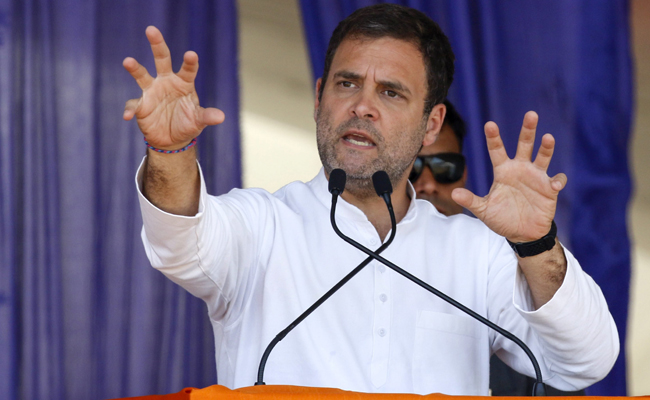
New Delhi (PTI): Congress leader Rahul Gandhi on Friday dubbed the BJP 'Bhrast Janata Party' and claimed that its double-engine governments in various states have ruined the lives of the people through corruption, abuse of power and the poison of arrogance.
Gandhi cited the murder of Ankita Bhandari in Uttarakhand, the Unnao rape case in Uttar Pradesh, deaths from drinking contaminated water in Indore, among others, to attack the BJP.
“Across the country, the ‘Bhrasht’ Janata Party's double-engine governments have ruined the lives of the people. Corruption, abuse of power, and the poison of arrogance have spread throughout the BJP's politics, from top to bottom,” the Leader of Opposition in the Lok Sabha said in a post in Hindi.
ALSO READ: Death toll rises to 8 in Belagavi sugar factory explosion
In their system, the lives of the poor, the helpless, labourers, and the middle class are merely statistics, and a system of extortion is operating in the name of "development", Gandhi alleged.
"The brutal murder of Ankita Bhandari in Uttarakhand shook the entire nation but the question remains: which BJP VIP is being protected by those in power? When will the law be equal for all?" he said.
In the Unnao case in Uttar Pradesh, the entire country witnessed how criminals were protected due to the arrogance of power, and how much the victim had to pay for justice, Gandhi said.
Whether it's deaths from drinking contaminated water in Indore or complaints of contaminated water and polluted supply from Gujarat, Haryana, and Delhi - the fear of disease is everywhere, he claimed.
"From the Aravalli range in Rajasthan to other natural resources - wherever the greed and self-interest of billionaires have reached, rules have been trampled upon. Mountains are being cut down, forests are being destroyed and the public is getting in return: dust, pollution, and disaster," Gandhi said.
Deaths of children from cough syrup, rats killing newborns in government hospitals, collapsing roofs of government schools - this is not "negligence," but a direct consequence of corruption, he further alleged.
"Bridges collapse, roads cave in, families are wiped out in train accidents, and the BJP government does the same thing every time: photo opportunities, tweets, and the formality of compensation," Gandhi said.
"Modi ji's 'double engine' is running' but only for the billionaires. For the common Indian, this double-engine government of corruption is not a speed of development, but a speed of destruction - crushing someone's life every single day," the former Congress chief charged, using the hashtag ''Bhrasht Janata Party'.
Let the Truth be known. If you read VB and like VB, please be a VB Supporter and Help us deliver the Truth to one and all.
26-year-old youth from Andhra dies by suicide in US
Kurnool (Andhra Pradesh) (PTI): A 26-year-old youth from this district has died allegedly by suicide in Chicago, US, recently, due to distress over debt, sources said on Saturday.
The family members of the deceased have requested that the identity of their relative be withheld, noting that his parents are senior citizens suffering from medical conditions.
Reacting to the incident, Andhra Pradesh IT Minister Nara Lokesh expressed condolences and assured assistance for the repatriation of the mortal remains of the deceased.
"My heartfelt condolences to the bereaved family. I request Union Aviation Minister K Ram Mohan Naidu to ensure smooth and hassle-free transport of the mortal remains," Lokesh said in a post on X.
An NRI community member from the US posted on social media that one of their members from Kurnool on Optional Practical Training (OPT) passed away in Chicago a few days ago.
He said Telugu Association of North America (TANA) had completed all necessary documentation and formalities to send the mortal remains to India for final rites.
He further requested assistance in expediting the cargo pickup, currently scheduled for Sunday, seeking an earlier arrangement considering the urgency.
(Assistance for overcoming suicidal thoughts is available on the state’s health helpline 104, Tele-MANAS 14416.)