Bihar CM Nitish Kumar accuses opposition INDIA bloc leaders of treating Muslims as 'vote bank'
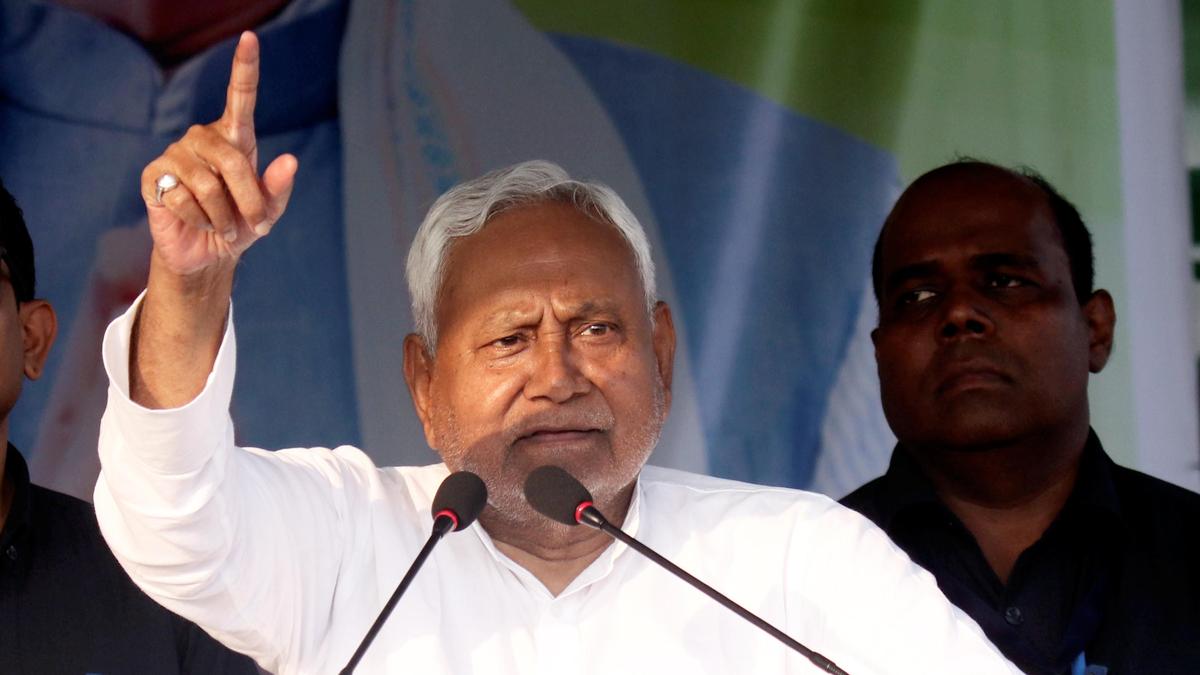
Patna (PTI): Bihar Chief Minister Nitish Kumar on Saturday accused opposition INDIA bloc leaders of treating the Muslim community as a "vote bank" by portraying themselves as their well-wishers.
Kumar claimed that while opposition leaders are using various tactics to secure the votes of the minority community, no efforts are being made to give them any significant representation.
In a post on X, the CM wrote, "When elections are here, some people (leaders of Opposition parties) are again trying to portray themselves as well-wishers of the Muslim community. This is all deception. They consider Muslims as their 'vote bank' only."
The CM said in the NDA government, people from the minority community are getting their due representation in every sector.
"Without any discrimination, they are getting proper representation in every field, whereas previous governments used the Muslim community only for votes and gave them no share in power", Kumar wrote.
I humbly request people belonging to this community not to get themselves trapped into promises offered by them, he said..
"Remember the work we have done for you and then decide whom to vote for. Before 2005, there was no work for people of the Muslim community in the state. Prior to that, communal clashes used to occur frequently in different parts of the state", the CM stated.
"Since November 24, 2005, when we came to power, steps were taken for the overall development of the Muslim community. In 2025-26, the budget of the Minority Welfare Department was increased 306 times, with a provision of Rs 1080.47 crore annually," he added.
The chief minister highlighted the measures taken to prevent communal incidents, such as fencing more than 8,000 cemeteries since 2006, with 1,273 additional sites identified for fencing, 746 of which have been completed.
Referring to past incidents of communal violence, Kumar noted that, "When we got the opportunity to serve, the Bhagalpur communal riots of 1989 were investigated, strict action was taken against culprits, and compensation was provided to victims. Additionally, assistance in the form of pensions is being given to families affected by the riots. Earlier, there used to be so many Hindu-Muslim conflicts, but now there are no such disputes."
After 2006, madrasas were registered and granted recognition by the state government, Kumar said.
"Teachers in madrasas are being paid salaries equivalent to those of government teachers. Furthermore, after 2007, an assistance amount of Rs 10,000 has been provided to abandoned/divorced Muslim women to help them gain employment, which has now been increased to Rs 25,000 per month," he added.
"Useful schemes like Talimi Markaz and Hunar have been implemented for the Muslim community. Scholarships, free coaching, hostels, grants, and other schemes are being run for students and youth from the Muslim community. The Entrepreneur Scheme is providing benefits to young people to start their own businesses", the CM wrote.
Let the Truth be known. If you read VB and like VB, please be a VB Supporter and Help us deliver the Truth to one and all.
Trump tells Fox News he's no longer sending Witkoff, Kushner to Pakistan for Iran talks
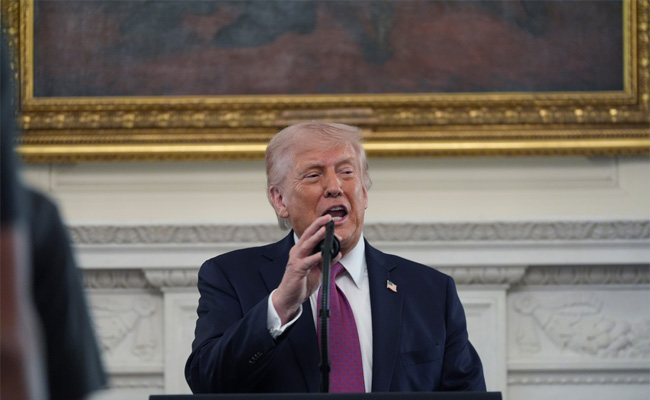
Islamabad (AP): President Donald Trump says he told top US envoys not to travel to Pakistan to negotiate with Iran, telling Fox News that "they can call us anytime they want.”
In a brief phone interview Saturday, Trump told Fox News that he told US negotiators Steve Witkoff and Jared Kushner “you're not going to be making any more 18 hour flights to sit around talking about nothing.”
Trump also said of the US side “we have all the cards.”
His comments came after the White House said Friday that Witkoff and Kushner would be heading to Pakistan for another round of negotiations with Iran.