Bilkis Bano case: All 11 convicts surrender at Godhra jail shortly before end of deadline set by SC

Godhra (PTI): All 11 convicts in the Bilkis Bano case have surrendered at the Godhra sub jail in Gujarat's Panchmahal district in keeping with the deadline set by the Supreme Court.
The 11 convicts surrendered before jail authorities late Sunday night, local Crime Branch inspector NL Desai said.
"They reached the jail before midnight of January 21, which was the deadline set for them to surrender," he said.
The top court on January 8 annulled the remission granted by the Gujarat government to the 11 convicts in the high-profile case while slamming the state for being "complicit" with an accused and abusing its discretion.
It ordered the convicts, who were released prematurely on Independence Day in 2022, to go back to jail within two weeks.
The apex court on Friday rejected pleas of the convicts for grant of more time to surrender and asked them to do so by Sunday.
The 11 convicts are Bakabhai Vohania, Bipin Chandra Joshi, Kesarbhai Vohania, Govind Nai, Jaswant Nai, Mitesh Bhatt, Pradeep Mordhiya, Radheshyam Shah, Rajubhai Soni, Ramesh Chandana and Shailesh Bhatt.
Bilkis Bano was 21 years old and five months pregnant when she was gang-raped while trying to escape the horror of the communal riots that broke out after the Godhra train burning incident in February 2002. Her three-year-old daughter was among the seven family members killed.
On August 15, 2022, the 11 convicts, who spent 14 years in jail as part of the life sentence, were granted premature release after the Gujarat government accepted their remission applications in accordance with its 1992 policy, citing their 'good conduct' during imprisonment.
The 11 convicts are residents of Singvad and Randhikpur villages in Singvad taluka of Dahod district near Panchmahal.
Quashing the remission order, the Supreme Court had ruled that the Gujarat government lacked jurisdiction to grant premature release to the convicts as the case trial was held in Maharashtra.
Days after the SC order, the convicts moved the top court seeking more time to surrender on various grounds such as failing health, impending surgery, son's marriage and harvesting ripe crops.
These applications were dismissed by the apex court on Friday with the observation that the reasons cited had no merit.
Let the Truth be known. If you read VB and like VB, please be a VB Supporter and Help us deliver the Truth to one and all.
India achieves major milestone in wind energy; capacity now 56 gigawatts: PM Modi
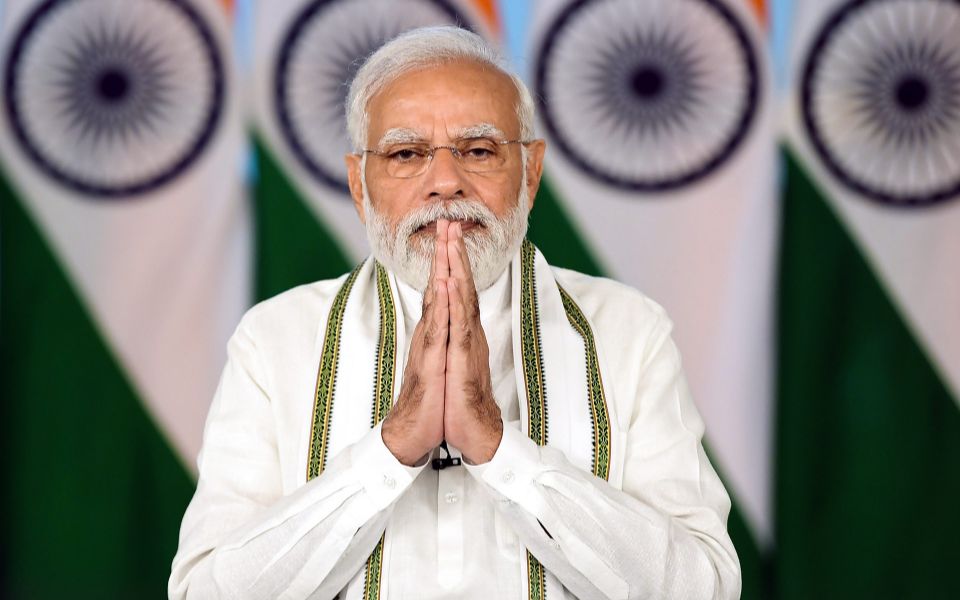
New Delhi (PTI): India has achieved a major milestone in wind energy, with the country's wind energy generation capacity exceeding 56 gigawatts, Prime Minister Narendra Modi said on Sunday.
In his monthly radio address 'Mann Ki Baat', Modi also said the country must save electricity and adopt clean energy.
“India recently achieved a major milestone in wind energy. India's wind energy generation capacity has now exceeded 56 gigawatts. In just the past year, nearly 6 gigawatts of new capacity have been added,” he said.
Underlining that solar and wind energy are essential for India's development, Modi said, “It is not just about the environment; it is about securing our future, and we all have a role to play in it.”
On April 22, Union Minister for New and Renewable Energy, Pralhad Joshi, said that India has recorded its best-ever year in wind energy capacity addition, with a historic 6.1 GW added during 2025-26.
India currently ranks fourth globally in wind energy, with more than 56.1 GW installed capacity and an additional 28 GW under implementation.
Emphasising the vast untapped potential of the sector, Joshi highlighted that India's wind energy potential at 150 metres hub height is estimated at nearly 1,164 GW.
He expressed confidence that with sustained efforts, the country will achieve 100 GW wind capacity by 2030 and 156 GW by 2036, contributing significantly to the net-zero target by 2070.
Joshi also underlined that wind energy plays a critical role in stabilising India's energy system, particularly due to its peak generation during evening and night hours, which aligns with high demand periods.
He noted that nearly 45 per cent of wind power generation occurs during peak demand hours, making it a vital complement to solar energy.