Bilkis Bano case: IPS officer sacked a day before retirement
Ahmedabad, Jun 7: Gujarat cadre IPS officer R S Bhagora, convicted (rpt convicted) in the 2002 Bilkis Bano case, was dismissed from service by the Union Home Ministry on May 30, a day before his retirement, a senior state government official said Friday.
The 60-year-old officer, who was to retire on May 31, was serving as Deputy Commissioner of Police (Traffic) with the Ahmedabad police when his dismissal order came, said M R Soni, Deputy Secretary (Inquiry), Gujarat Home Department.
"The state Home Department had received a communication from the Union Home Ministry ordering dismissal of Bhagora from service on May 29.
"We had served the order on May 30, which effectively means he was sacked a day before his retirement," said Soni.
As per the government records, Bhagora, a state police service officer, was promoted to the IPS cadre in 2006.
The dismissal means Bhagora will not get benefits entitled to retired government employees.
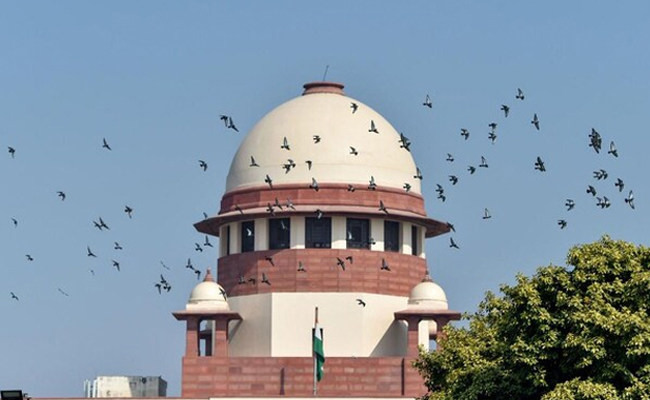
In March this year, the Supreme Court had asked the Gujarat government to take disciplinary action against the erring police officials, including Bhagora, convicted by the Bombay High Court for dereliction of duty in the sensational Bilkis Bano gang-rape case during the 2002 riots in the state.
Among the erring police officials, four - a deputy superintendent of police, two inspectors and a constable - have already retired from service.
The Supreme Court had also awarded a compensation of Rs 50 lakh to Bano, who was gang-raped in Randhikpur village in Dahod district during the post-Godhra riots.
On Bano's request, the apex court had transferred the case to Mumbai in August 2004.
A special court in Mumbai had awarded life sentence to 11 men for raping Bano, who was five-month pregnant at the time of the crime, and murdering seven of her family members during the riots.
The trial court had acquitted five policemen, including Bhagora, who were booked for dereliction of duty in the high-profile case.
After their acquittal was challenged, the Bombay High Court had in 2017 reversed the lower court order and convicted these five policemen under sections 218 (not performing their duties) and 201 (tampering of evidence) of the Indian Penal Code (IPC).
The Supreme Court had on July 10, 2017 dismissed the appeals of Bhagora and the other policemen against the HC order, saying there was "clear-cut evidence" against them.
Let the Truth be known. If you read VB and like VB, please be a VB Supporter and Help us deliver the Truth to one and all.
No need for guv: DMK leader Kanimozhi
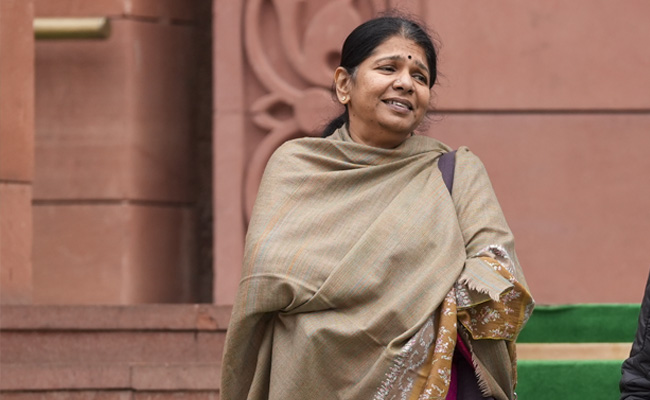
Chennai (PTI): Senior DMK leader Kanimozhi Karunanidhi on Friday reiterated her party’s opposition to the office of the governor amid uncertainty over government formation in Tamil Nadu after a fractured election mandate.
Speaking to PTI Videos, Kanimozhi emphasised that the DMK’s demand for the abolition of the governor’s post remained unchanged, especially as questions arise over constitutional propriety during the current political transition.
"Our position that we do not need a governor at all is something the DMK has never changed at any point in time," she said.
When asked about the governor’s actions following the election results—particularly the delay in inviting the leading party to form the government—Kanimozhi pointed to what she described as the "inherent friction" between the office of the governor and the political interests of the state.
She said the current situation "raises a lot of questions" and requires introspection regarding constitutional procedures.
Kanimozhi described the election results as lacking a "clear mandate", which she identified as the primary reason for the prevailing political uncertainty in the state.
"What the people decide is supreme," she said, adding that while the mandate was not decisive, it must be respected.
The Thoothukudi MP attributed the ongoing delays and "many confusions" to the absence of a decisive majority for any single party.
She firmly dismissed rumours about the DMK potentially supporting the AIADMK from outside to help stabilise the government.
She described such reports as mere "speculation" and "rumours".
"We can’t be responding to every rumour," she said, declining to comment on the AIADMK’s claims regarding its numbers to form the government.
The political situation in Tamil Nadu remains fluid as stakeholders await the governor’s next constitutional step in an Assembly where no party has secured a clear majority.
The DMK and AIADMK—both of which suffered significant losses to the TVK—are reportedly exploring tactical manoeuvres to navigate the hung Assembly.
The TVK, with 108 seats and the support of Congress’s five MLAs, is still short of the majority mark. The DMK and AIADMK secured 59 and 47 seats, respectively.