Bilkis Bano case: One more convict moves SC seeking review of Jan 8 verdict cancelling remission
New Delhi, Mar 18: One more convict in the Bilkis Bano case has moved the Supreme Court seeking a review of its January 8 verdict cancelling remission of his sentence, contending that it cannot be challenged based on the nature of the crime and "society's cry for justice".
The review plea filed by Ramesh Rupabhai Chandana said the top court erred while passing the impugned order and overruling judgment dated May 13, 2022, passed by another bench of the apex court.
The Gujarat government and two of the 11 convicts have already filed a petition seeking a review of the January 8 verdict in which remission orders of all of them were cancelled and they asked to surrender.
Listing reasons for seeking a review of the verdict, the plea said the top court bench erred in its finding "on the ground that the remission order passed by the competent authority cannot be challenged on factual grounds, inter alia, the nature of the crime, impact on society and society's cry for justice after the conviction and sentence has attained finality in the eyes of law."
It said that overruling of the judgment dated May 13, 2022, passed by a coordinate of this court, which allowed the Gujarat government to grant remission as per the 1992 policy, the impugned order of January 8 was in contravention of the doctrine of Comity of Courts.
The doctrine of Comity of Courts refers to courts respecting the laws and decisions of other courts.
The plea said that in the instant case, only the trial was transferred (to Maharashtra) under "extraordinary circumstances" by way of judicial intervention and it is a fact apparent on the face of record that in the transfer petition concerned, the issue of remission was not the matter in issue.
"Hence, it is not just and fair to presume that vide the said transfer order, appropriate government as per section 432(7) CrPC also stood changed to being that of the transferee state," it said.
The plea further said the remission policies of Gujarat and Maharashtra respectively, when compared both at the time of transfer and subsequent conviction respectively can be said to be beneficial and prejudicial respectively.
"That is to say, since Gujarat policy laying down 14 years as criteria for becoming eligible for grant of remission is beneficial for the petitioner and on the other hand, 28 years for the same as per Maharashtra policy is prejudicial for him," it said.
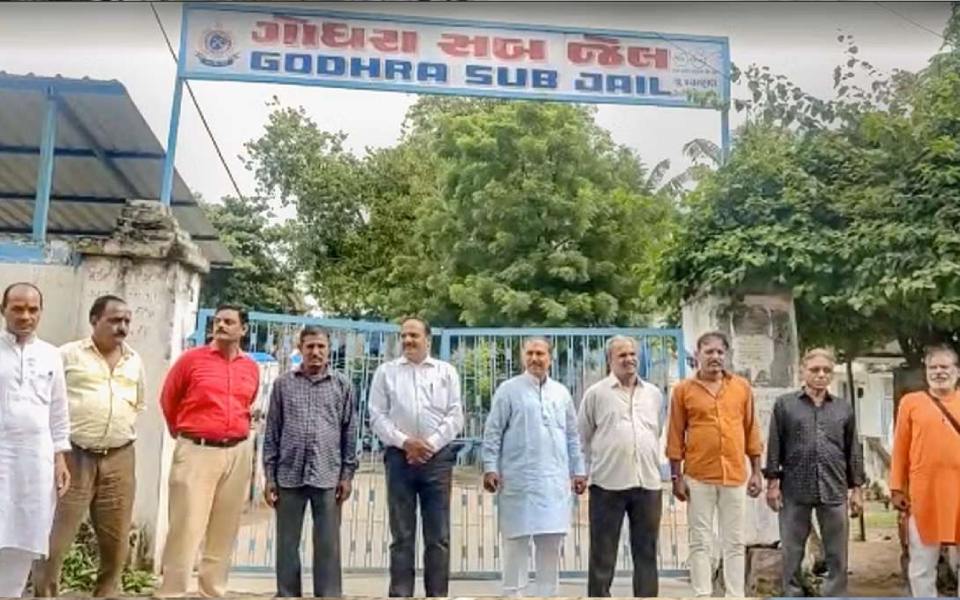
Earlier, Radheyshaym Bhagwandas Shah and Rajubhai Babulal Soni, both lodged in Godhra sub-jail after the January 8 apex court verdict, filed the review plea.
On January 8, the top court quashed the remission it had granted to 11 convicts in the high-profile gang-rape case of Bilkis Bano and the killing of her seven family members while slamming the state for being "complicit" with the accused and abusing its discretion.
It ordered all the convicts, who were released prematurely on Independence Day in 2022, back to jail within two weeks.
Excoriating the Gujarat government, the apex court said it "usurped" the power of the Maharashtra government to grant remission to the convicts.
It held as nullity the May 13, 2022, judgement of another bench of the apex court, which had directed the Gujarat government to consider the remission applications of the 11 convicts in the case, saying it was obtained by "playing fraud on court".
Bilkis Bano was 21 years old and five months pregnant when she was raped while fleeing the horror of the communal riots that broke out after the Godhra train burning incident in February 2002. Her three-year-old daughter was among the seven family members killed.
Let the Truth be known. If you read VB and like VB, please be a VB Supporter and Help us deliver the Truth to one and all.
NIA registers case to probe recovery of 79 crude bombs in poll-bound West Bengal
New Delhi (PTI): The National Investigation Agency (NIA) on Sunday registered a case to probe recovery of 79 crude bombs in poll-bound West Bengal, officials said.
The move came following a directive by the Union Home Ministry in this regard, they said.
In pursuance to the home ministry's order, the anti-terror agency on Sunday registered a case, which was originally filed at Uttar Kashi police station, Bhangar division, Kolkata on Saturday, and took up the investigation, an NIA spokesperson said in a late night statement.
"The case pertains to recovery of 79 crude bombs and other incriminating materials by Kolkata police, which were being stored at a spot, thereby endangering human life and property," the spokesperson said.
Earlier in the day, the Election Commission had directed the West Bengal Police to launch a special drive to arrest those involved in illegal manufacturing of crude bombs in the poll-bound state, an official said.
It asserted that all cases related to the making of any such explosive would be probed by the National Investigation Agency, the official said.
The directive came after the police recovered a large number of crude bombs from the house of a person, allegedly a TMC worker, at Bhangar in South 24 Parganas district, days ahead of the second and final phase of the assembly polls in the state.
The explosives were recovered during a search at the residence of Rafikul Islam following specific inputs, the official said.
The poll panel also issued a warning to senior police officers across the state over any lapse in maintaining law and order before the April 29 polling.
The first phase of the assembly elections in West Bengal was held on April 23, while the second phase will take place on April 29. Votes will be counted on May 4.
A record 93.19 per cent turnout has been recorded in the first round of polling. Bhangar will vote in the second phase.