Bill to regulate deepfakes tabled in Lok Sabha
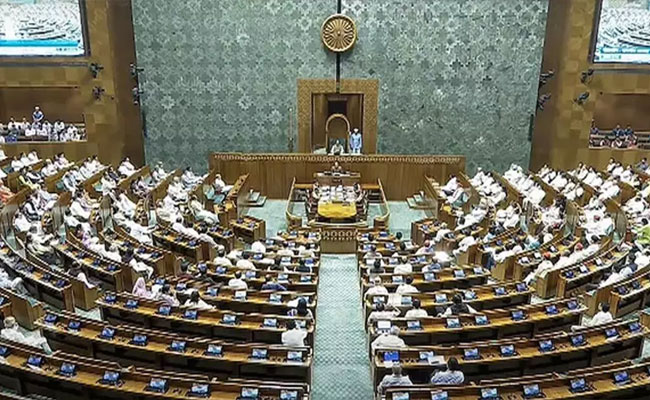
New Delhi (PTI): A Private Member's Bill seeking a clear legal framework for regulation of deepfakes has been introduced in the Lok Sabha.
The Regulation of Deepfake Bill, introduced by Shiv Sena leader Shrikant Shinde in the House on Friday, aims to protect citizens by mandating prior consent from individuals depicted in deepfake content.
"Misuse of deepfakes for harassment, deception and misinformation has escalated, creating an urgent need for regulatory safeguards," Shinde said.
The Bill also lists penalties for offenders creating or disseminating deepfake content with malicious intent.
"With advancements in artificial intelligence and deep learning, deepfake technology has emerged as a significant tool for media manipulation. While the technology has potential applications in education, entertainment and creative fields, it also poses severe risks when misused, threatening individual privacy, national security and public trust," Shinde said in the statement of objects and reasons in the Bill.
The proposed Bill seeks to establish a clear legal framework to govern the creation, distribution and application of deepfakes in India, said Shinde, a three-term Lok Sabha member from Kalyan.
The Bill also seeks to establish the Deepfake Task Force, a dedicated body to combat national security implications and evaluate the influence of deepfakes on privacy, civic participation, and potential election interference.
The task force will collaborate with academic and private sector institutions to develop technologies that detect manipulated content, thereby promoting credibility in digital media.
The Bill also proposes to establish a fund to support public and private sector initiatives in the detection and deterrence of advanced image manipulation.
A Private Member's Bill is a procedure of Parliament that enables lawmakers, who are not ministers, to draw attention to issues that might not be represented in Government Bills or to highlight the issues and gaps in the existing legal framework that require legislative intervention.
Let the Truth be known. If you read VB and like VB, please be a VB Supporter and Help us deliver the Truth to one and all.
CM Siddaramaiah alleges ‘criminal conspiracy’ in Sringeri recount, vows legal action
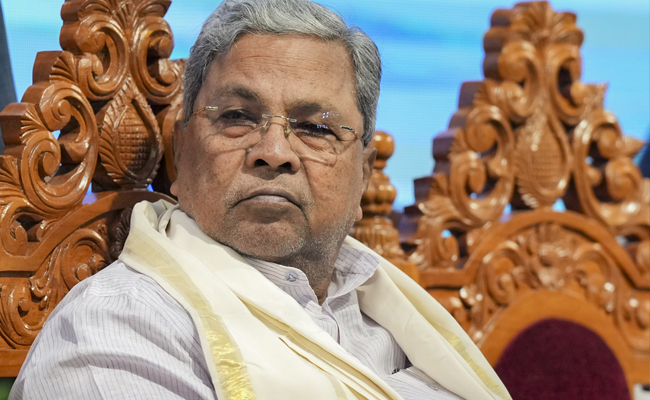
Bengaluru (PTI): Alleging a “criminal conspiracy” by BJP candidate D N Jeevaraj in the Sringeri Assembly poll recounting, Karnataka CM Siddaramaiah on Tuesday said the outcome was manipulated after valid postal ballot votes in favour of Congress leader T D Raje Gowda were tampered with during the recounting process.
Following a Karnataka High Court order on an election petition filed by Jeevaraj, challenging Raje Gowda’s election, the reverification and recounting were conducted on Saturday.
After the reverification and recount of postal ballots for the Sringeri Assembly constituency, votes polled in favour of Raje Gowda were reduced by 255, the returning officer said.
A report on the matter has been submitted to the Election Commission of India for further action, the officer added.
Congress leader Raje Gowda had won the 2023 Assembly polls from Sringeri by 201 votes, defeating his nearest rival Jeevaraj.
Addressing a press conference in Bengaluru, Siddaramaiah said the High Court had directed the recounting of postal ballots and that irregularities were noticed during the exercise conducted on May 2.
“This is a clear case of criminal conspiracy,” Siddaramaiah said, alleging that valid votes cast in favour of Raje Gowda were altered after being accepted by counting agents of all parties, including Congress, BJP, and JD(S).
He claimed that during the recounting of postal ballots, 255 votes were initially accepted as valid by all agents but were later tampered with by subordinate officials.
“There is a second mark on the votes polled in favour of Raje Gowda. They had accepted these as valid votes. Subsequently, another mark was made by officials. This is a clear case of criminal conspiracy,” he said.
When asked who was behind the alleged conspiracy, the CM replied, “It was hatched by Jeevaraj and others. It is planned.”
Siddaramaiah further alleged that the returning officer acted improperly by declaring the result despite the presence of an Election Commission observer during the recounting.
“Immediately after the counting, the returning officer announced the result. He should not have done so; this is against the law,” he said.
He pointed out that Raje Gowda had originally won by 201 votes, but after the recounting, the BJP candidate was declared the winner by 52 votes.
“The BJP has committed a criminal act of conspiracy. This is not vote chori but vote dacoity,” he alleged.
The CM said a police complaint had already been filed by Raje Gowda’s election agent, Sudhir Kumar, and emphasised the need for electoral integrity.
“We want transparency and free and fair elections. That is what our Constitution mandates,” he added.
Stating that the government would pursue legal remedies, Siddaramaiah said, “We are preparing an appeal challenging the returning officer’s announcement in a court of law.”
Responding to a separate query on elections in other states, the CM said there appeared to be an anti-incumbency factor in West Bengal, while results in Tamil Nadu were “surprising,” adding that Vijay’s party was emerging as the largest there.
Following the victory of party candidates in Bagalkote and Davanagere South, Siddaramaiah expressed confidence about future electoral prospects in Karnataka.
“Even in 2028, we will win the Assembly elections. We will come back,” the CM said.
Siddaramaiah added that he would order a forensic examination into the alleged tampering of postal ballots.