Biological father cannot be booked for kidnapping a child in absence of legal prohibition: HC
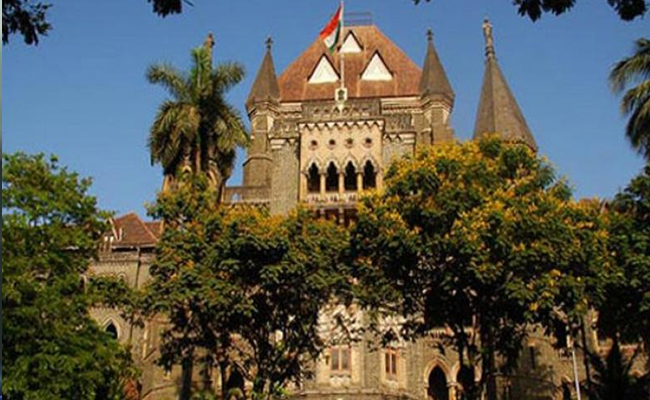
Mumbai (PTI): A biological father cannot be booked on charges of kidnapping his child in the absence of legal prohibition, the Nagpur bench of the Bombay High Court has ruled, quashing an FIR registered against a 35-year-old man.
A division bench of Justices Vinay Joshi and Valmiki SA Menezes in its order of October 6 noted that in the absence of any prohibition by order of any court, the father was a lawful guardian along with the mother and hence he cannot be booked for taking away his own minor child from the custody of the mother.
The order was made available on Thursday.
"The expression Guardian' encompasses any person who cares for a minor. Therefore, in our view, in the absence of a legal prohibition, a father cannot be booked for the offence of kidnapping his own child," the court said.
It added that the effect of the biological father taking away the child from the custody of the mother only amounts to taking the child from the custody of one natural guardian to another.
The bench quashed the FIR (first information report) registered against the man, on a complaint by his estranged wife, with the Amravati police for allegedly kidnapping their three-year-old son on March 29, 2023, noting that continuation of such prosecution would amount to abuse of process of the court.
In his petition seeking for the FIR to be quashed, the man said he was the child's father and natural guardian and hence he cannot be booked on charges of kidnapping.
The court referred to the definition of natural guardian of a minor under the Hindu Minority and Guardianship Act and said for a Hindu minor, the father is a natural guardian and after him, the mother.
"It is abundantly clear that the father is a natural guardian of the minor. It is not a case that the mother (of the child) was lawfully entrusted with the care or custody of the minor by an order of any court," HC said.
Let the Truth be known. If you read VB and like VB, please be a VB Supporter and Help us deliver the Truth to one and all.
Rickelton's ton in vain as SRH beat MI by 6 wickets
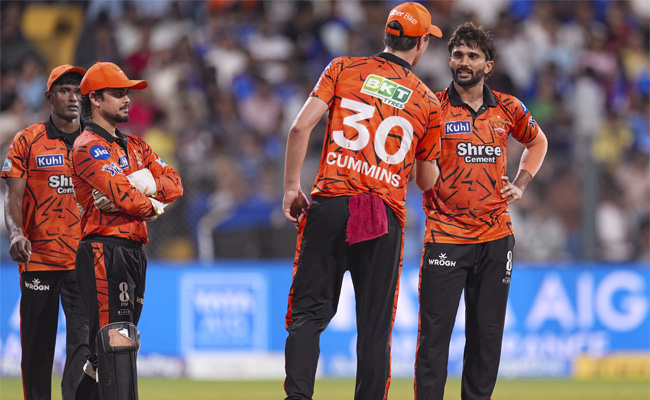
Mumbai (PTI): Ryan Rickelton's whirlwind unbeaten ton was overshadowed by Heinrich Klaasen's unbeaten 65 as Sunrisers Hyderabad defeated Mumbai Indians by six wickets in an IPL match here on Wednesday.
Chasing an imposing 244-run target, Travis Head (76 off 30) and Abhishek Sharma (45 off 24) shared 129 runs for the opening wicket to set the platform for SRH.
Klaasen (65 not out off 30 balls) then displayed his all-round hitting abilities to guide SRH home with the help of Nitish Kumar Reddy (21) and Salil Arora (30 not out off 10) in 18.4 overs.
Earlier, Rickelton's knock powered MI to 243 for five.
MI rode on a 93-run stand between Rickelton (123 not out off 55 balls) and Will Jacks (46 off 22) in 7.1 overs for the opening stand to power the side.
MI skipper Hardik Pandya scored a valuable 31 off 15 balls before being dismissed.
Praful Hinge (2/54), Eshan Malinga (1/29), Sakib Hasan (1/39) and Nitish Kumar Reddy (1/31) were the wicket-takers for SRH.
Brief Scores:
Mumbai Indian: 243 for 5 in 20 overs (Ryan Rickelton 123 not out; Praful Hinge 2/54).
Sunrisers Hyderabad: 249 for 4 in 18.4 overs (Travis Head 76, Heinrich Klaasen 65 not out; AM Ghazanfar 2/51).