Bitdefender launches new security solution in India
New Delhi, May 28: Romania-based security solutions provider Bitdefender on Monday introduced the "Total Security-Multi-Device", in India for Windows, MacOS, iOS and Android devices in order to deliver multiple layers of protection against the prevailing cyber security threats.
The software comes with features including "advanced threat defence" with "behavioural detection technique" to monitor active apps, webcam protection, anti-phishing, anti-fraud, anti-theft and anti-loss tools to safeguard devices and user-files, the company said in a statement.
"The software functions on 'autopilot', that runs the entire cyber security solution by itself with nothing to configure," said Bitdefender.
Additionally, to ensure privacy on the web, with "Bitdefender Virtual Private Network (VPN)", the company claimed to protect user's online presence by encrypting the internet traffic that includes up to 200MB daily encrypted traffic for Windows and Android devices.
The newly rolled out security solution also has features like "parental advisor, privacy firewall, social network protection and password manager" for network protection, keeping connections safe from hackers, along with "quick risk checker" to keep computer software fixes handy.
Priced at Rs 999, the latest security solution that works against cyber threats like viruses, trojans, ransomware, zero-day exploits, rootkits, and spyware is available for purchase online, the company added.
Let the Truth be known. If you read VB and like VB, please be a VB Supporter and Help us deliver the Truth to one and all.
Recurring delays in approval, fund release give perception of systemic inequity: Siddaramaiah to PM
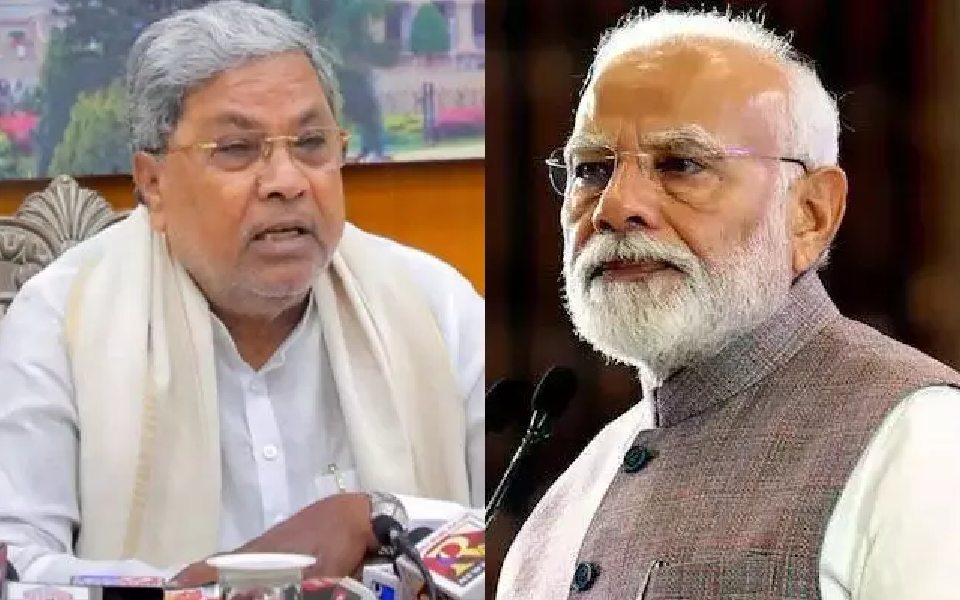
Bengaluru (PTI): Karnataka Chief Minister Siddaramaiah on Wednesday submitted a memorandum to Prime Minister Narendra Modi, seeking his intervention on 18 issues, including the demand to give constitutional protection to Karnataka's 56 per cent reservation policy and release of deficit grants, among others.
Siddaramaiah also highlighted that recurring delays on the part of the Union government, in approvals and fund releases to the state, have created a perception of systemic inequity.
CM sought the PM's intervention for the inclusion of Karnataka's 56 per cent reservation for Scheduled Castes, Scheduled Tribes, and Other Backward Classes in the Ninth Schedule of the Constitution and inclusion of certain OBCs in the central list of ST.
He insisted on the release of revenue deficit grants, special grants to Bengaluru, and approval to the Mekedatu project, among others.
According to the chief minister's office, Siddaramaiah handed over the memorandum to the prime minister on his arrival at the city's HAL airport on his way to Adichunchanagiri in Mandya district.
"Karnataka has always taken pride in contributing to India's growth with responsibility and vision. However, recurring delays in approvals and financial releases have created a perception of systemic inequity. Addressing these concerns will reaffirm the spirit of true cooperative federalism and strengthen our shared vision for the development of India," Siddaramaiah said in the letter to Modi.
"The people of Karnataka look forward to your kind intervention in resolving these issues. I am certain that the Union Government will enable Karnataka to continue playing a transformative role in India's inclusive and sustainable development," he said.
"Our state embodies the aspirations of a progressive and inclusive India and remains steadfast in its commitment to the ideals of cooperative federalism," he said.
While Karnataka continues to be among the largest contributors to the national exchequer and a leader in economic and social development, certain long-pending issues require the Union Government's urgent attention, he said.
Pointing out that the railway coach factory at Kolar announced in the Railway Budget remains unimplemented despite the state offering 1.123 acres of land, Siddaramaiah said, reviving this project will catalyse industrial development and employment in the backward Kolar region.
He said that including the Bengaluru-Mysuru segment in the proposed high-speed rail corridor is essential for balanced regional development and enhanced connectivity. The state respectfully urges the Union government to expedite the release of committed Central assistance for the Bengaluru Suburban Rail Project and to initiate the Bengaluru-Mumbai High-Speed Rail Corridor, connecting key districts of Kittur Karnataka and Kalyana Karnataka.
The CM also sought the release of the pending central share of Rs 17,554 crore and resolution of policy issues, including support for retrofitting and augmentation schemes, to ensure universal access to safe drinking water under the Jal Jeevan Mission.
Regarding 15th Finance Commission Grants to Gram Panchayats, he said, despite fulfilling all conditions, Karnataka is yet to receive grants of Rs 2,860 crore for FY 2025-26. "Their timely release is vital for sustaining rural infrastructure and essential services," he said.
Karnataka seeks the centre's urgent intervention for the sanction and implementation of pending National Highway projects, Siddaramaiah said, noting that the State has not received any major new NH projects in the last 12 years despite its significant contribution to the national economy.
Regarding revenue deficit grants of Rs 5,495 crore, he said, "The State requests the immediate release of the pending grants recommended by the 15th Finance Commission to address fiscal imbalances and sustain developmental initiatives."
He also demanded a special grant for Bengaluru to the tune of Rs 6,000 crore.
He urged the PM to direct the Ministry of Jal Shakti and the Central Water Commission to expedite the appraisal and approval of the Mekedatu Project, envisaging 67 TMC storage for Bengaluru's drinking water, regulated releases to Tamil Nadu, and 400 MW hydropower, in line with CWMA referral and the Supreme Court's judgment dated November 13, 2025.
Siddaramaiah further urged the centre to release the announced Rs 5,300 crore Central Assistance and national project status for the Upper Bhadra Project under the PMKSY-AIBP scheme, to gazette the Krishna Water Disputes Tribunal-II Award and declare the Upper Krishna Project (Stage-III) as a National Project.
He also urged wildlife clearance for the Kalasa Nala Diversion Project, enabling the diversion of 1.72 TMC of water for drinking purposes under the Mahadayi Tribunal Award.
Other demands mentioned in the memorandum include: provision of dedicated financial support of Rs 5,000 crore annually for the development of the Kalyana Karnataka region, in line with the spirit of Article 371(J) of the Constitution; establishing at least one public sector undertaking in each of the districts of North Karnataka; expedited forest, environmental, and wildlife clearances for the nationally significant energy storage project, which will enhance grid stability and support India's renewable energy goals; and establishment of AIIMS in Raichur.