BJP accuses Sonia Gandhi of crying for terrorists after Batla House encounter
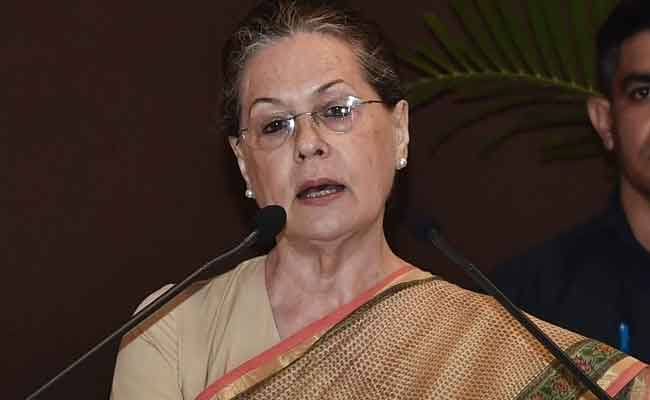
Madhubani: In a recent election rally in Bihar's Madhubani, Bharatiya Janata Party (BJP) president JP Nadda made a startling claim, stating that senior Congress leader Sonia Gandhi had shed tears for terrorists following the Batla House encounter in 2008. During the encounter, Delhi police inspector Mohan Sharma and two terrorists, Atif and Sajid, were killed.
Nadda's remark was in reference to a statement made by Congress leader Salman Khurshid in 2012, where he claimed that Sonia Gandhi had tears in her eyes after seeing images of the Batla House encounter. However, another Congress leader, Digvijaya Singh, refuted Khurshid's claim, stating that Sonia Gandhi did not cry.
Nadda accused the Congress of always standing in support of those who attempt to weaken India, questioning their sympathy towards terrorists. He labeled this alliance as the "arrogant alliance" and questioned whether the people would support them.
This accusation comes amidst a heated political atmosphere where the BJP and Congress are engaged in a war of words over various issues, including allegations of the Congress promising to redistribute wealth among Muslims and implementing religion-based reservations, which the BJP claims goes against the principles of the Indian Constitution.
Prime Minister Narendra Modi also joined the fray, accusing the Congress of preparing to cut the reservation quota for Scheduled Castes (SC), Scheduled Tribes (ST), and Other Backward Classes (OBC) to implement reservations based on religion, which he deemed unconstitutional.
Let the Truth be known. If you read VB and like VB, please be a VB Supporter and Help us deliver the Truth to one and all.
Karnataka School Edu Dept prohibits children from being made to dance to obscene songs
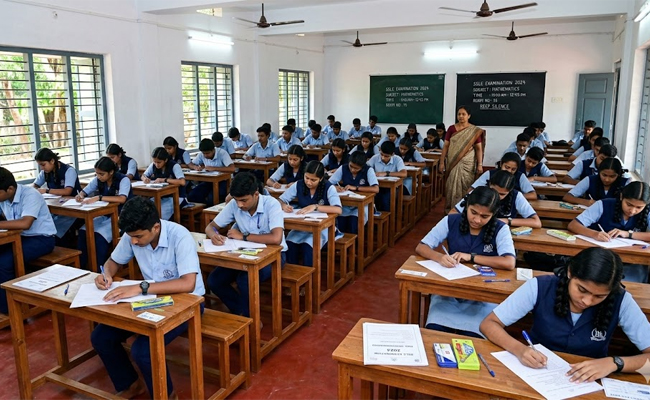
Bengaluru (PTI): The Karnataka School Education Department has issued a circular strictly prohibiting children from being made to dance to obscene songs in educational and cultural programmes.
It stated that such dances would negatively impact students' mental health and moral values. It will create indiscipline and harm the sanctity of education.
"All the Deputy Directors (Administration) of the state's School Education Department have been asked to take strict measures to prevent children or students from dancing to obscene songs in all government, aided and unaided schools in the state," the office of the commissioner of the School Education Department said in a recent circular.
"If it is found that children are being made to dance to obscene songs, appropriate action will be taken against the headmaster or management of such school," it added.
The department also listed certain measures in this regard, which include: strictly prohibiting children from being made to dance to obscene songs during educational and cultural programmes; selecting songs that are inspiring, positive, instilling national pride in children and reflecting the greatness, dignity, values, culture, and morality of the state.
Stating that the school headmaster and management are responsible for selecting songs and dances for cultural programmes, it said, they should also ensure that students wear decent clothes in dance or cultural programmes.