BJP ally NPP to oppose implementation of Uniform Civil Code in Arunachal Pradesh
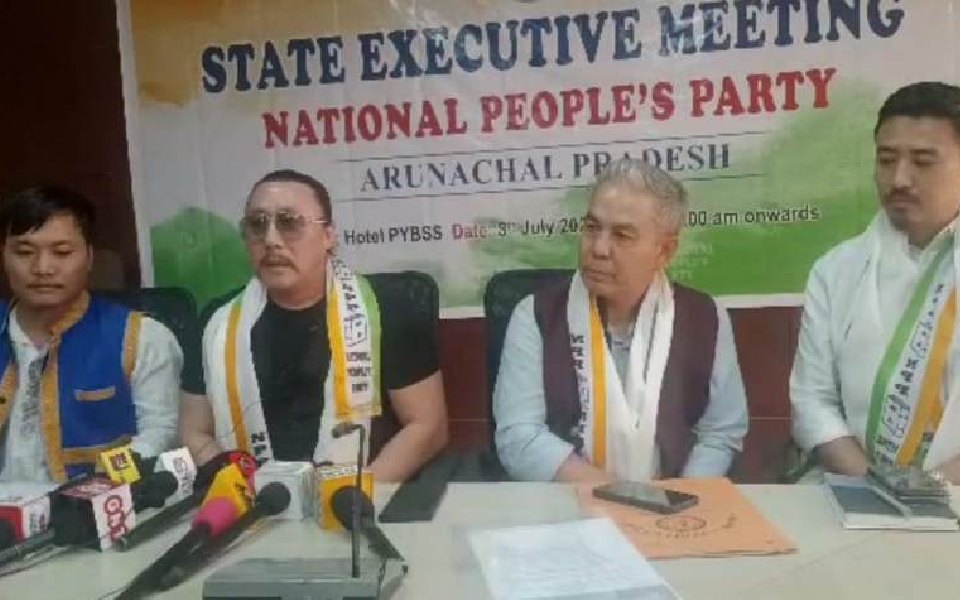
Itanagar, Jul 9: The Arunachal Pradesh unit of the National People's Party (NPP) has decided to oppose the immediate implementation of the Uniform Civil Code (UCC) in the northeastern state.
The decision was taken at the state executive meeting of the party here on Saturday, NPP state general secretary Paknga Bage said.
NPP state working president Likha Saaya told reporters, "Though NPP is in alliance with the BJP on developmental issues, but the regional party follows its own ideology".
The party unanimously adopted a resolution at the meeting opposing the UCC, citing the state's diverse multi-ethnic and multi-tribal composition, as well as its strong customary and traditional identity, Bage said.
Elaborating the reason as to why NPP is opposing UCC, Bage said since Arunachal Pradesh has its own unique laws, the NPP has unanimously adopted a resolution to go with the customary laws with certain modifications.
"The state and the central governments should focus on codifying the existing customary laws with necessary modifications to align them with tribal practices," he said.
The UCC refers to a common set of laws on marriage, divorce and inheritance that would be applicable to all Indian citizens irrespective of religion, tribe or other local customs.
The Law Commission had on June 14 initiated a fresh consultation process on UCC by seeking views from stakeholders, including public and recognised religious organisations, on the politically sensitive issue.
The other resolution adopted at the meeting was to place the demand for revocation of New Pension Scheme (NPS) by reintroducing the Old Pension Scheme, Bage said.
The state working president of the regional party said that the resolutions adopted at its executive meeting, would form the groundwork for Assembly polls in the state, due in 2024.
"The NPP is a secular party and holds no prejudice against any individual or religious group. Its sole objective is to ensure the overall development and welfare of every citizen in the state," Saaya said.
The NPP has four MLAs in the 60-member Arunachal Pradesh Assembly.
Let the Truth be known. If you read VB and like VB, please be a VB Supporter and Help us deliver the Truth to one and all.
Man kills woman lecturer, sets car ablaze; dies by suicide in Karnataka

Bengaluru (PTI): A 46-year-old man allegedly killed a woman lecturer by setting fire to the car with her inside, before dying by suicide; his severed body was found by railway police the next day, police said on Tuesday.
The deceased, identified as Ramanjinappa, a resident of Doddaballapura, was a contract worker in the tahsildar’s office, they said.
Police said the man, who was married and had apparently separated from his wife, was in an illicit relationship with a woman identified as Saroja, whose charred body was found inside a gutted car in an isolated area near the Bashetty Industrial Area in Doddaballapura taluk on the outskirts of Bengaluru.
Saroja was also married and had a son, police said.
According to police, on Saturday, the man allegedly borrowed a car from an acquaintance, claiming he had a medical emergency and needed to visit a hospital.
Citing preliminary investigations, a senior police officer said the man picked up the lecturer from a bus stop in Devanahalli. The two spent a couple of hours driving around Nandi Hills and nearby areas.
Later, they reached a secluded spot in Doddaballapura, where it is suspected that an argument ensued inside the car, following which he allegedly hit her on the head with a hammer, the officer said.
He then set the car on fire, reportedly using petrol, and is believed to have died by suicide thereafter, police said.
Locals who saw the burning car alerted the police and fire department, who rushed to the spot, extinguished the fire, and found the woman’s body completely charred inside the vehicle, the officer added.
His severed body was found near railway tracks in Bidadi by the railway police on Sunday, he said.
The motive and whether the crime was premeditated or impulsive are under investigation, he said.
Saroja’s husband filed a complaint accusing Ramanjinappa of killing her, police said, adding that a detailed investigation is underway to establish the exact sequence of events.