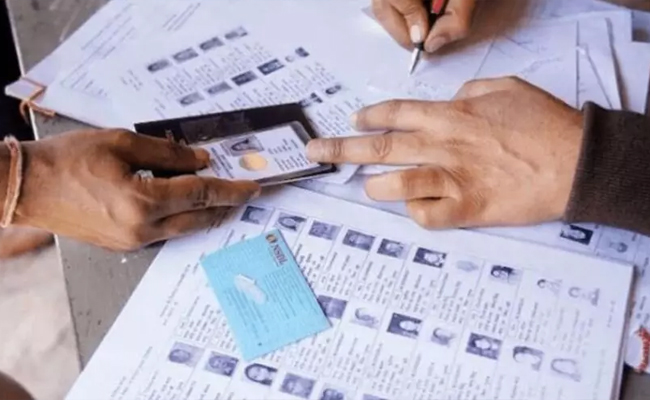
BJP conceded that EC failed to maintain integrity of electoral rolls: Khera on 2-voter cards charge
New Delhi (PTI): Congress leader Pawan Khera hit back at the BJP on Tuesday after it alleged that he has two voter IDs, saying in a bid to target him and his party, it has ended up targeting the Election Commission (EC) and left the poll body "bleeding".
Khera also slammed the EC after poll authorities in Delhi issued a notice against him for allegedly getting himself registered in the electoral rolls of more than one constituency, saying while complaints of "vote chori" (vote theft) are disregarded, the election watchdog rushes to act against opposition members.
"The @DEO_NDD has issued me a notice. Yet another confirmation of how the @ECISVEEP functions to support the ruling regime. While our complaints of Vote Chori are disregarded, the EC rushes to act against opposition members," he said in a post on X.
"Why did the @ECISVEEP not issue a single notice to the 1,00,000 fake voters of Mahadevapura constituency, that were exposed by Rahul Gandhi? We will not stop exposing the EC's wrongdoings in the Bihar SIR and other election processes," the Congress leader added.
Earlier, he claimed that with his "morning stunt", BJP's IT department head Amit Malviya has "conceded" that the EC has "failed to maintain the integrity" of the electoral rolls.
The ruling Bharatiya Janata Party (BJP) has alleged that Khera has two voter IDs and Congress leader Rahul Gandhi is running a campaign against voter-roll revision in Bihar to "protect and hide" his party's "theft of votes".
In a post on X, Malviya said Gandhi screamed "vote chori" from the rooftops but just like "he forgot to mention that his mother, Sonia Gandhi, enlisted herself in India's voter list even before becoming an Indian citizen, it has now emerged that Khera, a Congress spokesperson -- who never misses a chance to flaunt his proximity to the Gandhis -- holds two active EPIC numbers".
Reacting to Malviya's post, Khera said, "I came to know from him only that I have a second EPIC card. I had applied to remove it in 2016-17, but it seems that did not happen and the EC is to be blamed for this."
"What Anurag Thakur did, Amit Malviya replicated -- they both wanted to target us, but ended up targeting the EC. This is the issue we have been raising, this is what Rahul Gandhi is saying. Now I want to know if my vote was misused in Delhi and went to the BJP. I want CCTV footage," the Congress leader told PTI Videos.
Later, in a post on X, Khera said, "Desperate for attention, Amit Malviya tried a shot at me but much to his dismay, it is the ECI that was left bleeding. Again."
"Few takeaways: After Rahul Gandhi's August 7 press conference, thousands of cases surfaced where the same or different EPIC IDs for one person are registered in multiple booths, constituencies, even states. Malviya showed no particular interest in those cases. So, it is not the integrity of the electoral rolls that he is concerned about. It is politically-motivated mudslinging," he said.
With his "morning stunt", Malviya has conceded that the EC has "failed to maintain the integrity" of the electoral rolls, he added.
"This is despite my Form 7 application to delete my name from the New Delhi constituency after shifting houses in 2016," Khera said.
"Since 2016, four elections -- 2019 Lok Sabha, 2020 Vidhan Sabha, 2024 Lok Sabha, 2025 Vidhan Sabha -- have gone by. So it is safe to assume that four 'revisions' must have also taken place. Yet, my name is still on New Delhi rolls. Which stone has the ECI been sleeping under?" he said.
"(Chief Election Commissioner) Gyanesh Gupta Ji should pick his allies wisely -- after Anurag Thakur, Amit Malviya too has found it convenient to toss him under the bus," Khera said.
Earlier, addressing a press conference at the BJP headquarters here, the party's national spokesperson, Pradeep Bhandari, claimed that Khera, the Congress's media department head and Rahul Gandhi's "close associate", has two voter IDs on Delhi addresses.
"Rahul Gandhi and his close associates are chor (thieves) and making shor (noise)," Bhandari said.
Let the Truth be known. If you read VB and like VB, please be a VB Supporter and Help us deliver the Truth to one and all.
Karnataka School Edu Dept prohibits children from being made to dance to obscene songs
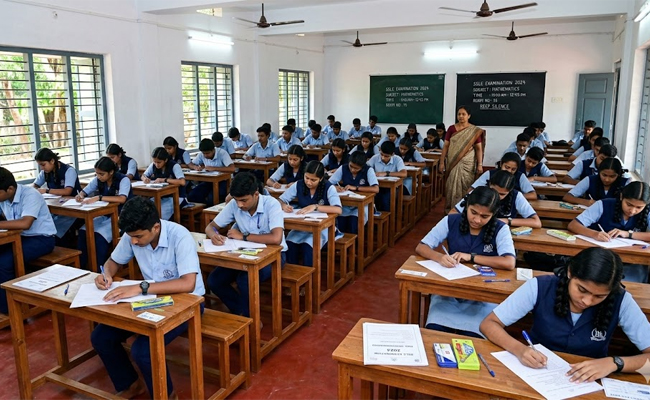
Bengaluru (PTI): The Karnataka School Education Department has issued a circular strictly prohibiting children from being made to dance to obscene songs in educational and cultural programmes.
It stated that such dances would negatively impact students' mental health and moral values. It will create indiscipline and harm the sanctity of education.
"All the Deputy Directors (Administration) of the state's School Education Department have been asked to take strict measures to prevent children or students from dancing to obscene songs in all government, aided and unaided schools in the state," the office of the commissioner of the School Education Department said in a recent circular.
"If it is found that children are being made to dance to obscene songs, appropriate action will be taken against the headmaster or management of such school," it added.
The department also listed certain measures in this regard, which include: strictly prohibiting children from being made to dance to obscene songs during educational and cultural programmes; selecting songs that are inspiring, positive, instilling national pride in children and reflecting the greatness, dignity, values, culture, and morality of the state.
Stating that the school headmaster and management are responsible for selecting songs and dances for cultural programmes, it said, they should also ensure that students wear decent clothes in dance or cultural programmes.