BJP corporator Ritu Tawde elected Mumbai’s mayor; Shiv Sena’s Sanjay Ghadi becomes deputy mayor
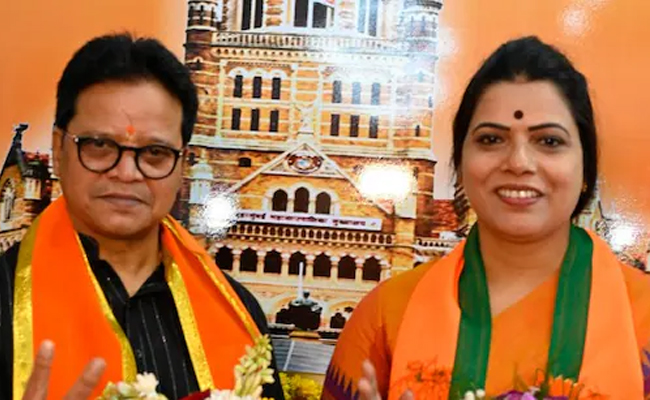
Mumbai (PTI): BJP corporator Ritu Tawde was elected mayor of Mumbai on Wednesday, while Shiv Sena’s Sanjay Ghadi became the deputy mayor.
Both Tawde and Ghadi were elected unopposed in a special meeting of the general body of the Brihanmumbai Municipal Corporation (BMC).
After the election process was completed at the BMC headquarters, Tawde took charge as the 78th mayor of Mumbai amid sloganeering from both the ruling and opposition party corporators.
Chief Minister Devendra Fadnavis and Deputy CM Eknath Shinde, who heads the Shiv Sena, were present during the ceremony. They congratulated the newly elected mayor and deputy mayor.
Tawade is a corporator from Ward 132, while Ghadi was elected from Ward 5 in the January 15 civic elections.
In the absence of an elected general body, BMC Commissioner Bhushan Gagrani had been overseeing the day-to-day affairs of the civic corporation since March 2022.
With Tawde’s elevation, the BJP has secured the mayor’s post in the country’s richest civic body after a gap of 44 years. She is the second mayor from the BJP in Mumbai.
Earlier, Gagrani conducted the election process in the BMC’s historic Committee Hall in his capacity as the state-appointed presiding officer.
Ahead of the proceedings, corporators of the BJP and Shiv Sena gathered at Hutatma Chowk to pay floral tributes before proceeding to the BMC headquarters.
In the polls to the 227-member BMC last month, the BJP emerged as the single-largest party with 89 seats, while Shiv Sena won 29 seats. The ruling alliance, with a combined strength of 118 corporators, was past the halfway mark of 114 and was well placed to secure the mayor’s post.
The Shiv Sena (UBT), which ruled the civic body for 25 years since 1997, won 65 seats, while its allies, the Maharashtra Navnirman Sena (MNS) and the Nationalist Congress Party (Sharad Pawar), won six and one seat, respectively.
Let the Truth be known. If you read VB and like VB, please be a VB Supporter and Help us deliver the Truth to one and all.
Rickelton's ton in vain as SRH beat MI by 6 wickets
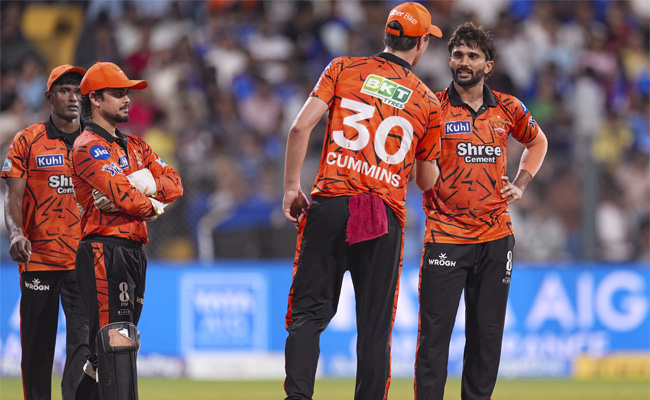
Mumbai (PTI): Ryan Rickelton's whirlwind unbeaten ton was overshadowed by Heinrich Klaasen's unbeaten 65 as Sunrisers Hyderabad defeated Mumbai Indians by six wickets in an IPL match here on Wednesday.
Chasing an imposing 244-run target, Travis Head (76 off 30) and Abhishek Sharma (45 off 24) shared 129 runs for the opening wicket to set the platform for SRH.
Klaasen (65 not out off 30 balls) then displayed his all-round hitting abilities to guide SRH home with the help of Nitish Kumar Reddy (21) and Salil Arora (30 not out off 10) in 18.4 overs.
Earlier, Rickelton's knock powered MI to 243 for five.
MI rode on a 93-run stand between Rickelton (123 not out off 55 balls) and Will Jacks (46 off 22) in 7.1 overs for the opening stand to power the side.
MI skipper Hardik Pandya scored a valuable 31 off 15 balls before being dismissed.
Praful Hinge (2/54), Eshan Malinga (1/29), Sakib Hasan (1/39) and Nitish Kumar Reddy (1/31) were the wicket-takers for SRH.
Brief Scores:
Mumbai Indian: 243 for 5 in 20 overs (Ryan Rickelton 123 not out; Praful Hinge 2/54).
Sunrisers Hyderabad: 249 for 4 in 18.4 overs (Travis Head 76, Heinrich Klaasen 65 not out; AM Ghazanfar 2/51).