BJP gave 33 of 68 tickets in Jharkhand polls to members of political families: Congress
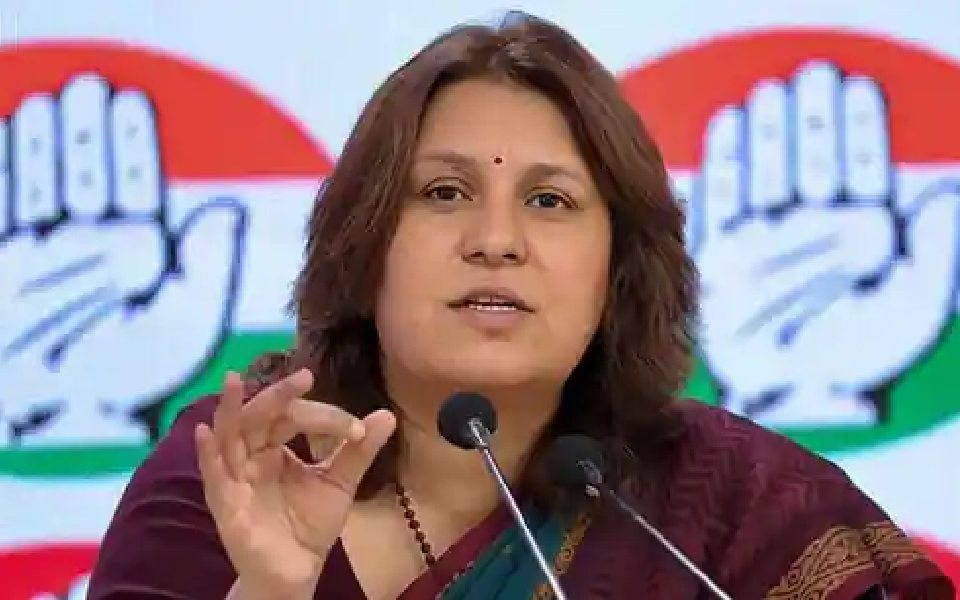
Ranchi, Nov 4: Launching a scathing attack on Prime Minister Narendra Modi's 'Pariwarwaad' remark, Congress spokesperson Supriya Shrinate on Monday claimed that the BJP itself indulged in dynastic politics, and gave out tickets for 33 of the 68 seats it is contesting in Jharkhand assembly elections to those belonging to political families.
The BJP is contesting 68 of the 81 assembly seats in the state, leaving the rest for its allies. PM Modi, during an election rally in Garhwa earlier in the day, said that the JMM, Congress and RJD believe in 'Pariwarwaad' (dynastic politics).
Addressing reporters here, Shrinate said, "The BJP in Jharkhand has given 33 out of 68 tickets to those who come from political families. For example, former Union minister Arjun Munda's wife, former Jharkhand CM Raghubar Das's daughter-in-law and Champai Soren's son were given tickets. So, the BJP has no right to say anything about 'Pariwarwaad'."
She also alleged that the central government is sitting over Jharkhand's Rs 1.36 lakh crore dues, which could have accelerated the state's development if released.
She claimed that the alliance government in Jharkhand has worked for all sections of the society and its report card of five years is full of achievements.
"Around 57 lakh women of the state are being given Rs 1,000 under Maiyan Samman Yojana, which will be increased to Rs 2,500 after formation of the alliance government here again," she said.
Shrinate said that around 42 lakh consumers are availing benefits of 200 units of free electricity and their power dues have also been waived. Similarly, farm loans of around 4.5 lakh farmers have been waived.
She said that Congress president Mallikarjun Kharge would be in Jharkhand on Tuesday and present the roadmap for Jharkhand's further development.
Let the Truth be known. If you read VB and like VB, please be a VB Supporter and Help us deliver the Truth to one and all.
Sujit Nair raises concerns over speculation of DMK-AIADMK understanding to block TVK
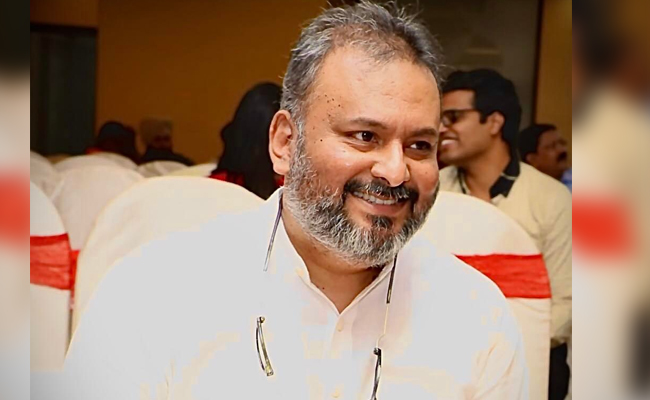
Chennai: Journalist and political commentator Sujit Nair has expressed concern over speculation that the Dravida Munnetra Kazhagam and the All India Anna Dravida Munnetra Kazhagam could explore a post-poll understanding to prevent Vijay-led Tamilaga Vettri Kazhagam from forming the government in Tamil Nadu.
In a social media post, Sujit Nair said the election verdict in Tamil Nadu reflected a clear public demand for political change and argued that the mandate should be respected irrespective of political preferences.
Referring to reports and political discussions surrounding a possible understanding between the DMK and AIADMK, he said he hoped such developments remained only speculative conversations and did not turn into reality.
Nair stated that if such an alliance were to take shape, it would raise serious questions about ideological politics in the country. He said TVK had emerged through a democratic electoral process and that the legitimacy to govern in a parliamentary democracy comes from the people’s verdict.
According to him, attempts to prevent an electoral winner from forming the government through unexpected political arrangements may be constitutionally valid, but many people could view them as politically opportunistic.
He further said that such a move could particularly affect the political image of the DMK, which has historically projected itself around ideology, social justice and opposition politics. Nair said that in ideological terms, the DMK appeared closer to TVK than to the AIADMK, and joining hands with its long-time political rival only to remain in power could weaken its broader political narrative.
He added that the same questions would apply to the AIADMK as well, as the party had spent decades positioning itself against the DMK and such an arrangement could create discomfort among its cadre and supporters.
Drawing a comparison with Maharashtra politics in 2019, Nair said he had expressed similar views when the Shiv Sena formed an alliance with the Indian National Congress and the Nationalist Congress Party after the Assembly elections.
He said post-poll alliances between long-standing political rivals often create a public perception that ideology and electoral mandates become secondary when political power equations come into play.
Nair also said such developments increase public cynicism towards politics and reinforce the belief among voters that ideology is often sidelined after elections.
He maintained that the Tamil Nadu verdict was emphatic and said respecting both the spirit and substance of the mandate was important for the credibility of democratic politics.