BJP govt at Centre fighting with everyone, alleges Kejriwal
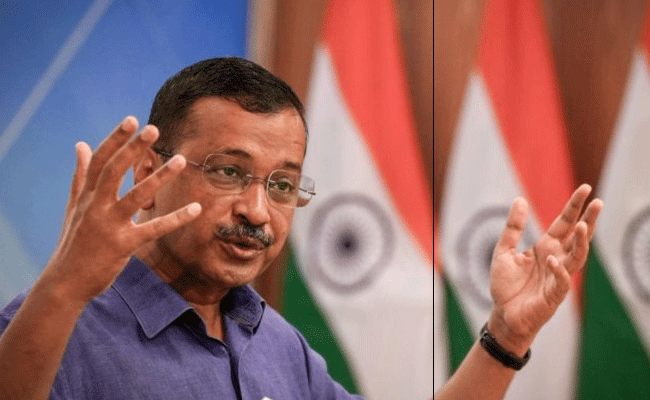
New Delhi (PTI): Delhi Chief Minister Arvind Kejriwal on Saturday accused the BJP government at the Centre of "fighting with everyone", including states, judges, farmers as well as traders.
Citing a news report on the Collegium system of appointment of judges becoming a major flashpoint between the Supreme Court and the Centre, Kejriwal advised the Narendra Modi government not to meddle in others' work.
"Why does the central government fight with everyone? With judges, Supreme Court, state governments, farmers and traders? The country will not progress by quarrelling with everyone. Do your job and let others do theirs. Don't interfere in other's work," Kejriwal said in a tweet in Hindi.
The AAP government in Delhi is involved in a running battle with the Centre-appointed Lt Governor over a range of governance and jurisdiction-related matters.
Last month, Kejriwal along with Deputy Chief Minister Manish Sisodia and AAP MLAs marched to Raj Niwas over an alleged delay in approving his government's proposal to send school teachers to Finland for training.
He also accused the Centre of using the Enforcement Directorate (ED) that recently filed a chargesheet in the liquor scam case in Delhi of using the agency to "topple governments and buy MLAs".
The Kejriwal government has challenged the GNCTD (Amendment) Act in the Supreme Court that gives more power to the LG in Delhi. The top court is yet to pronounce a decision.
Kejriwal on Thursday criticised the GNCTD Amendment Act brought by the Centre in 2021 and hoped that the Supreme Court will declare it unconstitutional.
Constitution and the law state that LG is bound by the aid and advice of the council of ministers. This means that the files should not go to the LG, he had said in a press conference.
Let the Truth be known. If you read VB and like VB, please be a VB Supporter and Help us deliver the Truth to one and all.
2019 mud attack on engineer: Maharashtra court sentences BJP minister Nitesh Rane to one-month jail
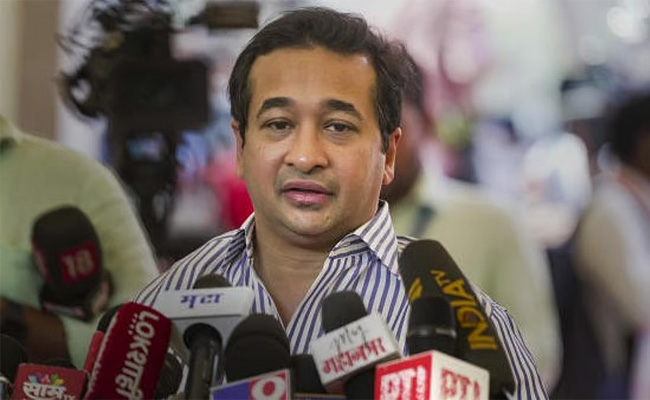
Mumbai (PTI): A court in Sindhudurg on Monday convicted Maharashtra minister Nitesh Rane in a 2019 case of pouring mud on an NHAI engineer when he was in opposition, and sentenced him to one-month imprisonment, noting that lawmakers are not supposed to take the law into their hands.
Later, the court suspended Rane's sentence, allowing him time to appeal before a higher court, while acquitting 29 other accused in the case.
"Even though Rane's intention was to raise a voice against the poor quality of work and inconvenience faced by the people, he was not supposed to humiliate or insult a public servant in public," additional sessions court judge V S Deshmukh stated.
"If such incidents continue to occur, public servants would not be able to discharge their duties with dignity," the judge noted.
ALSO READ: 19-yr-old woman found hanging from tree in UP village; juvenile held
Calling the act "abuse of power", the court held that "it is the demand of time to curb such tendency".
Rane, a son of former Union minister Narayan Rane, was among 30 people charged under various offences, including rioting, assault to deter a public servant, and criminal conspiracy. He was in Congress when the incident occurred.
All the accused, including Nitesh Rane, were acquitted of these offences, as the court found insufficient evidence to support most of these claims.
However, the court found Nitesh Rane guilty of an offence under section 504 (intentional insult meant to provoke a breach of public peace) and sentenced him to one month's jail.
Rane, then a Congress MLA, had called the Sub-Divisional Engineer of the National Highway Authority, Prakash Shedekar, to a bridge over the Gad river in Kankavli on July 4, 2019, for inspecting the work to widen the Mumbai-Goa Highway.
According to the prosecution, Nitesh Rane and his followers, frustrated by the poor quality of the roadwork and waterlogging, confronted the engineer. They poured muddy water on Shedekar and forced him to walk through slush in public.
The court, after perusing the evidence on record, noted that the informant (victim) was holding a high post in the National Highway Authority.
"Despite that, he was made to walk through the muddy water in public. It would have certainly humiliated and insulted him," the court remarked.
The judge held that Rane compelling Shedekar to walk through the muddy water "was nothing but an intentional insult to the informant," and provocation which will cause him to break the public peace.