BJP has 'no genuine concern' over Karur stampede, seeks 'political gain': TN CM
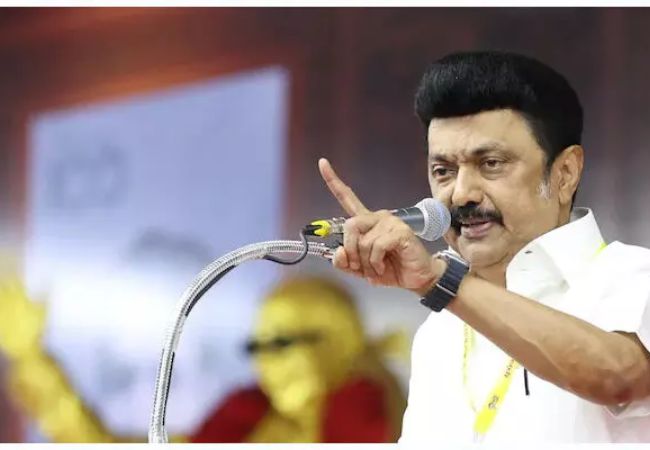
Ramanathapuram (PTI): Tamil Nadu Chief Minister M K Stalin on Friday accused the BJP and the government led by it at the Centre, of "showing no genuine concern" over the tragic stampede in Karur, and said the saffron party wanted to "capitalise" on the incident in view of next year's Assembly election.
He sought to know why a delegation of NDA MPs was sent to Karur so urgently to look into the cause of the stampede. Teams were not sent to inquire about the Manipur riots, Morbi bridge accident in Gujarat, and the Kumbha Mela stampede in Uttar Pradesh, he said.
"Of course, there's no interest or concern. It is a petty act of seeking political gain in view of the 2026 Assembly election," Stalin said at a government event here.
He alleged that the BJP, "which is used to riding on the back of others, is a parasite that survives on the blood of others." "It is using the Karur stampede to find out who it can bring under its control. Irrespective of the masks that are worn, how many slaves that are conscripted, or who is enlisted afresh, as I said earlier, Tamil Nadu is out of control for you," Stalin, who is president of the DMK, said.
He termed the BJP as a "washing machine" for those seeking to escape accountability for wrongdoings and hit out at the AIADMK for allegedly betraying the state's interest by forging electoral ties with the BJP.
When Tamil Nadu was struck by three major natural disasters, Union Finance Minister Nirmala Sitharaman neither visited nor provided any funds to the state. "But she now immediately rushes to Karur," he said.
The September 27 stampede at a rally addressed by Vijay, who heads the Tamilaga Vetri Kazhagam, left 41 dead.
Also, the Chief Minister alleged that RSS made an attempt on the life of former Chief Minister Kamaraj, and asserted that it was his duty to protect the people from such forces. "The mission will continue under the Dravidian model 2.0."
He accused the Centre of "failing" to prevent the frequent attacks on the Tamil Nadu fishermen by the Sri Lankan coast guard.
Retrieving the Katchatheevu islet ceded to Lanka alone would ensure a lasting solution to the fishermen issue, he said, and recalled the state Assembly resolution in this regard.
The CM inaugurated development projects worth Rs 738 crore in the district, including Thangachimadam government higher secondary school building, and hostel for college students in Paramakudi.
Let the Truth be known. If you read VB and like VB, please be a VB Supporter and Help us deliver the Truth to one and all.
Kolkata Port: Decline in number of voters during SIR brings in uncertainty in TMC bastion
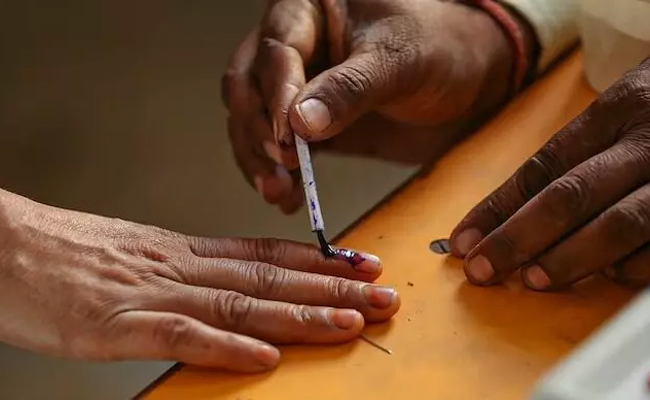
Kolkata (PTI): A sharp decline in the number of voters following the Special Intensive Revision (SIR) of electoral rolls has injected an element of uncertainty into the Kolkata Port Assembly constituency, considered a safe seat for the ruling Trinamool Congress (TMC).
The electorate in the south Kolkata constituency has dropped from 2.36 lakh in the 2021 Assembly polls to around 1.75 lakh, a fall of nearly 26 per cent, prompting political parties to closely assess its potential impact on the April 29 polling.
The TMC re-nominated senior minister and Kolkata Mayor Firhad Hakim, who has held the seat for two consecutive terms, while the BJP fielded Rakesh Singh. The Congress nominated Aquib Gulzar, and the CPI(M) put up Faiyaz Ahmad Khan, making it a four-cornered contest.
Kolkata Port, part of the Kolkata Dakshin parliamentary constituency, comprises dock areas, old business districts and densely populated neighbourhoods. Muslim voters form a significant segment of the electorate, alongside traders, transport workers and working-class Hindu families.
The reduction in voter numbers has prompted party workers across formations to scrutinise the revised rolls booth-wise to identify deletions and assess whether specific localities have been affected.
Singh’s candidature has added a twist to the contest. He had earlier contested against Hakim as a Congress candidate but is now in the fray on a BJP ticket.
Hakim won the seat in 2016 by 26,548 votes, defeating Singh, and increased his margin significantly to 68,554 votes in 2021, polling over one lakh votes.
While the TMC has expressed confidence in retaining the seat, opposition parties have raised concerns over the voter list revision, alleging that names of genuine voters have been removed.
“People here know who has stood by them. Elections are decided by trust,” Hakim told PTI during a campaign event.
Singh claimed several residents had complained about missing names in the rolls, stressing the need for transparency. The CPI(M) nominee also said voters in several areas had raised similar concerns.
The constituency has remained a difficult terrain for the opposition in recent elections.
Civic issues such as sanitation, traffic congestion and declining business activity in traditional markets also feature in the campaign in the constituency, though the revised voter list has emerged as a key talking point.
Polling in the constituency will be held in the second phase on April 29, with counting scheduled for May 4.