BJP, INDIA alliance await election results: Lok Sabha polls vote counting begins at 8:00 AM
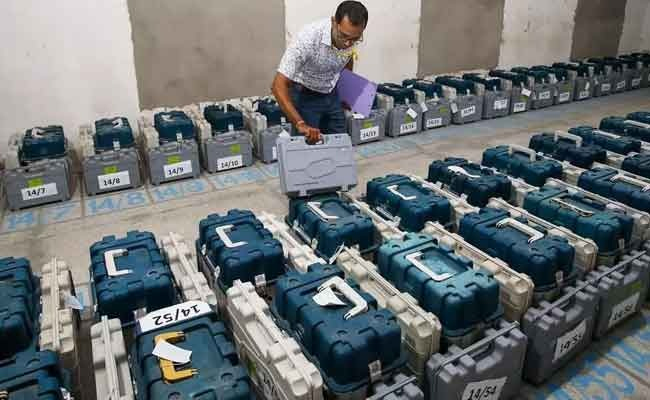
New Delhi: Following an extensive six-week process spanning seven phases of voting, the ballots for the Lok Sabha elections 2024 are to be counted today. With the counting of votes scheduled to begin at 8 AM under stringent security measures, the nation awaits the outcome of this crucial electoral exercise.
Spanning from April 19 to June 1, the voting process engaged citizens across 543 Lok Sabha seats, each contributing to the selection of a representative for the Lower House of the Parliament. A majority of 272 seats is required for any party or coalition to form the government.
This year's Lok Sabha election stands as the second-longest electoral process since India's inaugural election in 1951-52.
Traditionally, the emergence of trends occurs within the first hour of counting, with definitive results anticipated by the afternoon. The counting of Electronic Voting Machine (EVM) votes will commence 30 minutes subsequent to the tabulation of postal ballots, as confirmed by election officials.
The Bharatiya Janata Party (BJP) has set ambitious goals for itself, aspiring to secure 370 seats, while aiming for a formidable 400-seat mark for the National Democratic Alliance (NDA).
Under the leadership of Prime Minister Narendra Modi, the BJP conducted an extensive campaign, with PM Modi himself participating in over 200 public engagements, encompassing rallies and roadshows.
In opposition, the Indian National Congress, grappling with electoral setbacks and a series of defections, aligns itself with the INDIA bloc, poised to challenge the BJP's dominance. The INDIA bloc's campaign has been characterized by joint rallies featuring prominent opposition leaders.
Let the Truth be known. If you read VB and like VB, please be a VB Supporter and Help us deliver the Truth to one and all.
Vijayanagara: One dead, 12 injured as trucks hits their vehicle from behind on NH 50
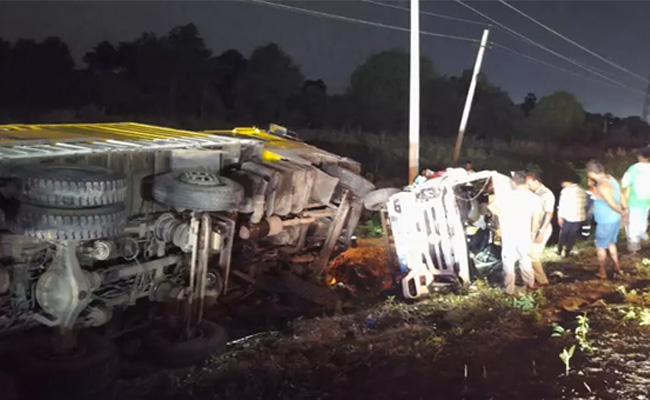
Vijayanagara: One man was killed and 12 others were injured after a truck hit vehicle they were traveling in on the National Highway 50 stretch on the outskirts of Koodligi in the district.
The accident victim, Madhu (27), is learned to have been an employee of Reliance Digital from Andhra Pradesh.
The vehicle was reportedly traveling from Bengaluru to Koodligi and the passengers are learned to have been seriously injured following the collision with the truck, which was found to have a Maharashtra registration.
Koodligi Deputy Superintendent of Police (DySP) Mallesh Dodmani and Circle Inspector Prahlad Channagiri arrived at the accident spot on being informed of the accident.
The police officers and locals rescued the injured passengers and got them shifted to the Koodligi Government Hospital. Some of the passengers were reportedly taken to the Ballari Trauma Care Centre for further treatment.
A case has been registered at the Koodligi Police Station and the officers are investigating the incident.