BJP Lawmaker Wants House Under PM's Scheme For "Homeless" Lord Ram
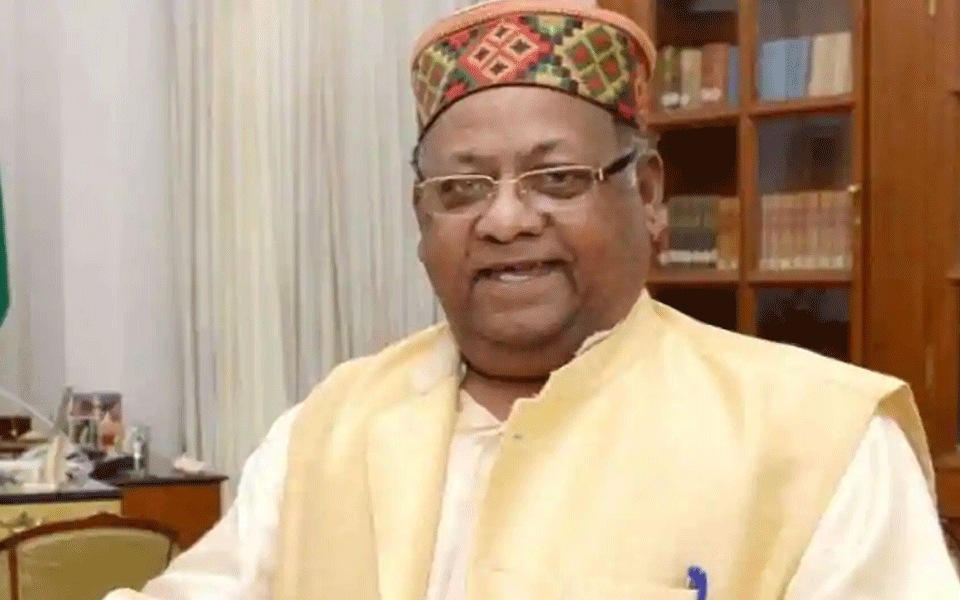
NEW DELHI, Dec 28: A house for Lord Ram is an exigency for a BJP parliamentarian from Uttar Pradesh who has written to the state administration saying it is its duty to provide shelter to the "homeless". Hari Narayan Rajbhar has asked for a house to be allocated to the deity under the Prime Minister's housing scheme.
Mr Rajbhar, 68, has written to the District Magistrate of Ayodhya, home to a decades-old dispute over the site of a demolished mosque that many Hindus believe was built on the ruins of a temple marking the birthplace of Lord Ram.
Ram should be given a house under the government's "Pradhan Mantri Awas Yojana" as "Ram Lalla has been living in a tent, exposed to the harsh weather," the lawmaker writes.
Thousands of worshippers come to the site to pray to idols of Lord Ram or "Ram Lalla (infant Ram)" in a makeshift temple set up after the mosque was razed by Hindu activists in 1992.
Mr Rajbhar is the ruling party's MP from Ghosi and was considered something of a giant-killer when he won against Mayawati's party man in 2014 in his first Lok Sabha election.
Demands for a grand temple at the disputed site have been loud as the 2019 national election, due by May, draws near.
Members of the BJP and its allies have called for a special order to enable the building of the temple, which has been a key campaign promise of the BJP over the years.
The Supreme Court will hear the Ayodhya case in January. BJP president Amit Shah has said while the temple remains the party's priority, the government will not bring an ordinance as the case is in the court.
Courtesy: www.ndtv.com
Let the Truth be known. If you read VB and like VB, please be a VB Supporter and Help us deliver the Truth to one and all.
AIITA welcomes Karnataka’s ban on obscene songs in school events

Bhatkal: The Karnataka unit of the All India Ideal Teachers Association (AIITA) has welcomed the Karnataka government’s decision to strictly ban school children from dancing to obscene songs during educational and cultural programmes in government, aided, and private schools across the state.
AIITA Karnataka State President M. R. Manvi congratulated the government for taking what he termed an important step to preserve the sanctity of education.
“Such decisions to safeguard the dignity of school children and uphold the values of education are the need of the hour. This rule should not be limited to government schools alone but must be strictly implemented in all private educational institutions as well,” he said.
He further urged the government to address other concerns within school programmes.
“The government should not only prohibit obscene dances in the name of school anniversaries, but also ensure that plays and dialogues that incite religious hatred are avoided. Schools should be centres of harmony, not platforms for spreading hatred,” he added.
According to a recent circular issued by the Department of School Education and Literacy, obscene dances are adversely affecting the mental health and moral values of students.
In this regard, schools have been advised to use songs that promote nationalism, positive thinking, the greatness of Kannada culture, and value-based traditions instead of inappropriate content during programmes.
The circular also emphasises that students should be dressed in decent attire.
AIITA also backed the department’s warning that disciplinary action would be taken against head teachers if such guidelines are violated. The association has further demanded that district Deputy Directors of Public Instruction strictly monitor the implementation of these rules.