BJP member raises concerns over code 'GAY' for Gaya airport
govt says airport codes considered permanent
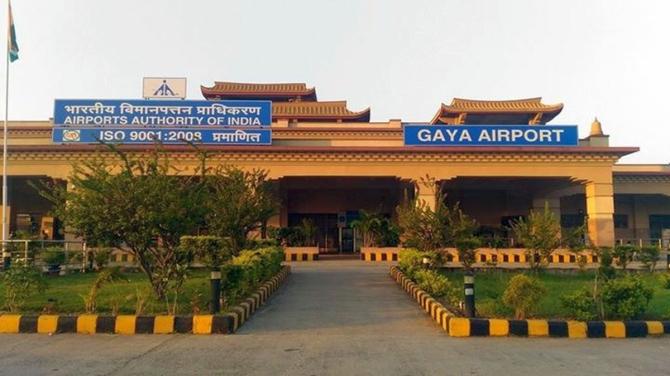
New Delhi, Aug 5 (PTI): A BJP member in Rajya Sabha has raised concerns about 'GAY' as the IATA identifier code for Gaya international airport in Bihar.
In response, Minister of State for Civil Aviation Murlidhar Mohol in a written reply said the three-letter airport codes once assigned are considered permanent and are altered only under exceptional circumstances, usually involving air safety concerns.
The three-letter airport codes, also known as IATA location identifiers, are assigned by the International Air Transport Association (IATA) to facilitate identification of airports across various travel-related systems and processes.
These codes are generally assigned using the first three letters of the location's name where the airport is situated, Minister of State for Civil Aviation Murlidhar Mohol said in a written reply in the Rajya Sabha on Monday.
He also mentioned that requests for changing the code of Gaya have been received in the past by the Ministry of Civil Aviation and Airports Authority of India.
"IATA location codes are primarily intended for commercial airline operations and are issued at the request of airline operators. Air India had earlier approached IATA seeking change of the existing airport code. However, IATA has conveyed that under the provisions of IATA Resolution 763, assigned three-letter codes are considered permanent and are altered only under exceptional circumstances, usually involving air safety concerns," Mohol said.
The minister's responses were to queries from BJP member Bhim Singh on whether it is a fact that the Gaya international airport's code is 'GAY', which people consider socially and culturally offensive and uncomfortable.
He also asked whether the government is considering to change the code name 'GAY' to a more respectful and culturally appropriate code.
Let the Truth be known. If you read VB and like VB, please be a VB Supporter and Help us deliver the Truth to one and all.
Right to vote under threat, must be made fundamental right: Cong's Jairam Ramesh
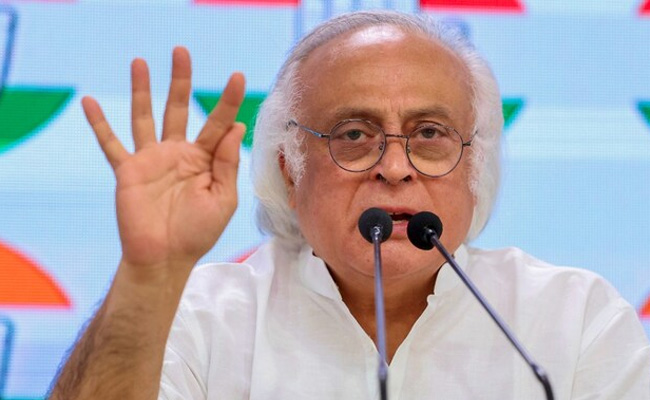
New Delhi (PTI): Congress leader Jairam Ramesh alleged on Thursday that the right to vote is under threat and the time has come when it should be made a fundamental right for citizens.
Speaking with reporters, Ramesh lashed out at Chief Election Commissioner (CEC) Gyanesh Kumar, saying the Election Commission (EC) has never been as compromised as it has been under him.
"The rot started under his predecessor. This man is a player and not a neutral observer," the Congress leader said, slamming Kumar.
Kumar is completely compromised and has become a player in elections, he alleged.
"Home Minister Amit Shah had talked about three Ds -- detect, delete and deport. So we want to know how many non-Indian citizens have been detected, how many have been deleted and how many have been deported," Ramesh said, adding that the right to vote is now under threat.
On opposition parties submitting a fresh notice in the Rajya Sabha, seeking to move a motion for the CEC's removal, the Congress leader said they will continue to make efforts for Kumar's removal as he is "compromised".
Ramesh also batted for the right to vote to be recognised as a fundamental right.
"I believe that the time has come that the right to vote should be made a fundamental right. It is a statutory right, it is not a fundamental right. Fundamental rights are justiciable," he said.
The former Union minister said this was discussed in the Constituent Assembly, but it was eventually decided that it should be made part of the Constitution.
B R Ambedkar and Jagjivan Ram had warned that in the future, governments might try to disenfranchise voters, he added.
"Once and for all, include the right to vote as a fundamental right for Indian citizens," Ramesh asserted.