BJP MLAs 'purify' Ambedkar statue at assembly with 'Gangajal' after TMC protest led by Mamata
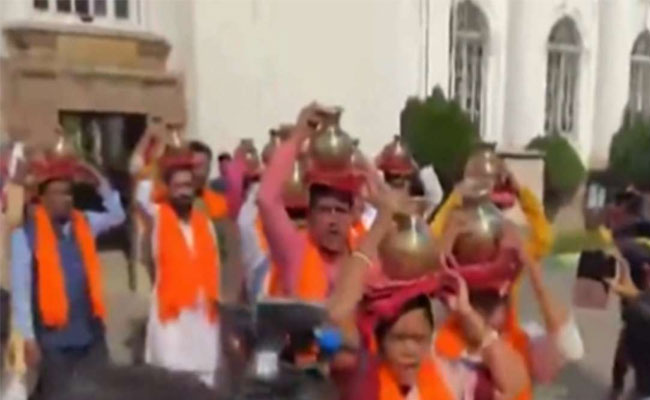
Kolkata (PTI): BJP MLAs on Friday washed the statue of BR Ambedkar on the West Bengal assembly premises with 'Gangajal' to "purify" it after TMC legislators led by Chief Minister Mamata Banerjee staged a demonstration there, demanding central funds for the state.
Over 30 BJP legislators, including leader of opposition Suvendu Adhikari, took turns in pouring water from the Ganga on the statue, and the spot where the TMC MLAs demonstrated over two days.
"The MLAs of a party that is looting the state and murdering democracy tainted the holy statue of Ambedkar with their presence. They have already been rejected by the people of the state, and are clinging to power with the help of the police," said Adhikari.
Speaker Biman Bandyopadhyay said he would ask the House's marshalls to seek Adhikari's response about such an activity.
"I would like to know why such an activity was undertaken. We will ask everyone not to use the assembly premises for demonstration without the consent of the speaker's office," he said.
The assembly campus witnessed a shouting match over the last two days with TMC and BJP MLAs holding demonstrations, often calling each other "chor" or thief.
TMC's deputy chief whip in the assembly Tapas Roy said that by washing the statue of Ambedkar, BJP atoned its sins "of atrocities committed on Dalits".
He said that his party took permission from the speaker for the two-day agitation.
Meanwhile, the ruling TMC also announced that it will hold protests on Saturday against alleged atrocities against the weaker sections of society under the "saffron ecosystem".
"Did the BJP ever show respect to Dalits? A BJP leader even made disparaging comments against a popular tribal leader such as Birbaha Hansda. Now, they are raising the outrageous claim that BR Ambedkar's statue was sullied by the presence of our legislators, who include women, tribals and OBCs. This is an insult to them," state minister Chandrima Bhattacharya said.
Reacting to the charges, BJP chief whip Manoj Tigga told PTI that people know how TMC looks down upon tribals.
"This was evident from the offensive comments made by a TMC leader against the country's first tribal president, Droupadi Murmu. Also, crimes against women and deaths of Dalits are on the rise in West Bengal," he claimed.
Let the Truth be known. If you read VB and like VB, please be a VB Supporter and Help us deliver the Truth to one and all.
4 held for sexually assaulting woman, girl on moving bus after social media alert in UP's Agra

Agra (UP) (PTI): Four people were arrested, after a prompt response by police following a social media alert, for allegedly sexually assaulting a woman and a girl inside a moving bus here, officials said on Tuesday.
According to an official police statement, at 12:27 am on April 27, information was received on the social media platform X about an incident of sexual assault on a bus travelling from Kanpur to Ahmedabad, which was approaching Namner crossing in Agra.
Acting under the direction of Police Commissioner Deepak Kumar, the Agra Police social media team immediately alerted the Rakabganj police station within minutes and coordinated with the victims to confirm the incident and obtain the exact location, it stated.
Police teams launched intensive checking at Namner crossing and intercepted the bus as it reached the spot. The four accused involved in the incident were apprehended on the spot, and legal action was initiated against them, the statement said.
The police said the swift response and coordination between the social media team and field units ensured timely action, bringing relief to the victims and other passengers, who expressed gratitude towards the police, it added.