BJP MP Sharad Tripathy thrashes party MLA with shoes; Watch video
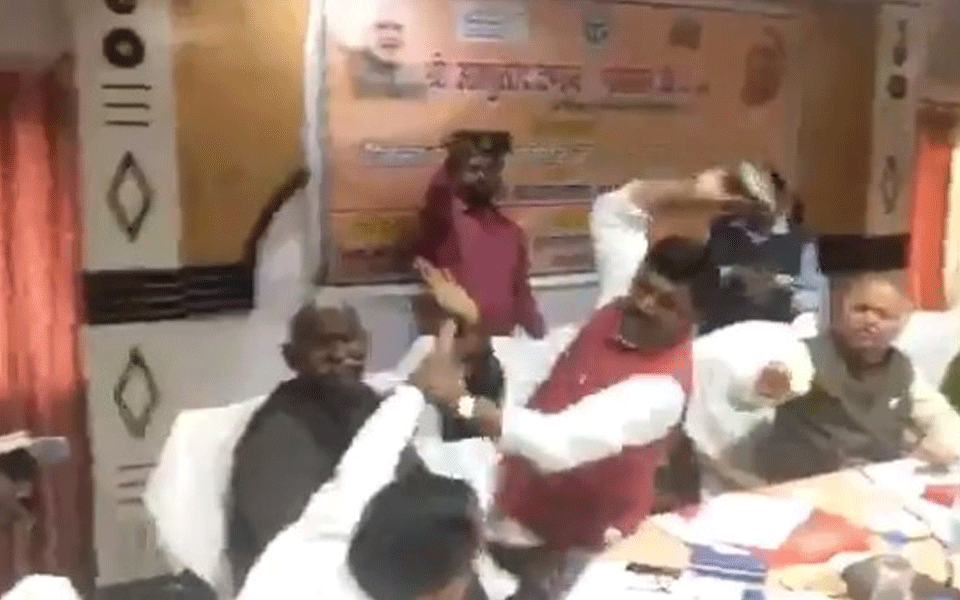
Lucknow: BJP MP Sharad Tripathi on Wednesday stirred a controversy after getting into a heated exchange which eventually ended in a physical attack on MLA of his own party Rakesh Singh. The incident happened during District Action Plan Committee at Collectorate office where many high ranking officials were present.
In a video which has since gone viral, the MP and the MLA are seen arguing on whose name should be displayed on a foundation stone of a project in the constituency. The argument reached as far as the MP took off his shoes and started thrashing Rakesh Singh with it.
The action also called for retaliation from Singh and both started assaulting each other physically before the cops present in the meeting intervened.
Just before the fight, Tripathi is seen saying angrily “I am the MP” to which Singh replied “I am the local MLA” Tripathy further said “I have produced many MLAs like your” which prompted both the BJP leaders to physical fight.
Supporters of Singh then gathered outside the office of District Magistrate in Sant Kabir Nagar where Tripathy has reportedly locked himself.
Soon after the video went viral, social media is abuzz with troll and comments on the video and is being widely circulated.
Here's the video:
Let the Truth be known. If you read VB and like VB, please be a VB Supporter and Help us deliver the Truth to one and all.
Austrian police detain suspect in case of rat poison found in baby food jars on supermarket shelves
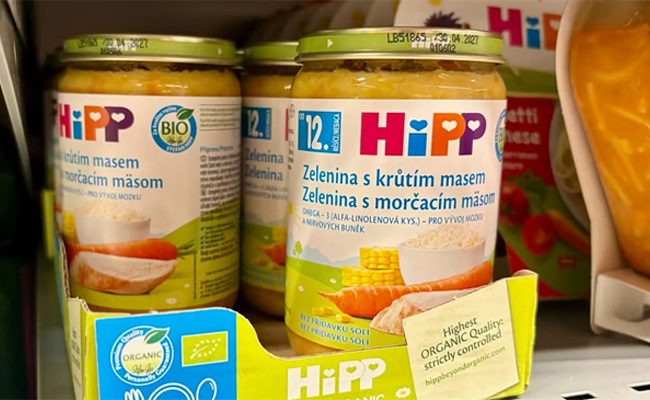
Vienna (AP): Police in eastern Austria say a 39-year-old suspect has been arrested after rat poison turned up in some HiPP baby food jars on supermarket shelves in central Europe.
HiPP, which recalled some of its baby food jars in Austria, Slovakia and the Czech Republic after the case came to light last month, said in a statement Saturday it was “greatly relieved” by the arrest, and would provide further updates as verified details come in.
The Burgenland State Criminal Police Office, under the direction of prosecutors, said a probe was launched after poison turned up in a baby food jar purchased at a supermarket in the city of Eisenstadt on April 18.
It said the suspect was being questioned, and that no further details would be immediately provided. The Burgenland public prosecutor's office has announced an investigation into suspected “intentional endangerment of the public.”
The Austrian Press Agency reported that an expert report on the toxicity of the poison was pending. A total of five tampered baby food jars were seized before they could be consumed, APA reported.
Authorities said previously they believe the tampering occurred in 190-gram (6.7-ounce) jars of baby food made with carrots and potatoes for 5-month-olds that were sold from SPAR supermarkets in Austria.
HiPP responded by recalling all of its baby food jars sold at SPAR supermarkets — which include SPAR, EUROSPAR, INTERSPAR and Maximarkt stores — in Austria as a precaution. Vendors in Slovakia and the Czech Republic also removed all of the brand's baby jars from sale.
The company said the recall was not due to any product or quality defect on its part, and said the jars left its facility in “perfect condition.”
Police said a customer at the time of the discovery had reported that a jar appeared to have been tampered with, but no one had consumed the baby food.