BJP never regarded those disagreeing with it as 'anti-national', 'enemies': L K Advani
New Delhi, Apr 4: Veteran BJP leader L K Advani said Thursday that his party has never regarded those who disagreed with it politically as "anti-national" or "enemies" but only as adversaries, remarks which come at a time when top BJP leaders have used anti-national barbs against political rivals on the issue of national security.
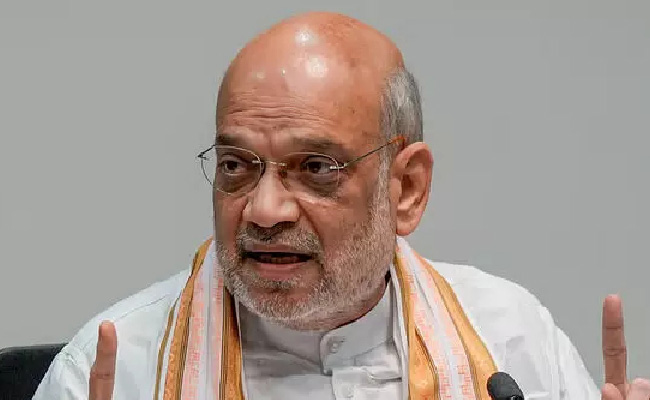
Advani, who has been replaced by party president Amit Shah in Gandhinagar Lok Sabha seat, wrote a blog 'Nation First, Party Next, Self Last' ahead of the party's foundation day on April 6, in which he said, "The essence of Indian democracy is respect for diversity and freedom of expression."
In the blog, written almost five years after he posted the last piece on its web page, the 91-year-old leader said, "Right from its inception, the BJP has never regarded those who disagree with us politically as our 'enemies', but only as our adversaries."
"Similarly, in our conception of Indian nationalism, we have never regarded those who disagree with us politically as 'anti-national'. The party has been committed to freedom of choice of every citizen at personal as well as political level," he added.
His comments assume significance as top BJP leaders, including Prime Minister Narendra Modi and Shah, have been attacking opposition parties with anti-national barbs in the aftermath of Balakot air strikes.
Advani is one of the BJP founders and its longest-serving president. He has been elected from Gandhinagar Lok Sabha seat six times since 1991.
Reacting to Advani's blog, Prime Minister Narendra Modi tweeted, "Advani Ji perfectly sums up the true essence of BJP, most notably the guiding Mantra of Nation First, Party Next, Self Last.' Proud to be a BJP Karyakarta and proud that greats like LK Advani Ji have strengthened it."
While he did not offered any direct comment on his party's decision to not field him in the polls, Advani conveyed his "most sincere gratitude" to the people of Gandhinagar.
Defence of democracy and democratic traditions, both within the party and in the larger national setting, has been the "proud hallmark" of the BJP, he said adding, therefore, the BJP has always been in the forefront of demanding protection of independence, integrity, fairness and robustness of all our democratic institutions, including the media.
Electoral reforms, with special focus on transparency in political and electoral funding, which is so essential for a corruption-free polity, has been another priority for our party, Advani said.
As one of the party's founders, he said he deemed it his duty to share his reflections with the people of India, and more specifically with the millions of BJP workers, "both of whom have indebted me with their affection and respect.''
Asserting that the triad of 'satya' (truth), 'rashtra nishtha' (dedication to the nation) and 'loktantra' (democracy, both within and outside the party) guided the BJP's struggle-filled evolution, Advani said the sum total of all these values constitute cultural nationalism and good governance.
"The heroic struggle against the Emergency rule was precisely to uphold the above values," he said.
Commenting on the Lok Sabha polls, he said elections are an occasion for honest introspection by all the stake-holders in Indian democracy - political parties, mass media, authorities conducting the election process and, above all, the electorate.
Advani also recalled his long association with the Rashtriya Swayamsevak Sangh (RSS) and said serving the motherland has been his passion and mission ever since he joined it at the age of 14 years.
The former deputy prime minister was made a member of BJP's 'Margdarshak Mandal' (group of mentors) along with another senior leader Murli Manohar Joshi, soon after Modi came to power in 2014 and Shah took over as the party president. This was seen as easing out of these leaders from active roles by the new party leadership.
Let the Truth be known. If you read VB and like VB, please be a VB Supporter and Help us deliver the Truth to one and all.
Vote rigging charges against MLA DN Jeevaraj: HC grants interim stay on FIR
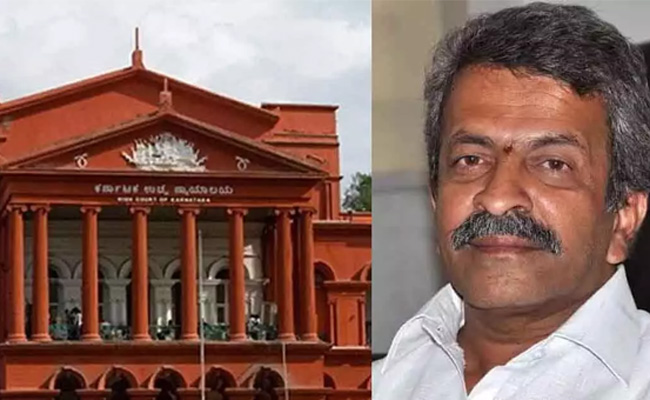
Bengaluru: Karnataka High Court has issued an interim stay on the FIR against Sringeri legislator DN Jeevaraj, who is accused of vote rigging.
A vacation bench consisting of Justice V Sreeshananda heard on Tuesday the BJP MLA’s plea urging the HC to quash the case against him.
After hearing the arguments, the judge granted an interim stay on the case against Jeevaraj.
The hearing of the case has been adjourned to Thursday, May 7.