BJP received Rs 276.45 crore from electoral trusts in 2019-20, Congress Rs 58 crore: ADR
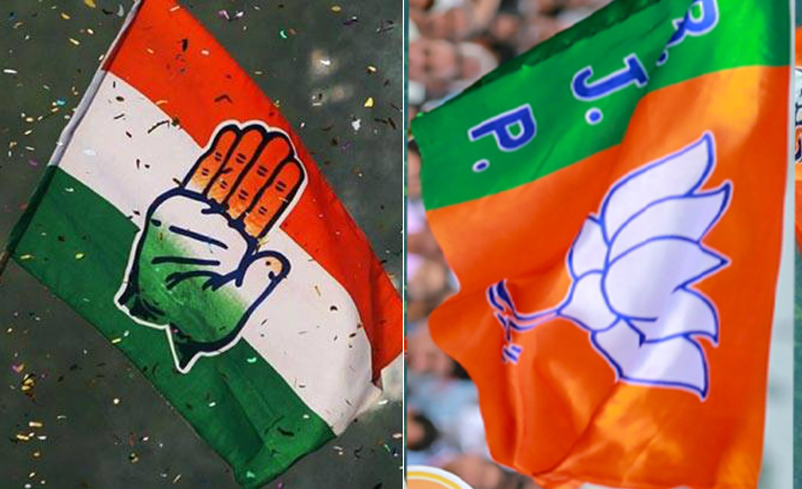
New Delhi: The BJP received Rs 276.45 crore or 76.17 per cent of total donations given to all political parties from electoral trusts in 2019-20, according to a report by poll rights group ADR (Association for Democratic Reforms).
The BJP was followed by the Congress which received Rs 58 crore or 15.98 per cent of total donations received by all parties from all seven electoral trusts, it said.
The report that analysed contribution reports of electoral trusts for financial year 2019-20 said top donors to the electoral trusts included JSW, Apollo Tyres, Indiabulls, Delhi International Airport and DLF groups.
JSW Steel Ltd. contributed the highest amount worth Rs 39.10 crore among all donors of electoral trusts, followed by Apollo Tyres Ltd. with Rs 30 crore and Indiabulls Infraestate Ltd which contributed Rs 25 crore to various trusts.
Eighteen individuals contributed to electoral trusts in 2019-20. Ten individuals contributed Rs 2.87 crore to Prudent Electoral Trust, four individuals contributed Rs 5.50 lakhs to Small Donations Electoral Trust and four individuals gave a total of Rs 1 lakh to Swadeshi Electoral Trust, the report said.
"BJP received Rs 276.45 crore or 76.17 per cent of the total donations received by all political parties from electoral trusts followed by Congress which received Rs 58 crore or 15.98 per cent of the total donations received by all parties from all seven electoral Trusts. Other 12 political parties including AAP, SHS, SP, Yuva Jan Jagriti Party, Jannayak Party, JDU, JMM, LJP, SAD, INLD, JKNC and RLD received a total of Rs 25.4652 crore collectively," the report said.
The Election Commission had circulated guidelines for submission of contribution reports of electoral trusts to submit an annual report containing details of contributions received by the electoral trusts and disbursed by them to political parties in the interest of transparency.
These guidelines were issued to seven electoral trusts formed after January 2013 -- Satya Electoral Trust, Pratinidhi Electoral Trust, People's Electoral Trust, Progressive Electoral Trust, Janhit Electoral Trust, Bajaj Electoral Trust and Janpragati Electoral Trust.
Fourteen out of the 21 electoral trusts, registered with the Central Board of Direct Taxes, submitted their contribution details in 2019-20 to the EC of which only seven declared to have received any donations during that year.
Let the Truth be known. If you read VB and like VB, please be a VB Supporter and Help us deliver the Truth to one and all.
Raj Thackeray questions need for NEET, demands Pradhan’s resignation
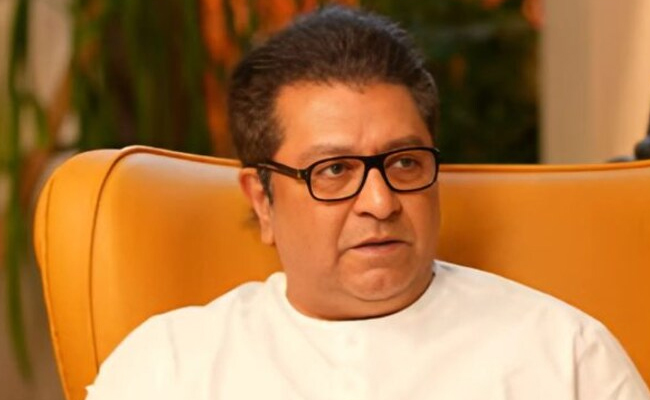
Mumbai (PTI): Maharashtra Navnirman Sena (MNS) president Raj Thackeray on Thursday questioned the need for NEET-UG and demanded that Prime Minister Narendra Modi seek the resignation of Union Minister of Education Dharmendra Pradhan.
Thackeray's demand comes amid massive protests over the cancellation of the examination following allegations of paper leak.
The MNS chief said the government is so “obsessed” with bringing everything under a centralised authority that it appears to make no difference if the lives of hundreds of thousands of people are thrown into “disarray”.
In a post on X, Thackeray said that for several years now, a single individual (Pradhan) has remained entrenched in the position of Union education minister. Despite numerous “irregularities” and “scandals” within the NEET framework during his tenure, this “gentleman” continues to occupy the post, he said.
“One wonders: has he been rewarded with this continued tenure because he is so zealously pursuing the agenda of imposing the Hindi language across the entire nation? I earnestly appeal to the Prime Minister: please demand the immediate resignation of this Minister of yours, who has repeatedly toyed with the lives and future of 22 lakh students,” Thackeray said.
The National Testing Agency on Tuesday cancelled the NEET (UG) 2026 exam held on May 3 amid allegations of paper leak, with the government asking the CBI to carry out a comprehensive inquiry into the “irregularities”. The examination for students seeking admission to undergraduate courses in medical colleges will now be held afresh on dates to be notified separately.
Thackeray said the Centre continues its tradition of creating “chaos” in every matter and holding the public to ransom. The “NEET paper leak” has proved this once again, he said.
Thackeray sought to know what the Centre did when it found out the alleged malpractice. It merely cancelled the examination and ordered a CBI inquiry, he said.
In 2024, a CBI inquiry was ordered in a similar case, but nothing substantial was achieved through it, he said.
The government projects an air of having fulfilled its duty in all of this. But what about the lives of 22 lakh students and their families, who have been left hanging in the balance, he asked.
Thackeray said fundamentally, there was no need to “impose” NEET (National Eligibility-cum-Entrance Test)-UG back in 2016.
“However, this government’s obsession with bringing everything under a single, centralised authority is so intense that, to them, it seems to make no difference if the lives of hundreds of thousands of people are thrown into disarray,” he said.
The MNS chief also asked ministers within the Maharashtra government to show some “spine” and join voices with those of the southern states and oppose this system.
Thackeray said leaders from the southern states have voiced their opposition in much the same way as he. Tamil Nadu Chief Minister Vijay has also demanded the cancellation of NEET. The reason for this is that the five southern states, combined with Maharashtra, collectively possess over 350 medical colleges, whereas the large states in the north have only 180 medical colleges, he said.
Consequently, this persistent push that began in 2016 is essentially an attempt to facilitate the “entry of students from the north into medical colleges in the south”, alleged Thackeray. To ensure this, the largest network of coaching classes has been established in the northern states, he claimed.