BJP slams Pawar for dubbing death threat to PM a ploy to garner sympathy
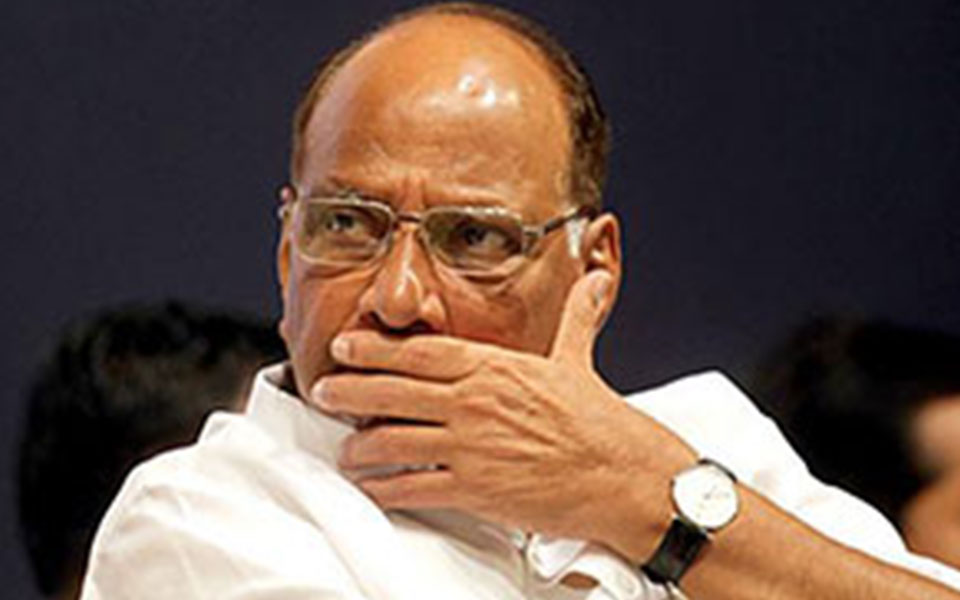
New Delhi, June 11: The BJP on Monday slammed Nationalist Congress Party (NCP) chief Sharad Pawar for raising doubts on the veracity of the death threat letter to Prime Minister Narendra Modi and dubbed his remarks over the issue a "new low in insensitivity".
"If the Prime Minister gets a death threat, the entire country should condemn it in one voice. This country has lost two Prime Ministers. Both were victims of violence. Even though they (Congress and opposition parties) are not understanding the sensitivity," Union Minister Prakash Javadekar told reporters here.
He said that if a senior leader like Sharad Pawar describes the threat as a ploy to garner sympathy, "it is new low in insensitivity" in politics.
"This is a serious threat. They have divulged their plan how to kill the Prime Minister... Where he can be attacked, how can a road show be targeted.
"Rather than questioning those who wrote this letter, they are questioning the letter coming to the fore. The Prime Minister is a keepsake (amaanat) of the nation. Even if a Leader of Opposition gets such death treats, the government takes it seriously."
At such times, parties should do politics seriously, he said. "If they do such kind of politics, it is bad for democracy."
Addressing a party rally in Pune on Sunday, Pawar said: "The BJP has realised that they are losing popular support. In order to gain sympathy, the BJP is now playing the threat letter card. However, I am sure that the people will not fall prey to such tactics.
"I have spoken to a senior retired police officer who told me that when such letters come they do not go to the media but to security agencies which make sure that adequate security measures are taken."
Let the Truth be known. If you read VB and like VB, please be a VB Supporter and Help us deliver the Truth to one and all.
Right to vote under threat, must be made fundamental right: Cong's Jairam Ramesh
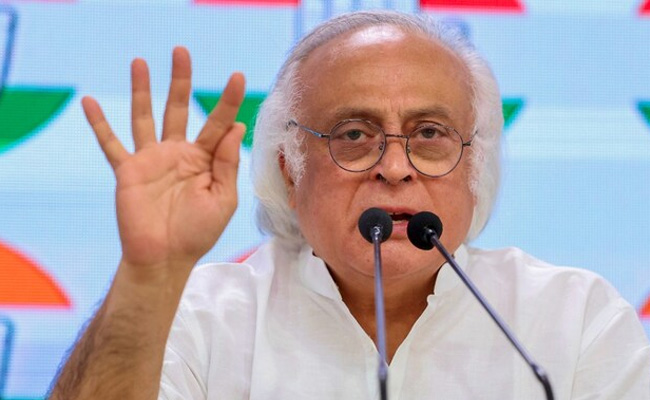
New Delhi (PTI): Congress leader Jairam Ramesh alleged on Thursday that the right to vote is under threat and the time has come when it should be made a fundamental right for citizens.
Speaking with reporters, Ramesh lashed out at Chief Election Commissioner (CEC) Gyanesh Kumar, saying the Election Commission (EC) has never been as compromised as it has been under him.
"The rot started under his predecessor. This man is a player and not a neutral observer," the Congress leader said, slamming Kumar.
Kumar is completely compromised and has become a player in elections, he alleged.
"Home Minister Amit Shah had talked about three Ds -- detect, delete and deport. So we want to know how many non-Indian citizens have been detected, how many have been deleted and how many have been deported," Ramesh said, adding that the right to vote is now under threat.
On opposition parties submitting a fresh notice in the Rajya Sabha, seeking to move a motion for the CEC's removal, the Congress leader said they will continue to make efforts for Kumar's removal as he is "compromised".
Ramesh also batted for the right to vote to be recognised as a fundamental right.
"I believe that the time has come that the right to vote should be made a fundamental right. It is a statutory right, it is not a fundamental right. Fundamental rights are justiciable," he said.
The former Union minister said this was discussed in the Constituent Assembly, but it was eventually decided that it should be made part of the Constitution.
B R Ambedkar and Jagjivan Ram had warned that in the future, governments might try to disenfranchise voters, he added.
"Once and for all, include the right to vote as a fundamental right for Indian citizens," Ramesh asserted.