BJP urges EC to verify identity of burqa-clad voters during Bihar polls, RJD calls it political ploy
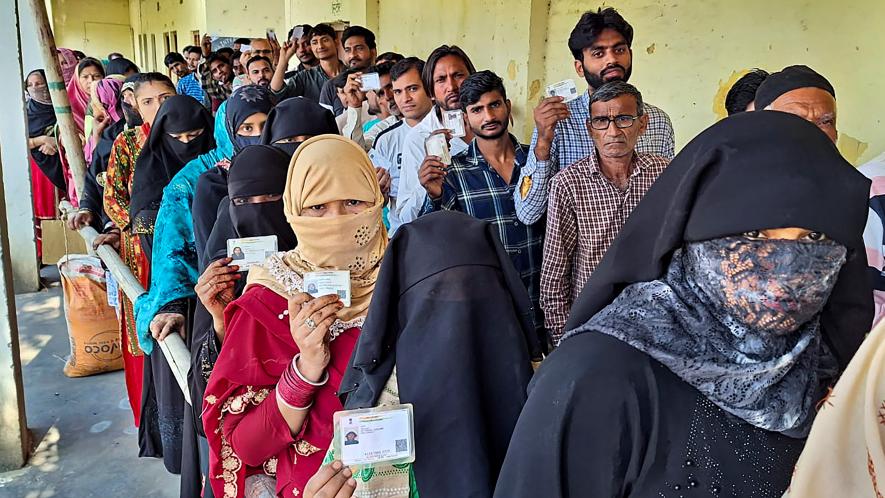
Patna (PTI): The BJP on Saturday urged the Election Commission to hold the upcoming Bihar assembly elections in one or two phases, and to ensure that women in burqas are properly verified against their voter ID photographs at the polling booths.
The BJP found itself on the same page as the RJD, its principal rival, on the issue of non-staggered elections, but got charged with "political conspiracy" for raising the issue of female voters wearing veils.
After a meeting with the visiting EC team, led by Chief Election Commissioner Gyanesh Kumar, state BJP president Dilip Jaiswal said, "We have urged the Election Commission to conduct the elections in one or two phases. The election process need not be staggered. Also, tallying of faces of voters, especially burqa-clad women, must be ensured with respective EPIC cards so that only genuine voters get to exercise their franchise."
The EC, which is on a two-day tour of the state, held talks with representatives of recognised political parties ahead of the announcement of election dates.
The RJD delegation was headed by Abhay Kushwaha, the party's leader in the Lok Sabha, who was accompanied by spokespersons Chitaranjan Gagan and Mukund Singh.
When Kushwaha's attention was drawn to Jaiswal's contention on burqas, he snapped, "This is a political conspiracy. Only recently has the Special Intensive Revision (SIR) of electoral rolls been carried out. New EPIC cards are to be issued to all voters with fresh photographs. Identification of voters is no big deal. But the BJP wants to push its own agenda".
The RJD leader, however, disclosed that, like the BJP, "we urged the EC to consider holding the polls in not more than two phases, since not much time is left (for expiry of the term of the current assembly)”.
It was also the RJD’s contention that the polls be held after Chhath, the state's most popular festival, held six days after Diwali, which falls at the end of October this year.
Jaiswal, too, had said that the BJP delegation urged the EC to ensure "no further delay in polling dates than the mandatory 28-day gap between the date of announcement of elections and the day on which voting begins. So, if elections are announced in a few days from now, polling should begin November 3-4 onwards".
Smaller parties like Union Minister Chirag Paswan's Lok Janshakti Party (Ram Vilas) and INDIA bloc partner CPI(ML) Liberation also told the Election Commission that they were in favour of assembly polls being held in "not more than two phases".
Both the BJP and the RJD acknowledged that there were a large number of villages in Bihar, with a sizeable population of weaker sections who were "intimidated" during polls.
Jaiswal was of the view that "paramilitary forces be deployed in villages with a heavy population of weaker sections like extremely backward classes, a few days in advance, and a flag march-like exercise be conducted to instil confidence among the voters".
He said that in riverine areas, which have had a history of booth capturing, deployment of cavalry must also be ensured.
On the other hand, Kushwaha sought from the EC "identification, at the earliest, of all sensitive booths and the list be shared with us so that we could circulate the same among our cadres in order to prevent intimidation of voters from the weaker sections"
He said the EC also had a few suggestions for political parties.
"It said that upon completion of voting, polling agents must obtain Form 17C from the presiding officer. Many times, the agents leave their assigned booths without doing so, leaving the scope for unnecessary disputes later," he added.
However, the RJD MP asserted that even if polling agents of a party leave the booth before completion of voting, Form 17C remains available with presiding officers in computerised form.
"It must be ensured that printouts of these are provided to all candidates," he said.
The RJD, which has been voicing apprehensions that the SIR might have been carried out to “help” the BJP-led NDA, also urged the EC to divulge details of the 3.66 lakh persons whose names were deleted from the final electoral roll published earlier this week.
The RJD delegation also requested the poll panel to restrain the Nitish Kumar government from coming up with populist announcements "without any budgetary allocation" and "put an effective check on personal attacks and abuses hurled at rivals by political figures during the campaign".
Let the Truth be known. If you read VB and like VB, please be a VB Supporter and Help us deliver the Truth to one and all.
Two killed in high-speed bike crash on Mukundpur flyover in Delhi
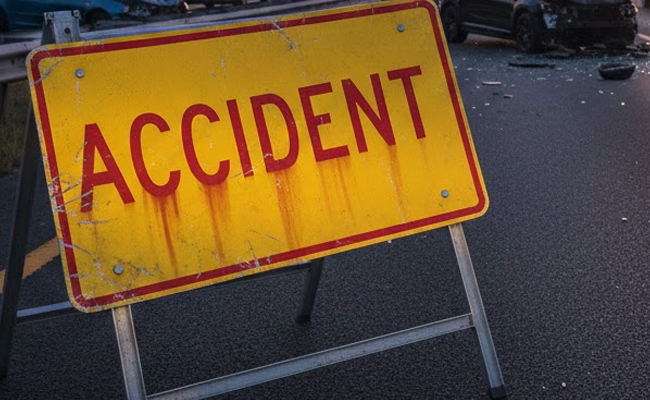
New Delhi (PTI): Two people were killed after their speeding motorcycle crashed into a wall on the Mukundpur flyover in outernorth Delhi's Bhalswa Dairy area, police said on Monday.
The rider lost control of the motorcycle, and it rammed into the side wall of the flyover with great force late Sunday night, they said.
The impact was so severe that one of the victims was thrown off the flyover and fell into a drain below.
A rescue operation was launched to locate the man who fell into the drain, police said, adding that both victims were later found dead.
On receiving information, police and ambulance teams rushed to the scene and shifted the bodies to Babu Jagjivan Ram Memorial Hospital. Further details awaited.