BJP wins Jasdan bypoll; reaches three-figure mark in Gujarat Assembly
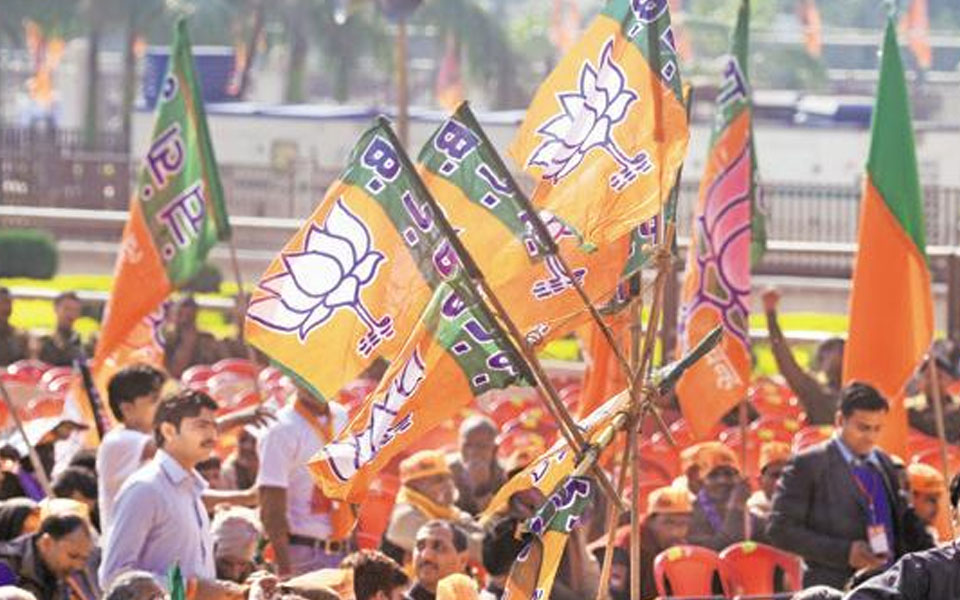
Ahmedabad, Dec 23: The ruling BJP comfortably won the bypoll from Jasdan Assembly seat in Gujarat Sunday, taking its tally in the House to 100.
BJP candidate Kunvarji Bavaliya defeated his nearest rival, Congress nominee Avsar Nakiya, by a margin of 19,979 votes, officials said.
Bavaliya retained the Assembly seat in Rajkot which he had won as Congress candidate in 2017.
With this, the BJP now has 100 MLAs in the 182-member Gujarat Legislative Assembly, while the Congress tally has come down to 76. The saffron outfit had won 99 seats in the 2017 assembly polls and the Congress 77.
At the end of the counting of votes, Bavaliya secured a total 90,262 votes as against Nakiya's 70,283, the officials said. A total 2,146 votes were cast as NOTA, they said.
Polling for the Jasdan Assembly seat was held on December 20 and a voter turnout of 71.27 per cent was recorded.
The by-poll became a battle of prestige between the ruling BJP and the opposition Congress in the wake of the latter winning the just held assembly elections in Madhya Pradesh, Rajasthan and Chhattisgarh.
The by-election was necessitated after Bavaliya, an influential Koli community leader who had won the seat on a Congress ticket in 2017, resigned from the party and also the assembly, and joined the BJP.
Bavaliya, who quit as an assembly member on July 2, was made a Cabinet minister in the BJP government the same day. As the Congress candidate in 2017, Bavaliya had won over BJP's Bharat Boghara by a margin of 9,277 votes.
Let the Truth be known. If you read VB and like VB, please be a VB Supporter and Help us deliver the Truth to one and all.
Man arrested with Rs 2.54-crore heroin in Mumbai

Mumbai (PTI): Police have arrested a man and seized over 500 grams of heroin worth Rs 2.54 crore in the illicit market from him in Mumbai, officials said on Friday.
The police's Anti-Narcotics Cell (ANC) made the drug seizure in Santacruz in the western suburbs. The operation was conducted by the Kandivali unit of the ANC on Thursday as part of a special crackdown against drug trafficking in the area, they said.
Acting on specific inputs, an ANC team conducted a raid in Santacruz (East) and intercepted a man. During a search, the team recovered 508 grams of high-grade heroin from his possession, an official said.
The seized contraband, a highly addictive, opioid drug derived from morphine, is estimated to be worth Rs 2.54 crore in the international market, he informed.
Following the seizure, a case was registered against the man under relevant sections of the Narcotic Drugs and Psychotropic Substances (NDPS) Act, 1985, and he was formally placed under arrest in the early hours of Friday.
The police are currently investigating the source of the drug and trying to identify the intended recipients of the consignment, he said.