BJP–JD(S) alliance will continue in all elections: Deve Gowda
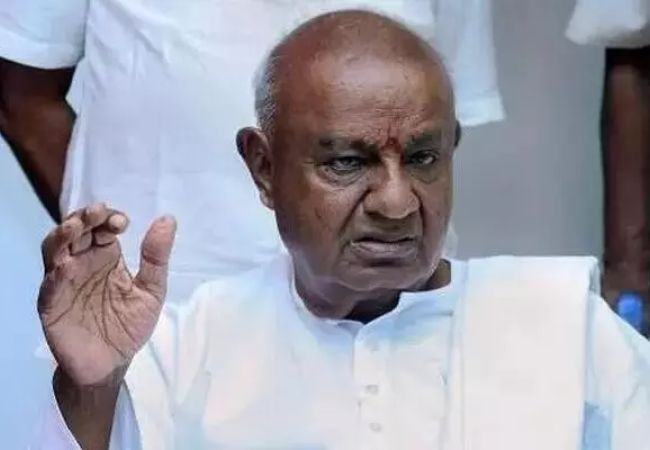
Bengaluru: Former Prime Minister and JD(S) supremo H.D. Deve Gowda has assured that the alliance between the BJP and JD(S) will remain intact and continue across all levels of elections in Karnataka.
Speaking to reporters at the JD(S) office, J.P. Bhavan, on Friday, Deve Gowda said that the understanding between the two parties would apply to elections in the Greater Bengaluru municipal corporations, Zilla Panchayats, Taluk Panchayats, as well as the upcoming Assembly polls.
He dismissed speculation about any strain in ties with the BJP. “There is no change in our relationship with Prime Minister Narendra Modi. He has never spoken lightly about me. The ties between the two parties are strong,” Gowda said.
On farmers’ protests against the Bidadi township project, the JD(S) chief chose not to comment. “We are a small political party. Our effort is to preserve and strengthen it. The people will give their verdict during elections, until then we must wait,” he remarked.
Criticising the Congress government, Gowda said that its guarantee schemes had worsened the State’s financial situation. “Even their own legislators admit this. At such a time, the government has the responsibility to go beyond its limits to help the people,” he said.
The veteran leader also underlined his commitment to strengthening the JD(S) organisation. “As before, H.D. Kumaraswamy will work actively, his health is improving. Nikhil Kumaraswamy is also engaged in party work. Despite losing three elections, he has been tirelessly working across 60–65 constituencies,” Gowda noted appreciatively.
JD(S) leaders T.N. Javarayigowda, former minister Leeladevi R. Prasad, former MLA H. Ningappa, Bengaluru city unit president H.M. Ramesh Gowda, and others were present at the press meet.
Meanwhile, Deve Gowda announced that the JD(S) will hold a massive women’s convention in Bengaluru on October 12. “We expect 50,000 to 60,000 women to participate. If possible, it will be organised at the Palace Grounds,” he said.
Let the Truth be known. If you read VB and like VB, please be a VB Supporter and Help us deliver the Truth to one and all.
Kolkata Port: Decline in number of voters during SIR brings in uncertainty in TMC bastion
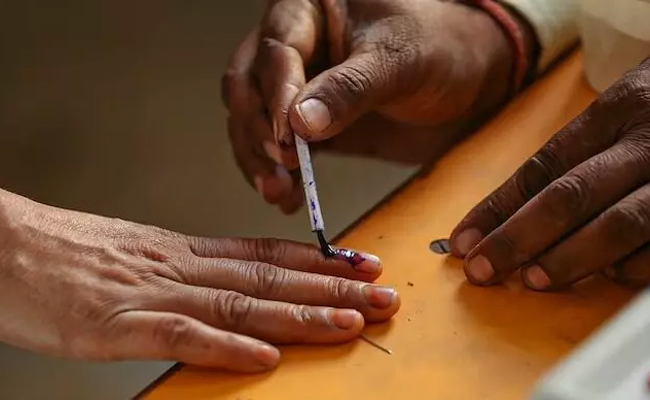
Kolkata (PTI): A sharp decline in the number of voters following the Special Intensive Revision (SIR) of electoral rolls has injected an element of uncertainty into the Kolkata Port Assembly constituency, considered a safe seat for the ruling Trinamool Congress (TMC).
The electorate in the south Kolkata constituency has dropped from 2.36 lakh in the 2021 Assembly polls to around 1.75 lakh, a fall of nearly 26 per cent, prompting political parties to closely assess its potential impact on the April 29 polling.
The TMC re-nominated senior minister and Kolkata Mayor Firhad Hakim, who has held the seat for two consecutive terms, while the BJP fielded Rakesh Singh. The Congress nominated Aquib Gulzar, and the CPI(M) put up Faiyaz Ahmad Khan, making it a four-cornered contest.
Kolkata Port, part of the Kolkata Dakshin parliamentary constituency, comprises dock areas, old business districts and densely populated neighbourhoods. Muslim voters form a significant segment of the electorate, alongside traders, transport workers and working-class Hindu families.
The reduction in voter numbers has prompted party workers across formations to scrutinise the revised rolls booth-wise to identify deletions and assess whether specific localities have been affected.
Singh’s candidature has added a twist to the contest. He had earlier contested against Hakim as a Congress candidate but is now in the fray on a BJP ticket.
Hakim won the seat in 2016 by 26,548 votes, defeating Singh, and increased his margin significantly to 68,554 votes in 2021, polling over one lakh votes.
While the TMC has expressed confidence in retaining the seat, opposition parties have raised concerns over the voter list revision, alleging that names of genuine voters have been removed.
“People here know who has stood by them. Elections are decided by trust,” Hakim told PTI during a campaign event.
Singh claimed several residents had complained about missing names in the rolls, stressing the need for transparency. The CPI(M) nominee also said voters in several areas had raised similar concerns.
The constituency has remained a difficult terrain for the opposition in recent elections.
Civic issues such as sanitation, traffic congestion and declining business activity in traditional markets also feature in the campaign in the constituency, though the revised voter list has emerged as a key talking point.
Polling in the constituency will be held in the second phase on April 29, with counting scheduled for May 4.