Blocked by Modi govt for 14 months, US SEC moves court to serve summons to Adani through email
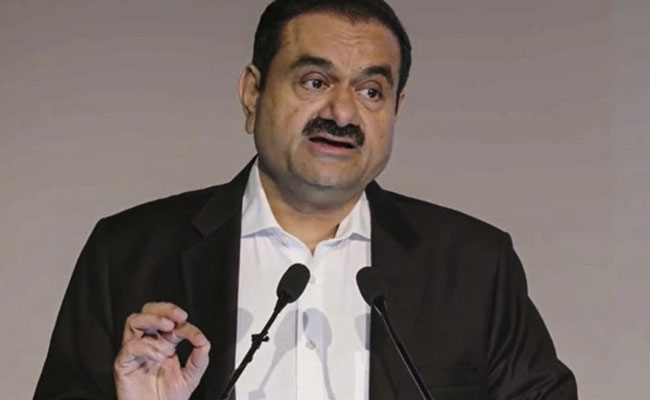
New Delhi: The United States Securities and Exchange Commission has approached a federal court in New York seeking permission to bypass diplomatic channels and serve summonses on industrialist Gautam Adani and his nephew Sagar Adani through their US-based lawyers and email, after India challenged the SEC’s authority to issue the summonses.
In a motion filed on Wednesday, January 21, before the US District Court for the Eastern District of New York, the SEC said it no longer expects service to be completed under the Hague Convention, effectively abandoning the treaty route it has been pursuing since February 2025. The case is being heard by Judge Nicholas G. Garaufis.
“The SEC does not expect service to be completed through the Hague Convention,” the regulator stated in its filing, adding that nearly a year of exchanges with India’s Ministry of Law and Justice had failed to yield results. The SEC said it was unaware of any alternative method of serving the summonses under Indian or international law.
The move marks a significant shift in the SEC’s 14-month effort to formally notify Gautam Adani, Chairman of Adani Green Energy Ltd, and Sagar Adani, its Executive Director, of civil charges linked to a September 2021 bond offering. The offering raised approximately $175 million from US investors as part of a larger $750 million issuance.
According to the SEC, the diplomatic impasse became clear after it received letters from India’s Ministry of Law and Justice on December 14, 2025, dated November 4. These letters cited Rule 5(b) of the SEC’s internal procedures and stated that the summonses did not fall within the categories covered by that rule. The ministry’s objection, which was attached as an exhibit to the SEC’s motion, appeared to question the regulator’s authority to issue the summonses.
The SEC rejected this reasoning as unfounded, arguing that Rule 5(b) has no relevance to service of documents under the Hague Convention. “This objection has no basis in the Convention, which governs service procedures, not the SEC’s underlying authority to bring enforcement actions,” the agency told the court. It added that the ministry’s position seemed to suggest that the SEC lacked authority to invoke the Hague Convention itself, despite the regulation cited having no bearing on treaty procedures.
This was the second time the Indian ministry declined to execute the service request. In April 2025, it had returned the documents unserved, citing the absence of seals and signatures. The SEC responded by stating that the Hague Convention does not require either a seal or a forwarding letter. It also noted that it had successfully served similar requests on Indian authorities in the past, including as recently as December 2024, using identical formats.
The SEC said it resubmitted the request on May 27, 2025, clarifying the treaty requirements, but received no response. Follow-up inquiries sent by its Office of International Affairs in April and September 2025 also went unanswered.
In light of this, the SEC has now asked the court to permit service under Rule 4(f)(3) of the Federal Rules of Civil Procedure, which allows alternative methods when conventional channels fail. The regulator is seeking approval to serve the summonses and complaint through the Adanis’ US counsel and via their business email addresses, arguing that this would ensure effective notice.
Sagar Adani is represented in the matter by Hecker Fink LLP. An attorney from the firm confirmed his representation on December 4, 2024. Gautam Adani has retained Kirkland & Ellis LLP and Quinn Emanuel Urquhart & Sullivan LLP. Lawyers from these firms contacted the SEC on February 28, 2025, identifying themselves as counsel for Gautam Adani in connection with the case.
“Service on Defendants’ established counsel is therefore virtually guaranteed to provide notice to defendants,” the SEC said in its memorandum.
The agency also sought permission to serve the summonses by email, stating that its investigation had uncovered more than 100 documents showing Sagar Adani’s use of his corporate email account for Adani Green Energy business, including communications related to the bond offering and others dated as recently as March 2024. It said similar records showed that Gautam Adani regularly used his corporate email for business communications, including correspondence linked to Adani Green, and that the address was listed as his contact email in filings with India’s securities regulator.
“Both addresses are reasonably believed to remain active and monitored,” the SEC said.
The civil case stems from a complaint filed by the SEC on November 20, 2024, alleging that Gautam and Sagar Adani orchestrated a bribery scheme involving payments or promises amounting to hundreds of millions of dollars to Indian government officials. According to the regulator, the bond offering materials contained statements about Adani Green’s anti-corruption and anti-bribery practices that were materially false or misleading in light of the alleged conduct.
On the same day, the US Attorney’s Office for the Eastern District of New York filed parallel criminal charges against the Adanis and others, including securities fraud conspiracy, wire fraud conspiracy and securities fraud.
The Adani Group, in a statement issued on November 21, 2024, rejected the allegations as baseless and said it would pursue all available legal remedies.
In its latest filing, the SEC also pointed to public statements and regulatory disclosures made by the Adanis to argue that they are fully aware of the proceedings. It cited remarks made by Gautam Adani in November 2024 and June 2025 claiming that no one from the Adani side had been charged with violations of the US Foreign Corrupt Practices Act or obstruction of justice.
“Defendants have demonstrated their actual knowledge of this action through public statements, regulatory filings and retention of US counsel,” the SEC said, adding that the defendants were actively managing their response to the litigation.
Let the Truth be known. If you read VB and like VB, please be a VB Supporter and Help us deliver the Truth to one and all.
Ex-army chief Naravane backs RSS leader's remarks on dialogue with Pakistan

Mumbai (PTI): Former army chief Gen (retd) Manoj Naravane on Wednesday supported RSS leader Dattatreya Hosabale's stand on the desirability of willingness to have a dialogue with Pakistan, stating that friendship between the two peoples can lead to better bilateral relations.
"Common people live on both sides of the border, with common problems of 'roti, kapda and makan (food, clothing and shelter). Common man has nothing to do with politics. When there is friendship between the two peoples, there will also be friendship between the two nations," Naravane told PTI on the sidelines of an event here.
"It is a right thing. People-to-people contact is important," he added.
People-to-people contact is key to breaking the deadlock with Pakistan and there should always be a window for dialogue, Hosabale said in an interview to PTI Videos on Tuesday. Pakistan's military and political leadership have lost India's confidence and it is time for civil society to lead the way, the RSS leader said.
Naravane said there should be a people-to-people connect between the two countries, be it through 'track two' diplomacy or even a sporting event.
"Even our people should know that those staying across the border are not sworn enemies," the former army chief said.
"Disputes should be resolved through discussion, but this does not mean we cannot use military force. India is a country that speaks the language of peace but we will not hesitate to use force if needed," Naravane added.
VIDEO | Mumbai: On RSS leader Dattatreya Hosabale advocating window of dialogue with Pakistan to be kept open, Former Army chief Gen MM Naravane (@ManojNaravane) says, “One important point is that people-to-people connections and contacts are extremely important. Ordinary people… pic.twitter.com/3pMmvynm43
— Press Trust of India (@PTI_News) May 13, 2026