Bombay HC rejects Abu Salem's plea for parole to marry
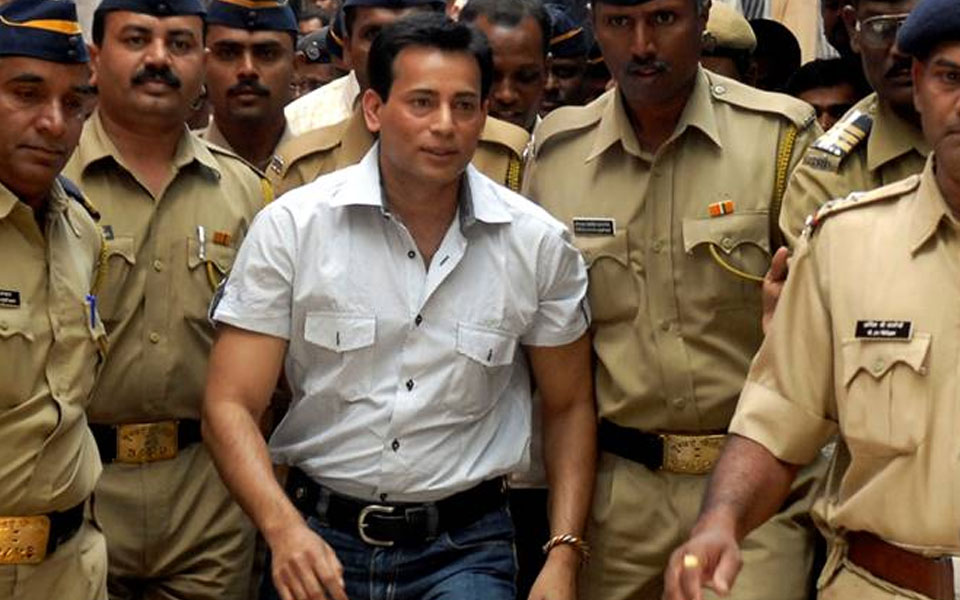
Mumbai, Aug 7 : The Bombay High Court on Tuesday rejected jailed gangster Abu Salem's plea for a 45-day parole to get married to his Thane-based girlfriend.
A division bench comprising Acting Chief Justice V.K. Tahilramani and Justice M.S. Sonak declined the request on the ground that under the prison rules, those convicted under terror charges were not eligible either for furlough or parole.
Currently lodged in the Taloja Jail, Raigad, Salem moved the High Court after his earlier application for parole was rejected by the Konkan Divisional Commissioner (KDC) - the competent authority in such cases - in March on security grounds.
Through his lawyer Farhana Shah, he informed the High Court on Tuesday that the KDC had refused his application "without proper application of the mind" for his previously planned marriage on May 5.
Convicted for his role in the March 1993 Mumbai serial blasts, Salem had reportedly married' his girlfriend, Heena alias Kausar Bahar, a resident of Mumbra town in Thane district.
Extradited from Portugal in November 2005, he claimed to have married Heena in 2014 over the phone while en route to Lucknow for a court case though she had made certain conflicting statements later.
He contended that he wanted to properly formalize his marriage with Heena by going to the registrar's office and needed parole for this.
Originally hailing from Azamgarh in Uttar Pradesh, Salem was convicted and sentence to life imprisonment for his role in the Mumbai serial blasts and other cases, besides being an accused in several other major cases, under trial in different parts of India.
In December 2014, he had complained to the Portugal authorities seeking cancellation of his deportation to India claiming that the extradition terms and conditions were allegedly violated.
Let the Truth be known. If you read VB and like VB, please be a VB Supporter and Help us deliver the Truth to one and all.
Fire at mass marriage event attended by Dy CM Shivakumar, nobody affected
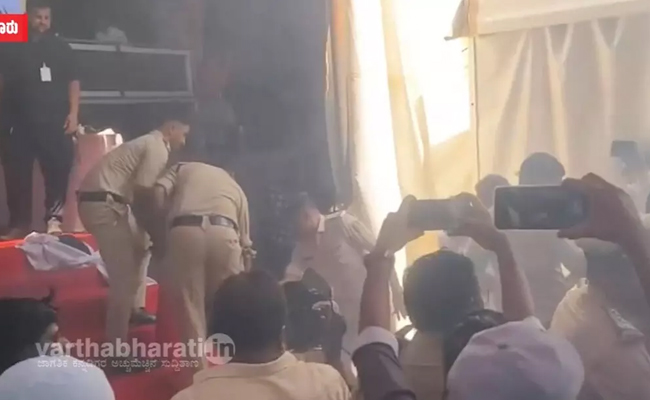
Raichur (Karnataka) (PTI): Fire broke out near the stage of the mass marriage event that was attended by Deputy Chief Minister D K Shivakumar here, police said on Sunday.
Nobody was affected, and the fire was immediately put out, they said.
The fire was noticed shortly after Shivakumar and other dignitaries left the stage, and Forest Minister Eshwaran Khandre was speaking to the media at the venue in Sindhanur, officials said.
According to officials, wires, speakers, and cloth materials near the stage caught fire, allegedly due to a short circuit.
Police personnel present at the spot quickly swung into action and extinguished the fire.
The programme was halted for some time and resumed later, they said.
Several ministers, legislators and political leaders from the region, and actor Sudeep had attended the event.