BRS leader K Kavitha leads hunger strike demanding early passage of Women's Reservation bill
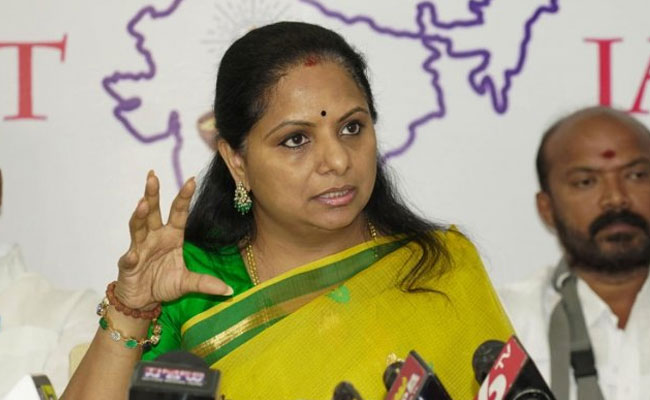
New Delhi (PTI): A day ahead of her appearance before the Enforcement Directorate in the excise scam case, BRS leader K Kavitha on Friday observed a hunger strike seeking passage of the long-pending Women's Reservation Bill in the second part of the Budget session of Parliament starting March 13.
CPI-M leader Sitaram Yechury, who inaugurated the six-hour strike programme at Jantar Mantar here, also demanded that the Modi government should bring this bill in this session of Parliament.
Among leaders present at the strike were Shyam Rajak (RJD), Seema Shukla (SP), NCP spokesperson, Telangana Education Minister Sabitha Indra Reddy as well as state Women and Child Welfare Minister Satyavathi Rathod. Women leaders from Andhra Pradesh were also present.
Sanjay Singh and Chitra Sarwara (AAP), Naresh Gujral (Akali Dal), Anjum Javed Mirza (PDP), Shami Firdous (NC), Sushmita Dev (TMC), KC Tyagi (JDU), Seema Malik (NCP), Narayana K (CPI), Shyam Rajak (RLD), Priyanka Chaturvedi (Shiva Sena) and ex-Congress leader Kapil Sibal have confirmed their participation in strike that will end at 4 pm.
"We have come here to assure that our party will extend support to Kavitha in this protest till the bill is passed in Parliament. It is important to bring this bill to give equal opportunity to women in politics," Yechury said in his inaugural address.
When he entered Parliament for the first time in 2014, Prime Minister Narendra Modi had said his government's priority would be the Women's Reservation Bill. It has been nine years now, this bill has not been introduced again in Parliament, he said.
After much efforts, the government gave reservation for women in Panchayats. "If you can give reservation for women in Panchayats, why not in Parliament," he asked and added a country will not progress unless women are given equal opportunity in social, economic and political sphere.
It is important to bring this bill in the current session of Parliament and the CPI-M will stand besides the Bharat Rashtra Samithi (BRS) party in this protest, he added.
The second leg of the Budget session of Parliament will start on March 13 and end on April 6.
Kavitha said, "If India needs to develop at a speed the world is developing, women should play a key role in politics. Women should get more representation in politics for which it is important to bring this bill that is pending for the last 27 years."
Many political parties tried to bring this bill since 1996, but it could not be passed in Parliament. Leaders like Susma Swaraj, Sonia Gandhi, and Brinda Karat had led struggles to make it possible, she said.
"I feel elated to have an opportunity to take this movement forward. I promise the women of India that we will continue this protest until the bill is introduced and passed," she said, adding today's hunger strike is just the beginning and the protest will continue across the country.
Kavitha further said it is a historic moment to have a full majority government at the Centre. "We demand that the BJP government introduces this bill, we will bring all the political parties together and will try supporting you in Parliament," she added.
RJD leader Shyam Rajak said Indian democracy cannot be strengthen without adequate political representation of women. Reservation for women should be more than 33 per cent in Lok Sabha and state legislative assemblies.
The bill, which seeks to reserve 33 per cent seats in Lok Sabha and all state legislative assemblies for women, was initially introduced in Lok Sabha on September 12, 1996 by the United Front government.
The Vajpayee government pushed for the bill in Lok Sabha but it still wasn't passed.
However, the UPA-I government, led by Congress, again introduced it in May 2008 and was passed in the Rajya Sabha but it was referred to a standing committee. In 2010, it was passed in the House and transmitted finally to the Lok Sabha. However, the bill lapsed with the 15th Lok Sabha. Since then, the bill has been lying in cold storage.
Kavitha, the daughter of Telangana Chief Minister M K Chandrasekhar Rao, had on Thursday said the hunger strike was planned a week before but the ED summoned her to depose before it on March 9, just a day before the planned agitation. The agency agreed to her request to appear on March 11 after the agitation.
The BRS leader has been summoned by the ED in connection with a money laundering case linked to alleged irregularities in the excise policy.
Let the Truth be known. If you read VB and like VB, please be a VB Supporter and Help us deliver the Truth to one and all.
SC asks states, UTs to prepare action plan to implement guidelines for intensive care services
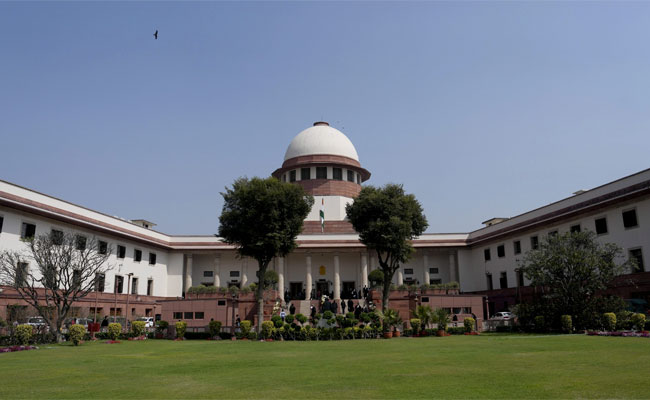
New Delhi (PTI): The Supreme Court has asked all the states and Union Territories to prepare a "realistic and practical" action plan to implement the guidelines necessary as a minimum standard for intensive care units.
The apex court was informed that "Guidelines for Organisation and Delivery of Intensive Care Services", on which there is consensus and which is practical, implementable and necessary as a minimum standard for an ICU, has been prepared.
A bench of Justices Ahsanuddin Amanullah and R Mahadevan said copies of the guidelines should be shared with all the states and UTs.
"Moving further, as an immediate measure, let all the additional chief secretaries/secretaries ... heading the department of health and medical education in the states and the UTs, convene a meeting of all experts involved in this exercise to prepare an action plan for implementation of the guidelines. Such a plan shall be realistic and practical," the bench said in its April 20 order.
The top court was hearing a matter relating to healthcare services, including guidelines for the treatment of patients in the ICU or critical care unit.
The bench said five basic issues shall be identified and prioritised in the first instance.
"The challenge ... lies in determining what ought to be treated as absolutely essential and mandatory; accordingly, an initial list of five basic requirements, in terms of priority, relating to both manpower and equipment/logistics, shall be prepared," it said.
It said a methodology should also be formulated for implementation on the ground, and more importantly, a mechanism to ensure compliance and monitoring of the implementation.
"We expect the exercise to commence immediately and the first meeting to be held within one week from today. We direct that the meeting shall be attended personally by the concerned additional chief secretary/secretary ... heading the department of health and medical education in the states and the UTs," the bench said.
It said the report prepared pursuant to the deliberations should be forwarded by the respective states and UTs to the Secretary of the Department of Health, Government of India, who in turn would circulate it to all the states and UTs.
The bench said thereafter, a meeting of all concerned should be convened where a final common agreed draft shall be prepared and circulated.
"A final report/blueprint/recommendation shall be prepared, which shall be placed before this court on the next date," it said, adding that the entire exercise should be completed within three weeks.
"Let the Ministry of Health, Government of India, formally issue the guidelines placed before us today, to the states and UTs concerned by way of an advisory. A copy of it shall also be uploaded on the website of the Ministry of Health, Government of India," the bench said, while posting the matter for further hearing on May 18.
During the hearing, it was suggested that for future requirements, the nursing staff should be trained to handle such situations since they remain with the patient round the clock, unlike doctors who may visit periodically.
"We fully endorse the suggestion, which is not only pragmatic but also imperative. Accordingly, the Indian Nursing Council and the Para Medical Council of India are impleaded as party respondents," the bench said.
It said on the next date, the newly added respondents shall come up with a plan indicating how they propose to augment the courses or curriculum and training imparted by them so that persons emerging from institutions recognised by them are capable of managing and handling situations in the ICUs.