Budget2019: Petrol, diesel to be costlier; tax on super-rich, gold imports
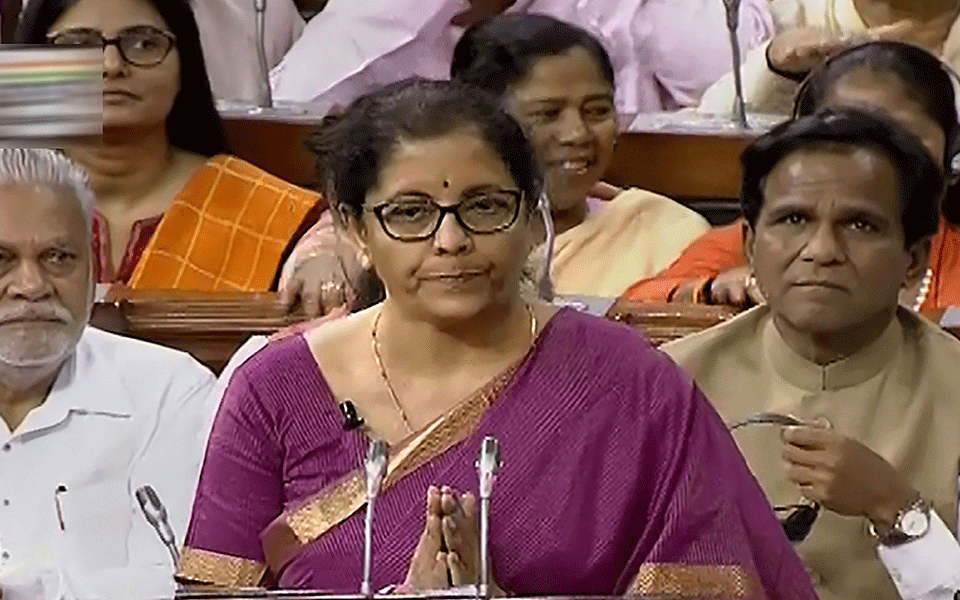
New Delhi: Finance Minister Nirmala Sitharaman Friday hiked tax on petrol and diesel, raised import duty on gold, levied additional surcharge on super rich and brought a tax on high value cash withdrawals as she sought to spur growth with reduction in corporate tax and sops to housing sector, startups and electric vehicles.
Presenting the maiden budget of Modi 2.0 government in Lok Sabha, Sitharaman, the first full-time woman Finance Minister, proposed measures to ease liquidity crisis facing shadow banking sector (NBFCs) and providing Rs 70,000 crore capital to public sector banks while seeking to raise additional resources through privatisation of some PSUs.
In relief to tax payers, she provided for an additional deduction of Rs 1.5 lakh on interest paid on loans borrowed up to March 31, 2020 on purchase of a house up to Rs 45 lakh.
Corporate tax on companies with turnover of up to Rs 400 crore has been slashed to 25 per cent from current 30 per cent. Presently, the lower tax rate is applicable on companies having a turnover of up to Rs 250 crore.
Sitharaman said the reduced tax rate would cover 99.3 per cent of corporates in the country.
To boost use of electric vehicles, an additional income tax deduction of Rs 1.5 lakh on interest paid on loans taken to purchase EVs has been proposed.
Also the government has asked the GST Council to reduce tax rate on EVs from 12 per cent to 5 per cent. Customs duty on certain parts of EVs has been reduced.
Addressing the angel tax issue faced by startups, she said startups and investors who file requisite declarations will not be subjected to any kind of scrutiny in respect of valuation of share premium.
A mechanism of e-verification will be put in place and with this, the funds raised by startups will not require any tax scrutiny.
She raised special additional excise duty and road cess on petrol and diesel by Re 1 per litre each, saying lower crude oil prices provide her with an opportunity to review taxes on the sector.
Also, customs duty on gold and precious metals was raised from 10 per cent to 12.5 per cent to mobilise resources.
Basic customs duty was raised on an array of products including tiles, cashew kernels, vinyl flooring, auto parts, some synthetic rubber, digital and video recorder and CCTV camera.
Excise duty of Rs 5 per 1000 has been imposed on cigarettes of length exceeding 65 mm, while 0.5 per cent duty has been levied on chewing tobacco, zarda and tobacco extracts and essence.
"I propose to levy TDS of 2 per cent on cash withdrawal exceeding Rs 1 crore in a year from a bank account," she said.
She also announced a surcharge on individuals having taxable income of Rs 2 crore to Rs 5 crore and for those above Rs 5 crore which will hike their effective tax rate by 3 per cent and 7 per cent respectively.
Sitharaman also proposed to made Aadhaar and PAN interchangeable for the purpose of filing Income Tax returns.
To boost FDI inflow into the country, the government will examine further liberalisation of sectoral investment caps in aviation, media, animation and insurance.
The Budget also proposed 100 per cent FDI in insurance intermediaries and easing of local sourcing norms for single brand retail.
She said measures are being worked out to ease filing returns and tax compliance. Taxpayers with an annual turnover of less than Rs 5 crore will have to file only quarterly returns, she said
To boost cash-less economy, she said business establishments with annual turnover of Rs 50 crore will have to use BHIM, UPI, Aadhaar Pay, NEFT, RTGS modes of payments with no charges or merchant discount rates will be imposed on customers or merchants.
RBI and banks will absorb these costs, she said.
The Securities Transaction Tax or STT is proposed to be restricted to the difference between settlement and strike price of options, she said.
She proposed an additional income tax deduction of Rs 1.5 lakh on interest paid on loans taken to buy electric vehicles. This will lead to a benefit of Rs 2.5 lakh crore over the tax period of the loan for the payer.
She said the government will spend Rs 100 lakh crores for infrastructure in next five years.
The disinvestment target for FY20 was raised to Rs 1.05 lakh crore from Rs 90,000 crore set in the interim budget and government will continue with disinvestment of PSUs in the non-financial space as well.
Regulation of housing finance companies has been moved to the Reserve Bank of India (RBI) from the NHB. The government proposed to allocate Rs 70,000 crore for PSU Bank recapitalisation.
Let the Truth be known. If you read VB and like VB, please be a VB Supporter and Help us deliver the Truth to one and all.
‘Self-styled Vishwaguru stands exposed’: Cong's dig at PM over Pak role in US-Iran ceasefire
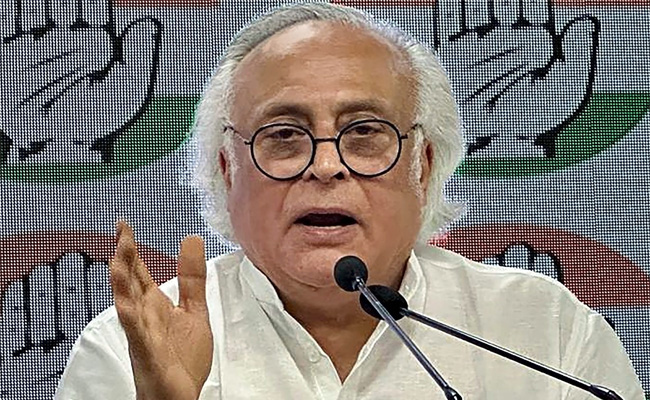
New Delhi (PTI): Taking a swipe at the government, the Congress on Wednesday said the role played by Pakistan in bringing about the ceasefire between the US and Iran is a “severe setback” to Prime Minister Narendra Modi's “highly personalised diplomacy” and “the self-styled Vishwaguru stands thoroughly exposed”.
The opposition party also said Prime Minister Modi's “cowardice is demonstrated by his silence not only on Israel’s belligerence, but on the completely unacceptable and disgraceful language being used by his good friend in the White House”.
Congress general secretary in-charge communications Jairam Ramesh said the entire world will cautiously welcome the two-week ceasefire in the West Asia conflict between the US and Israel on the one side and Iran on the other.
“The conflict had begun on February 28th with the targeted assassinations of the topmost echelons of the regime in Iran. These had started just two days after Prime Minister Modi had completed his much-trumpeted visit to Israel, a visit that diminished India’s global stature and standing,” Ramesh claimed.
PM Modi had said nothing about Israel’s "genocide" in Gaza and its aggressively expansionist policies in the occupied West Bank, Ramesh said.
“The role played by Pakistan in bringing about the ceasefire is a severe setback to both the substance and style of Mr Modi’s highly personalised diplomacy,” he said.
The policy to isolate Pakistan for its continuing support to terrorism in Jammu and Kashmir and to convince the world that it is a failed state has clearly not succeeded – unlike what Manmohan Singh had accomplished after the Mumbai terror attacks, Ramesh claimed.
That a bankrupt economy dependent entirely on the largesse of external donors and a broken country in so many ways was able to play such a role calls into question Modi’s strategy of engagement and narrative management, he said.
“He (Modi) or his team has also never explained why Op Sindoor was suddenly and abruptly halted on May 10th 2025 - the first announcement of which came from the US Secretary of State and for which the US President has claimed credit almost a hundred times since then,” the Congress leader said.
“There is a palpable sigh of relief everywhere. The External Affairs Minister (S Jaishankar) dismissed Pakistan as a dalal. But now the self-styled Vishwaguru stands thoroughly exposed, his self-declared 56-inch chest shrunk and shrivelled,” Ramesh said.
“His cowardice is demonstrated by his silence not only on Israel’s belligerence, but on the completely unacceptable and disgraceful language being used by his good friend in the White House,” the Congress leader added.
US President Donald Trump pulled back on his threats to launch devastating strikes on Iran late Tuesday, as the US and Iran agreed to a two-week ceasefire that includes the reopening of the Strait of Hormuz.
Trump swerved to de-escalate the war less than two hours before the deadline he set for Tehran to capitulate to a deal or face attacks on its bridges and power plants meant to destroy the Iranian civilisation.
Trump made the dramatic announcement on Truth Social on Tuesday evening (US time) even as Democrats called for his removal over unhinged threats to wipe out the Iranian civilisation.
"Based on conversations with Prime Minister Shehbaz Sharif and Field Marshal Asim Munir, of Pakistan, and wherein they requested that I hold off the destructive force being sent tonight to Iran, subject to the Islamic Republic of Iran agreeing to the COMPLETE, IMMEDIATE, and SAFE OPENING of the Strait of Hormuz," the US President said in a social media post.
Iran's Supreme National Security Council said it has accepted the ceasefire and that it would negotiate with the United States in Pakistan beginning Friday. Neither Iran nor the United States said when the ceasefire would begin, and attacks took place in Israel, Iran and across the Gulf region early Wednesday.
Israel backed the US ceasefire with Iran but the deal doesn't cover fighting against Hezbollah in Lebanon, Prime Minister Benjamin Netanyahu said early Wednesday.