'Tomatoes need vacation': Burger King India as it removes tomatoes from burgers
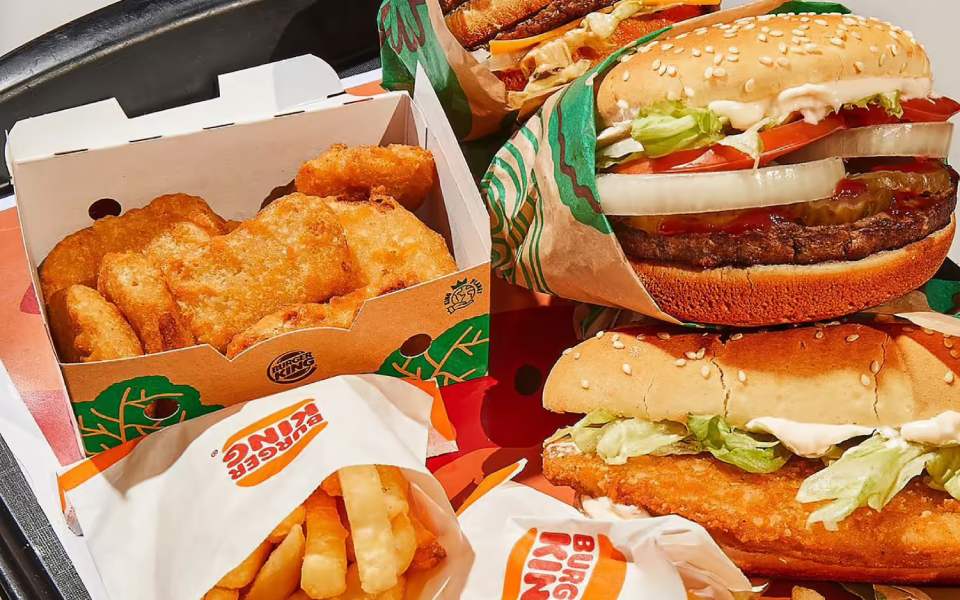
New Delhi, Aug 16: Fast food chain Burger King has stopped using tomatoes in its food preparations, joining the list of other quick service restaurant (QSR) chains like McDonald's and Subway, amid soaring prices of the staple kitchen item.
Burger King, operated by Restaurant Brands Asia in the country with 400 stores, in a message on the support page of its website cited "quality" and "supply" issues as reasons for removing tomatoes from its food servings.
"We, at Restaurant Brands Asia Ltd, have very high standards of quality as we believe in serving real and authentic food. Due to unpredictable conditions on the quality & supply of tomato crops, we are unable to add tomatoes to our food. Rest assured, our tomatoes will be back soon," the message read.
It has requested customers to have "patience and understanding" for the situation.
Some Burger King India outlets have reportedly placed a notice with some humour, saying, "Even tomatoes need a vacation... we are unable to add tomatoes to our food."
QSR chains are facing disruptions in their supply chain due to soaring tomato prices and struggling to find quality products.
The retail price of tomato in some parts of the country is up to Rs 200 per kilogramme amid supply disruptions caused by heavy rains. This has forced the government to import tomatoes for the first time.
India is currently importing tomatoes from Nepal. Last week, finance minister Nirmala Sitharaman informed the Parliament that India has started importing tomatoes from Nepal amid a record-high spike in the prices in the domestic market.
In July, fast food chain McDonald's had said it has stopped using tomatoes in its food preparations at most of the stores in northern and eastern parts of the country citing the non-availability of quality products.
"Due to seasonal crop issues arising out of farm fields in a few regions, there are not enough quantities meeting our quality specifications available. To ensure our customers get the best quality we are known to serve, we are constrained to hold tomatoes for the time being," a McDonald's India - North and East spokesperson had said.
After that, Subway India also stopped using tomatoes to cope with the soaring prices in major cities.
As per the government data, all-India average wholesale price of tomatoes came down to Rs 88.22 per kg on August 15, when compared with Rs 97.56 per kg a month ago.
Similarly, all-India average retail price of tomatoes came down to Rs 107.87 per kg now from Rs 118.7 per kg a month ago, the data showed.
Meanwhile, the arrival of the fresh tomato crop in Madhya Pradesh and Andhra Pradesh has started in wholesale mandis, cooling down the prices.
Let the Truth be known. If you read VB and like VB, please be a VB Supporter and Help us deliver the Truth to one and all.
Seven killed, three injured in separate road accidents in UP

Mainpuri/Muzaffarnagar/Deoria (UP) (PTI): Seven people were killed and three others injured in separate road accidents in Mainpuri, Muzaffarnagar and Deoria districts of Uttar Pradesh, police said on Wednesday.
All incidents took place on Tuesday night.
In Mainpuri, three persons, including a couple, were killed near the Shitala Devi Temple on Devi Road under Kotwali police circle when a pickup vehicle hit a motorcycle head-on, Superintendent of Police Ganesh Saha said.
The victims, Dharmendra Singh (50), his wife Baby (48), both residents of Ferozabad, and Sanjay Singh (40) of Tavepur village, were on the two-wheeler and were on their way to attend the cremation of a relative when the incident took place.
According to police, the pickup and a Wagon R car were attempting to overtake each other when the former went out of control and rammed into the motorcycle, killing all three riders on the spot. Police rushed to the scene and sent the bodies for post-mortem examination, Saha added.
In Muzaffarnagar's Charthawal town, a 30-year-old woman, identified as Imrana, was killed while another woman was injured after a speeding car hit them on Rajbaha Road.
Circle Officer Ravishankar said the victims were walking when the car struck them, throwing Imrana into a canal. She was declared dead by the doctors.
Following the incident, villagers staged a protest demanding action against the driver, who fled the spot without the vehicle. Police said efforts are underway to trace and arrest the accused.
In another incident in Deoria district, three persons were killed, and two others seriously injured when a car crashed into a tree in the Baghochghat area late Tuesday night, police said.
The accident occurred near Haji Market when a Bihar-registered Swift car coming from Pakaha went out of control and rammed into a roadside tree, leaving the vehicle badly mangled.
Police said five people were travelling in the car. Three of them died on the spot, while two injured persons were admitted to Maharshi Devaraha Baba Medical College in Deoria.
The deceased have been identified as Karan Kushwaha, a resident of Gopalganj district in Bihar, and Pintu Kumar of Dulharpur village under Phulwaria police station. The identity of the third deceased is yet to be established.
The injured have been identified as Govind Kushwaha (18) of Sisai village in Kushinagar and Bhola Srivastava alias Sonu (22). Police said the occupants had visited a relative's place in Kushinagar and were returning after attending a wedding function when the accident occurred.
Station House Officer Anil Tiwari said police had to use a gas cutter to rescue the victims trapped inside the vehicle.
The bodies have been sent for post-mortem examination, and further legal proceedings are underway, he added.