Bus driver, mistaken for thief and beaten, dies
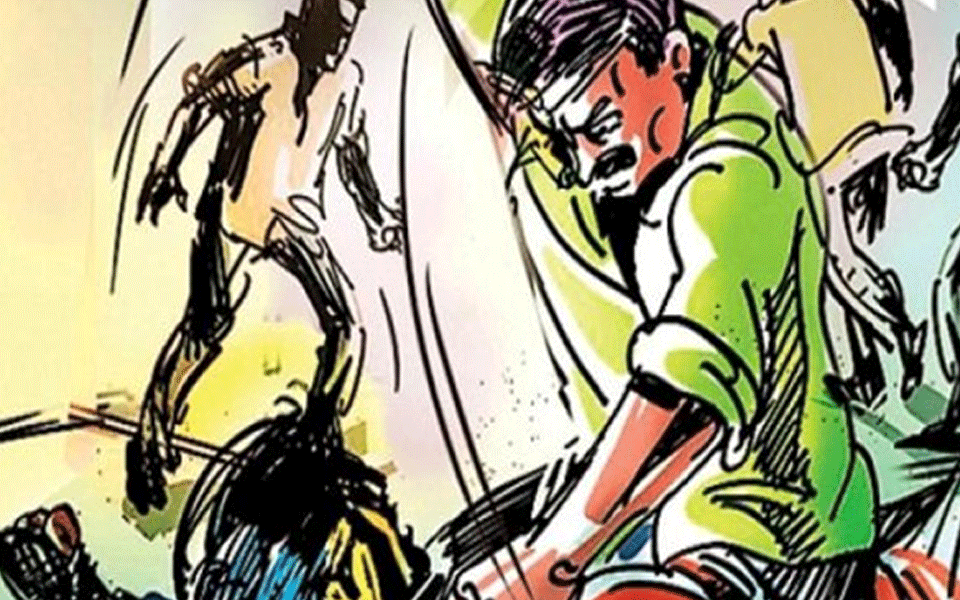
Palghar: A 32-year-old bus driver, mistaken to be a thief and thrashed by a group of people in Maharashtra's Palghar district, has succumbed to his injuries at a hospital in Gujarat, police said on Tuesday.
Six people have been booked in connection with the incident, Palghar police spokesperson Hemant Katkar said.
The victim, Ranjit Pandey, was standing near a bus in Boisar area on August21 when some people there suspected that he intended to steal the vehicle's battery and deflate its tyres, he said.
They then caught hold of Pandey and thrashed him severely, he said.
The victim, who was badly injured, was rushed to a local hospital. He was later shifted to a hospital in neighbouring Valsad district of Gujarat where he died on Sunday, he said.
The Boisar police on Monday booked six people - Anwar Garagewalla, his brother Mintu, two accomplices and two friends of the latter - under Indian Penal Code Sections 302 (murder), 143, 149 (unlawful assembly) and 147 (rioting).
No arrest has been made so far, he added. Several incidents of mob fury have come to light from various places across the county in recent times.
Maharashtra Chief Minister Devendra Fadnavis on Sunday termed lynching as an "inhuman" act and called for stern action against perpetrators of such crimes.
Let the Truth be known. If you read VB and like VB, please be a VB Supporter and Help us deliver the Truth to one and all.
Man arrested with Rs 2.54-crore heroin in Mumbai

Mumbai (PTI): Police have arrested a man and seized over 500 grams of heroin worth Rs 2.54 crore in the illicit market from him in Mumbai, officials said on Friday.
The police's Anti-Narcotics Cell (ANC) made the drug seizure in Santacruz in the western suburbs. The operation was conducted by the Kandivali unit of the ANC on Thursday as part of a special crackdown against drug trafficking in the area, they said.
Acting on specific inputs, an ANC team conducted a raid in Santacruz (East) and intercepted a man. During a search, the team recovered 508 grams of high-grade heroin from his possession, an official said.
The seized contraband, a highly addictive, opioid drug derived from morphine, is estimated to be worth Rs 2.54 crore in the international market, he informed.
Following the seizure, a case was registered against the man under relevant sections of the Narcotic Drugs and Psychotropic Substances (NDPS) Act, 1985, and he was formally placed under arrest in the early hours of Friday.
The police are currently investigating the source of the drug and trying to identify the intended recipients of the consignment, he said.