BWF World Tour Finals: PV Sindhu beats Tai Tzu Ying to inch closer to semis
Sameer too qualifies for knockout stage
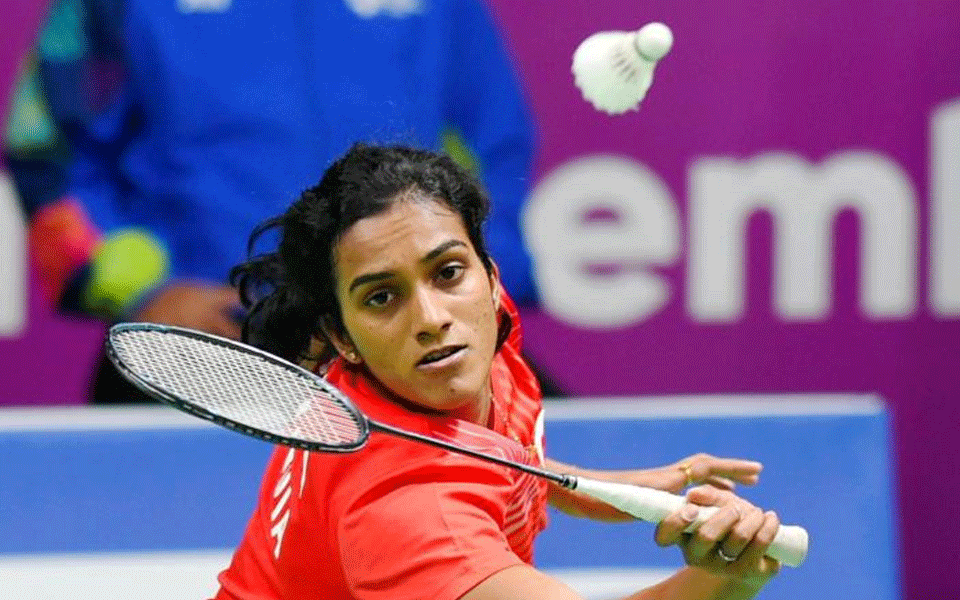
Guangzhou, Dec 14: Olympic silver medallist P V Sindhu continued her unbeaten run while debutant Sameer Verma also qualified for the knockout stage with a straight-game win in his last group B match at the BWF World Tour Finals, here Friday.
Playing her third successive year-ending finale, Sindhu dished out some deceptive strokes and showed precision during the 35-minute contest to prevail over world no 12 Beiwen Zhang 21-9 21-15 in a one-sided women's singles contest to top Group A.
"I was down 2-6 initially but I picked up the lead, so after that I was fine," Sindhu, the last edition's runner-up, said after the match.
"I have played a few matches against her after the Indian Open final, so I took it as a fresh match," said the 23-year-old referring to her Indian Open final loss to Zhang at New Delhi early this year.
"I am happy with the three wins, it is a positive thing. I hope to move forward with the same positivity and do well in the semifinals," added Sindhu, who won all the three matches of her group.
On the adjacent court, 24-year-old Sameer showed great athleticism and produced a masterful performance to demolish Thailand's Kantaphon Wangcharoen 21-9 21-18 in a match that clocked 44 minutes.
After losing the opening match to world no 1 and world champion Kento Momota, Sameer, who qualified for the tournament after defending his title at Syed Modi International last month, recovered well to come up trumps against his other two opponents in Group B.
"I have played him before at Swiss Open so I knew how to go about it. In the second game I was losing so after some advice from my coach, I kept my patience and now I am ready to play the semifinals," said Sameer.
"It has been a great experience playing my first world tour finals."
In the women's singles, Sindhu, who had stunned world no 1 Tai Tzu Ying in her previous match, didn't make a good start against Zhang, conceding a 0-4 lead early on.
But she clawed back at 6-6 after producing some angled returns, which included a delightful over-the head-cross court return.
The world no 6 Indian kept the pressure and eked out a three-point advantage at the break after Zhang hit out.
Zhang tried to put the shuttle in difficult positions but Sindhu not only retrieved the shuttle but also produced some precise returns to extend her lead to 17-8.
The Hong Kong-born US shuttler unleashed a cross court smash to break the run of points but Sindhu reciprocated with an equally superb smash. She eventually got game point when Zhang hit the net.
The Indian then sealed the opening game comfortably in 15 minutes when Zhang failed to reach a shot at the fore court.
After the change of sides, Sindhu continued to dominate the proceedings to accumulate the first five points before hitting long.
Zhang seemed to suffer from indecision and ended up committing too many unforced errors.
At 2-6, Zhang produced a precise body smash and then got a lucky net cord to gain a couple of points. She also played an exceptional net shot and drew parity at 7-7 when Sindhu went long.
The Indian managed a 11-9 advantage at the interval after Zhang went long again.
The Indian extended her lead to 16-12 after the breather even as Zhang showed signs of frustration, dropping her racquet or breaking into a sheepish smile after missing chances.
Sindhu continued to control the rallies and went to 20-12 when Zhang hit net twice.
The Indian committed three unforced errors before sealing the contest, following her opponent's miscued shot which went long.
Let the Truth be known. If you read VB and like VB, please be a VB Supporter and Help us deliver the Truth to one and all.
Remarks against St Francis Xavier: Right-wing speaker Gautam Khattar gets bail
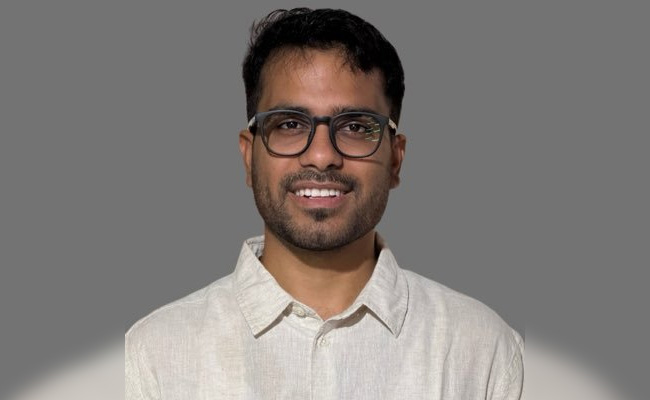
Panaji (PTI): A court in Goa on Saturday granted bail to right-wing speaker Gautam Khattar, who was arrested after he allegedly made derogatory comments against St Francis Xavier.
Judicial Magistrate First Class, Vasco, granted regular bail to Khattar, currently admitted to Goa Medical College and Hospital at Bambolim for treatment of chest pain after he was shifted from the District Hospital in Mapusa two days back.
A row erupted after a video of remarks by Khattar, the founder of Sanatan Mahasangh, at an event on April 18 in the presence of Swami Brahmeshanand, State Transport Minister Mauvin Godinho and BJP MLAs Sankulp Amonkar and Daji (Krishna) Salkar, went viral.
St Francis Xavier is revered as the patron saint of Goa.
The controversial remarks led to the Vasco Police registering an FIR against Khattar on charges of hurting religious sentiments and creating enmity between groups.
He was detained in Kullu, Himachal Pradesh, by local police. His custody was later handed over to the Goa Crime Branch, according to officials.