CAA takes into account historical context and current ground realities: India to UNHRC
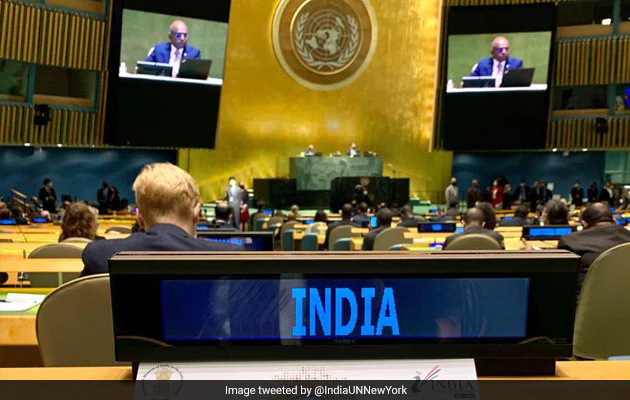
United Nations/Geneva, Nov 10: India on Thursday told the UN Human Rights Council that its Citizenship Amendment Act 2019 is a limited and focused legislation that reaffirms the country's commitment to the welfare of persecuted minorities in the region and takes into account "historical context and the current ground realities".
As the Universal Periodic Review of India's human rights record is underway in Geneva, some member states raised concerns over the issue of the Citizenship Amendment Act (CAA).
The CAA is a "limited and focused legislation, which reaffirms India's commitment to the welfare of persecuted minorities in the region," Solicitor General of India Tushar Mehta said in his response.
He added that the legislation is similar to laws that exist elsewhere in defining specific criteria for citizenship pathways.
"The criteria defined here is specific to India and its neighborhood and takes into account the historical context and the current ground realities," he said.
He added that it is aimed at enabling foreigners of six minority communities - Hindu, Sikh, Buddhist, Jain, Parsi and Christian - from three "specified neighbouring countries" - Afghanistan, Bangladesh and Pakistan, "who have migrated to India, owing to their religious persecution in those countries to obtain Indian citizenship."
"It will help in reducing their statelessness and would enable beneficiaries to have a more secured and dignified life. This Act neither takes away the citizenship of any Indian citizen nor amends nor abridges any existing process for acquiring Indian citizenship by any foreigner of any country belonging to any faith or religion," Mehta said.
In his response to issues raised by UN Member States during the review process over freedom of speech and opinion, Mehta said the Constitution of India guarantees to every citizen, the fundamental right to freedom of speech and expression.
"Like any other freedom, the freedom of speech and expression is not absolute in nature and is subject to reasonable restrictions in the interest of sovereignty and integrity of India, security of the state, friendly relations with the foreign state, public order, decency or morality, contempt of court, defamation, or incitement to an offense," he said.
He noted that these restrictions are conceived to protect national and public interest and are required to meet a very high threshold.
"Imposing reasonable restrictions enables the state to regulate freedom of speech and expression when it amounts to hate speech or leads to incitement to an offense," Mehta said, adding that it is a settled law in India that any restriction imposed must not be excessive or disproportionate.
Let the Truth be known. If you read VB and like VB, please be a VB Supporter and Help us deliver the Truth to one and all.
India describes attack on Fujairah 'unacceptable'
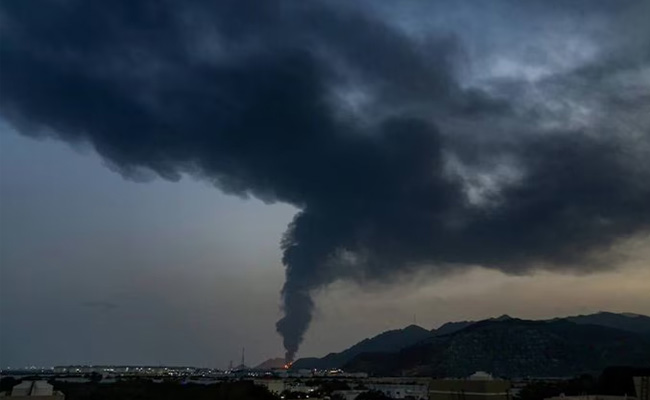
New Delhi (PTI): India on Tuesday described the wounding of three Indians in an attack on the United Arab Emirates' port city of Fujairah as "unacceptable" and pressed for an immediate cessation of hostilities targeting innocent civilians.
New Delhi's reaction came a day after the Indians were injured after a drone attack caused a fire at a major oil industry zone in Fujairah. The UAE had accused Iran of carrying out the strike.
"The attack on Fujairah that resulted in injury to three Indian nationals is unacceptable," External Affairs Ministry spokesperson Randhir Jaiswal said.
"We call for immediate cessation of these hostilities and the targeting of civilian infrastructure and innocent civilians," the spokesperson said.
Jaiswal said India continued to stand for dialogue and diplomacy to deal with the situation so that peace and stability could be restored across West Asia.
"We also call for free and unimpeded navigation and commerce through the Strait of Hormuz in keeping with international law. India stands ready to support all efforts for a peaceful resolution of issues," he said.
The attack on Fujairah city came as the ceasefire between the US and Iran came under strain in the Strait of Hormuz.
The Strait of Hormuz, through which roughly one-fifth of the world's oil and gas pass, remains a major sticking point in the talks. Shipping through the narrow Gulf waterway has been severely disrupted by the conflict, triggering a sharp increase in oil prices and energy shortages in several countries.
The UAE's defence ministry on Monday said its air defence systems engaged 12 ballistic missiles, three cruise missiles and four drones launched from Iran.
The ministry affirmed that it "remains fully prepared and ready to deal with any threats and will firmly confront anything that aims to undermine the security of the country."