Cabinet approves two multitracking projects across Jharkhand, Karnataka and Andhra Pradesh
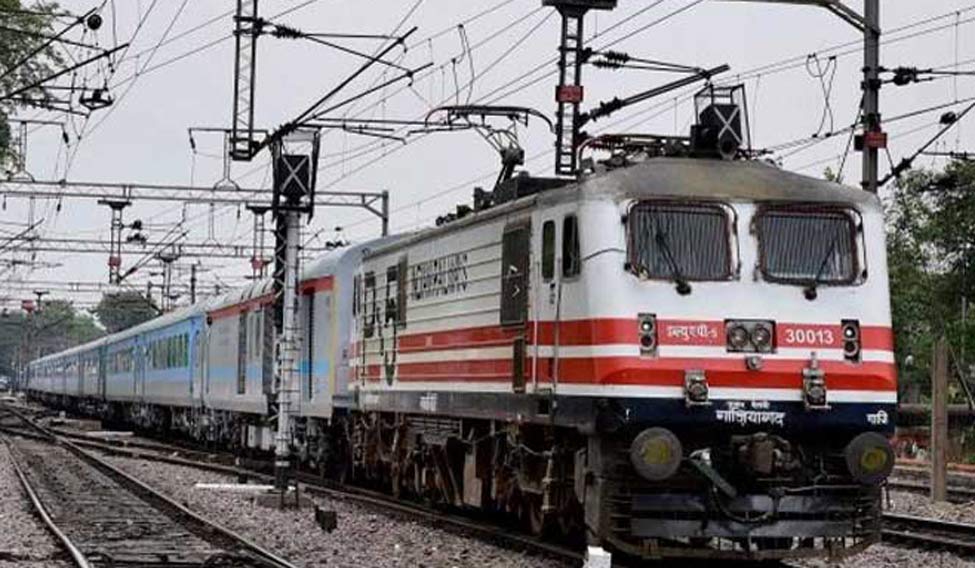
New Delhi (PTI): The Cabinet Committee on Economic Affairs, chaired by Prime Minister Narendra Modi, approved on Wednesday two railway projects covering seven districts in Jharkhand, Karnataka and Andhra Pradesh with a total cost of Rs 6,405 crore.
One of them is the doubling of the 133-km-long Koderma-Barkakana track which not only passes through a major coal-producing area of Jharkhand but serves as the shortest and a more efficient rail link between Patna and Ranchi.
The second project is the doubling of the 185-km Ballari-Chikjajur track that traverses through Ballari and Chitradurga districts of Karnataka and Anantapur district of Andhra Pradesh.
According to the government, the approved multi-tracking project will enhance connectivity to approximately 1,408 villages, which have a population of about 28.19 lakh.
“These are essential routes for transportation of commodities such as coal, iron ore, finished steel, cement, fertilizers, agriculture commodities, and Petroleum products etc. The capacity augmentation works will result in additional freight traffic of magnitude 49 MTPA (Million Tonnes Per Annum),” it said.
The increased line capacity will significantly enhance mobility, resulting in improved operational efficiency and service reliability for Indian Railways. These multi-tracking proposals are poised to streamline operations and alleviate congestion, a government press note said.
The projects are in line with Prime Minister Narendra Modiji’s vision of a New India which will make people of the region 'Atmanirbhar' by way of comprehensive development in the area which will enhance their employment/ self-employment opportunities,” it said.
The Railway Ministry said that the projects are a result of the PM-Gati Shakti National Master Plan for multi-modal connectivity which have been possible through integrated planning and will provide seamless connectivity for the movement of people, goods and services.
“The two projects covering seven districts across the states of Jharkhand, Karnataka and Andhra Pradesh, will increase the existing network of Indian Railways by about 318 Kms,” the Ministry added.
Talking about their environmental benefits, the Ministry said that the Railways, being environment-friendly and energy-efficient mode of transportation, will help both in achieving climate goals and minimising logistics cost of the country, reduce oil import (52 crore Litres) and lower CO2 emissions (264 crore Kg) which is equivalent to plantation of 11 crore trees.
Let the Truth be known. If you read VB and like VB, please be a VB Supporter and Help us deliver the Truth to one and all.
SC to hear on May 4 PIL seeking stringent guidelines for issuing Aadhaar to adolescents, adults
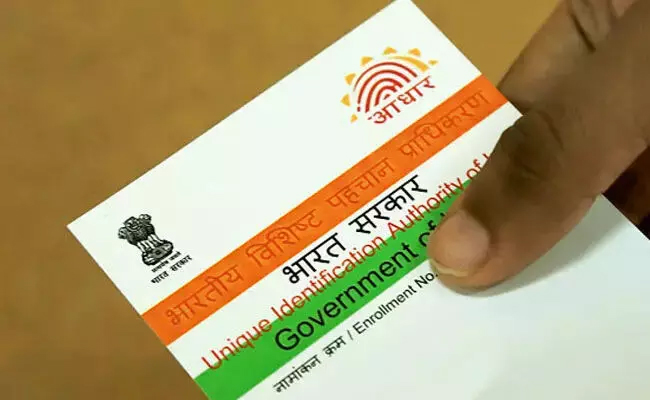
New Delhi (PTI): The Supreme Court is scheduled to hear on Monday a plea seeking a direction to the Unique Identification Authority of India to issue new Aadhaar cards only to citizens up to the age of six years, and frame stringent guidelines for its issuance to adolescents and adults to stop infiltrators from masquerading as Indian citizens.
As per the apex court's causelist of May 4, the plea would come up for hearing before a bench of Chief Justice Surya Kant and Justice Joymalya Bagchi.
The Public Interest Litigation (PIL) filed by lawyer Ashwini Upadhyay has also sought a direction to the authorities to install display boards at common service centres stating that the 12-digit unique identification number is only a "proof of identity" and not a proof of citizenship, address or date of birth.
Besides all the states and Union Territories, the plea has made the UIDAI -- which is the authority that issues Aadhaar -- and the Union ministries of home, law and justice, and electronics and information technology as parties.
The plea, filed through advocate Ashwani Dubey, said Aadhaar, originally intended as a proof of identity, has increasingly become a "foundational document" enabling individuals to obtain other identification documents, such as ration cards, domicile certificates and voter identity cards.
"The UIDAI has issued 144 crore Aadhaar and 99 percent Indians have been enrolled. Therefore, the petitioner is filing this writ petition as a PIL under Article 32, seeking a direction to UIDAI to issue new Aadhaar to children only and frame new stringent guidelines for adolescents and adults, so as to stop infiltrators from getting it and masquerading as Indian citizens," the plea said.
It said the need to file the plea arose when the petitioner came to know the manner in which infiltrators are able to procure Aadhaar through a verification process that is weak and can be easily manipulated.
"Foreigners apply for Aadhaar under the 'foreign' category. But infiltrators apply for Aadhaar under the 'Indian citizen' category and get it easily made. Thereafter, they obtain a ration card, birth and domicile certificate, driving licence, et cetera, essentially becoming indistinguishable from Indian citizens…," it said.
Besides seeking other directions, the plea has raised legal questions, including whether the Aadhaar Act 2016 has become "temporally unreasonable" for failing to keep up with the legislative intent of distinguishing foreigners from Indian citizens.
It said the alleged misuse of Aadhaar undermines targeted welfare delivery and leads to diversion of public resources.