Cabinet clears amendment to DICGC Act; bank depositors to get coverage of up to Rs 5 lakh
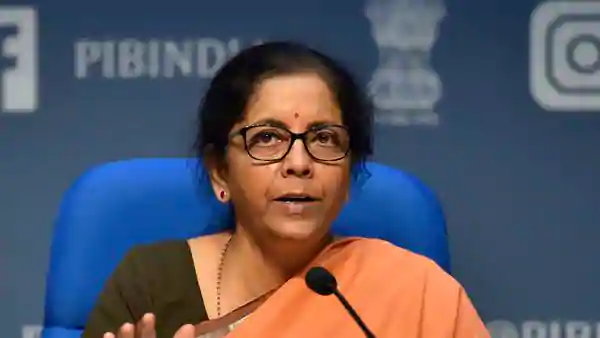
New Delhi, Jul 28: In a bid to ensure timely support to depositors of stressed banks, the Union Cabinet on Wednesday approved amendment to the DICGC Act to provide account holders access to up to Rs 5 lakh funds within 90 days of a bank coming under moratorium.
Finance Minister Nirmala Sitharaman in her Budget speech had announced that changes will be made to the Deposit Insurance and Credit Guarantee Corporation (DICGC) Act, 1961.
Last year, the government raised insurance cover on deposit five-fold to Rs 5 lakh to provide support to depositors of ailing lenders like Punjab and Maharashtra Co-operative (PMC) Bank.
Following the collapse of PMC Bank, Yes Bank and Lakshmi Vilas Bank too came under stress, leading to restructuring by the RBI and government.
"The Deposit Insurance and Credit Guarantee Corporation Bill 2021 has been cleared by the Cabinet today," Sitharaman said while sharing details about the Cabinet meeting.
The Bill is expected to be introduced in the monsoon session, she said.
Once the Bill becomes law, it will provide immediate relief to thousands of depositors, who had their money parked in stressed lenders such as PMC Bank and other small cooperative banks.
As per the current provisions, the deposit insurance of up to Rs 5 lakh comes into play when the licence of a bank is cancelled and the liquidation process starts.
DICGC, a wholly-owned subsidiary of the Reserve Bank of India, provides insurance cover on bank deposits.
Deposit Insurance Credit Guarantee Cooperation (DICGC) insures all bank deposits, such as savings of fixed or current deposits or recurring deposits, and it covers all commercial banks, including foreign bank branches in India, Sitharaman said.
With the proposed amendment, each account holder's deposit in banks is insured up to a maximum of Rs 5 lakh, for both principal and interest, she said.
"Now, what is the international coverage and what is Indian coverage...in India with the increase of insurance amount from Rs 1 lakh to Rs 5 lakh is going to cover 98.3 per cent of all deposit accounts...in terms of deposit value 50.9 per cent deposits value will be covered. Globally, deposit insurance coverage is only 80 per cent of all deposit accounts and it covers only 20-30 per cent deposit value," she said.
At present, it takes 8-10 years for depositors of a stressed bank to get their insured money and other claims.
Observing that accessing depositors money has been an issue, Sitharaman said, " now, what we're saying is, even if there is a moratorium on a bank, which means everything is frozen and depositors are not able to take their money out of their accounts, even at that time this measure will set in".
The first 45 days will go for the bank, which has come under stress, to collect all the accounts where the claims will have to be made, and then it will be given to this insurance company, which in real-time will check it all up, and nearer the 90th day, depositors will get the money, she added.
Every bank used to pay 10 paise as an insurance premium per Rs 100 of deposit.
"This is now being raised to 12 paise. We are saying it should not be more than 15 paise at any point in time per Rs 100 deposit. So, that is being made explicit...we will have an enabling provision in case banks feel that this has to go up but within a certain prescribed limit, which will be determined by the government in consultation with the RBI," she said.
The Finance Minister in the Budget speech in February said the government had approved an increase in the Deposit Insurance cover from Rs 1 lakh to Rs 5 lakh for bank customers.
"I shall be moving amendments to the DICGC Act, 1961 in this session itself to streamline the provisions, so that if a bank is temporarily unable to fulfil its obligations, the depositors of such a bank can get easy and time-bound access to their deposits to the extent of the deposit insurance cover. This would help depositors of banks that are currently under stress," she had said.
It could not be presented in the Budget session due to curtailment of the session following the spread of the second wave of the COVID-19 pandemic.
It is to be noted that the enhanced deposit insurance cover of Rs 5 lakh is effective from February 4, 2020. The increase was done after a gap of 27 years as it has been static since 1993.
Let the Truth be known. If you read VB and like VB, please be a VB Supporter and Help us deliver the Truth to one and all.
Allahabad HC orders probe into 'reinstatement' of teacher in UP's Barabanki
Lucknow (PTI): The Lucknow Bench of the Allahabad High Court on Friday ordered a probe by the special task force (STF) into alleged irregularities in the rejoining of a teacher at City Intermediate College in Barabanki, observing that the reinstatement appeared to be prima facie illegal.
The court also directed the recovery of the salary paid to the teacher during the disputed period.
A bench of Justice Rajeev Singh passed the order on a petition filed by the college management committee. The court expressed doubts over the roles of the District Inspector of Schools (DIOS), Barabanki, the college principal and the teacher concerned and hence, directed a detailed inquiry into the matter.
Taking note of alleged manipulation of records and misleading submissions, the court ordered the immediate transfer of the Barabanki DIOS to ensure a fair probe. It also directed the initiation of disciplinary proceedings against the then joint director of education of the Ayodhya division.
In its order, the court found that the teacher, Abhay Kumar, was initially appointed as an assistant teacher in 2018 but joined an Eklavya Model Residential School in Chhattisgarh as a lecturer in June 2024 without obtaining permission from the management. His subsequent request to retain the lien was rejected.
Despite this, he was allowed to rejoin the Barabanki College in September 2025 on the directions of the joint director of education and the DIOS, and was even paid the salary for October 2025. The court termed the rejoining "wholly illegal" and lacking any legal basis.
The bench also expressed concern over lapses in communication within the education department and directed the Uttar Pradesh chief secretary to ensure that official orders are communicated through email and WhatsApp as well, to prevent disputes.
The matter is next listed for hearing on May 28 when a compliance report is sought.