Cabs should accommodate wheelchairs or assistive devices of persons with disabilities: SC
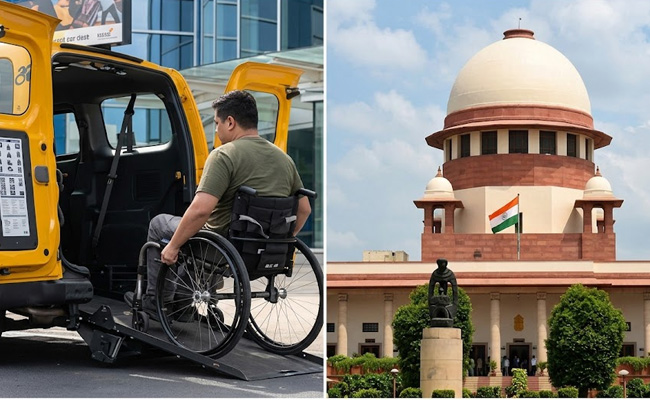
New Delhi (PTI): The Supreme Court on Friday emphasised the need to find ways to assist people with disabilities, and suggested that cab services should be equipped to accommodate wheelchairs and other assistive devices for them.
The observations came from a bench of Justices Vikram Nath and Sandeep Mehta, which was hearing a plea regarding first-mile and last-mile connectivity for people with disabilities.
"Now, in larger metros, there are cabs everywhere. Cabs should also be asked to accommodate wheelchairs or assistive devices of these persons," the bench said, proposing the idea of having specific cabs designated for persons with disabilities.
"The apps can have provision for specified cabs which have been accordingly modified for these individuals," the bench said, adding, "We have to find out the ways and means to help them."
The counsel appearing for the petitioner referred to the difficulties faced by people with disabilities while boarding cabs.
"Most cabs are equipped with CNG, which limits space and does not allow for wheelchairs to be transported in the back," the counsel said.
He proposed implementing a universal design similar to what is available in European markets.
"Take the case of a person whose house is, say, one km away from the highway or the main road. He comes on an automated wheelchair. If he doesn't accommodate it in the cab, where does he leave it?" the bench asked the counsel appearing for the Centre.
In response, the Centre's counsel stated that these issues are currently under review by the relevant department. They also informed the bench that a committee had been appointed by the Supreme Court to address a separate petition that raised similar concerns.
The bench observed that the issue raised in this petition could also be considered by that committee.
The petitioner's counsel said that they had a specific case concerning last-mile connectivity, distinct from broader issues.
"That specific issue can also be taken up by the committee, which is already dealing with larger issues," the bench observed.
The petitioner's counsel reminded the court that cabs are now an integral part of public transport.
The Supreme Court has scheduled further hearings on the plea for March 24.
Let the Truth be known. If you read VB and like VB, please be a VB Supporter and Help us deliver the Truth to one and all.
Lebanon appoints new representative for talks with Israel, rejects linkage to Iran
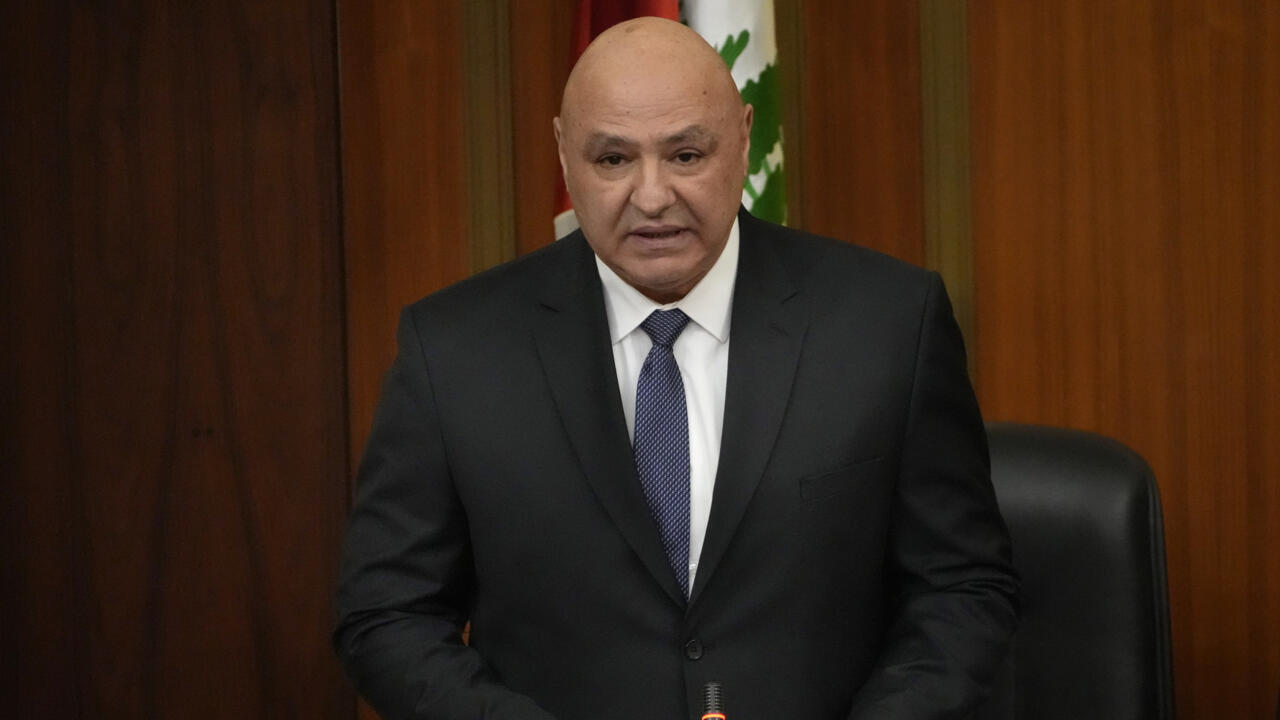
Beirut: Lebanon’s has moved to underline its independent position in ongoing regional developments, amid attempts to link the country to the broader conflict involving Iran, the United States and Israel.
President Joseph Aoun, while announcing the appointment of former US ambassador Simon Karam as Lebanon’s representative in talks with Israel, made it clear that Karam would be the sole representative for Lebanon and that there would be no substitute.
The move comes in response to what the Lebanese officials see as efforts by Iran to tie Lebanon’s situation to the wider regional conflict. Iran had indicated that there would be no ceasefire involving the US, Israel and Iran unless it also included a ceasefire in Lebanon.
Some groups, including Hezbollah and its supporters, had expressed support for linking the situations, citing concerns that the Lebanese government has limited leverage in negotiations with Israel. Lebanon is not formally a party to the conflict, and its army is considered weak.
However, others, including Prime Minister Nawaf Salam, have opposed this approach. They view Iran’s stance as an attempt to influence Lebanon’s internal affairs and see it as undermining the country’s sovereignty.
Officials backing the government’s position say the move is aimed at reaffirming Lebanon’s sovereignty and ensuring that decisions about peace and ceasefire within the country are not dictated externally.
They also see it as a safeguard, so that any breakdown in talks between the US, Israel and Iran does not automatically lead to renewed conflict in Lebanon.