Can show PM's degree to court, not strangers: DU tell Delhi HC
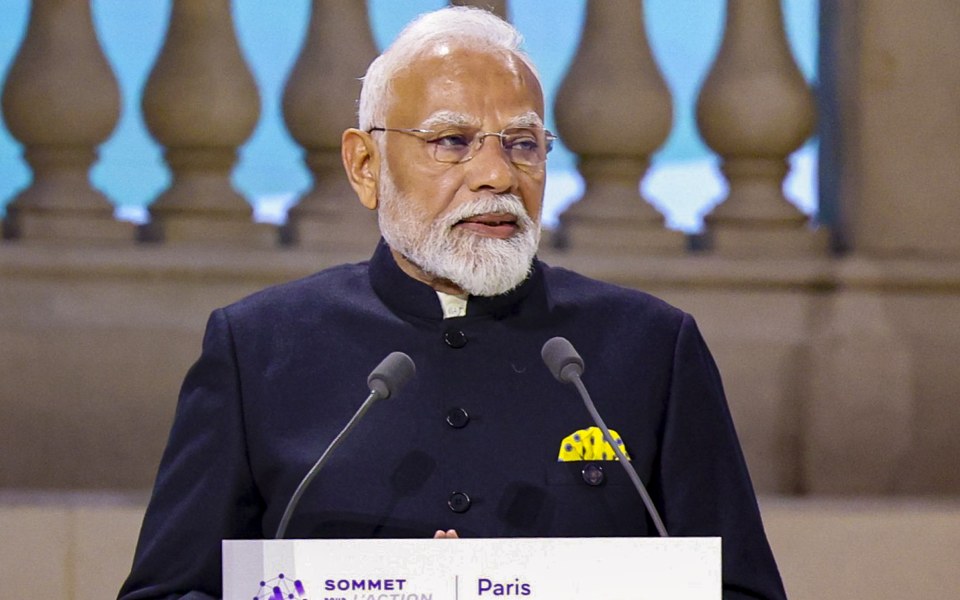
New Delhi, Feb 28 (PTI): Delhi University (DU) on Thursday informed the Delhi High Court that it was willing to show to court its records on Prime Minister Narendra Modi's degree but not disclose it to strangers under RTI.
Appearing before Justice Sachin Datta, solicitor general Tushar Mehta made the submission following which the court reserved its verdict on DU's plea against a CIC order directing disclosure of information with respect to the bachelor's degree of the prime minister.
"DU has no reservation in showing it to the court (but can't) put the university's record for scrutiny by strangers," Mehta said.
The order of the CIC, he said, deserved to be set aside for the "right to privacy" superseded the "right to know".
"What is demanded is the degree of an erstwhile student who is the Prime Minister. As a university, we have nothing to hide. We have the year-wise record. University has no objection in showing the record to the court. There is a degree from 1978, bachelor of art," Mehta submitted.
Following an RTI application by one Neeraj, the Central Information Commission (CIC) on December 21, 2016, allowed inspection of records of all students who cleared the BA exam in 1978 -- the year Prime Minister Modi also passed it.
The RTI plea sought details of all the students who wrote the exam in 1978.
The high court stayed the CIC order on January 23, 2017.
The court also reserved its judgement on other similar petitions as well.
The lawyers for the RTI applicants defended the CIC's order on the ground that Right to Information (RTI) Act provided for disclosure of the prime minister's educational information in greater public good.
On Thursday, Mehta said the "right to know" was not untrammelled and personal information of an individual, which was unrelated to public interest or public office, was protected from disclosure.
He cautioned against the misuse of the RTI Act by "activists" and said allowing disclosure in the present case would result in the varsity being exposed to RTI applications in relation to lakhs of its students.
"This is not the object for which RTI is envisaged. The Act is not enacted for Article 19(1). It is for transparency subject to (exceptions) under section 8," Mehta said, alleging the demand in the present case was for a political purpose.
He said that only because the information was more than 20 years old, the test of "larger public interest does not evaporate".
The law, he said, was not for "free people" who were "out to satisfy their curiosity" or "embarrass" others.
On February 11, DU said it was holding the information of its students in a fiduciary capacity and "mere curiosity" in the absence of public interest did not entitle anyone to seek private information under RTI law.
It said something being of "interest to public" was not the same as "public interest" to warrant disclosure under the RTI Act and there was no such public interest in this case.
On February 19, the lawyer representing one of the RTI applicants argued awarding a degree to a student was not a private act but a public one covered under the ambit of right to information.
In its challenge to the CIC order, DU has said the order of the RTI authority was “arbitrary” and “untenable in law” as the information sought to be disclosed was a “third party personal information”.
The DU has said it was "completely illegal" for the CIC to direct the disclosure of an information, which is available to it in a fiduciary capacity.
The RTI Act, it said, was reduced to a "joke" with queries seeking records of all students who passed the BA examination in 1978, including the Prime Minister.
The CIC, in its order, asked DU to allow inspection and rejected the argument of its public information officer that it was third party personal information, observing there was “neither merit, nor legality” in it.
The university was directed to "facilitate inspection" of the register which stored the complete information on results of all students who cleared the BA exam in 1978 along with their roll number, names of the students, fathers' names and marks obtained, and provide a certified copy of the extract, free of cost.
Let the Truth be known. If you read VB and like VB, please be a VB Supporter and Help us deliver the Truth to one and all.
Rupee falls 28 paise to 94.77 against US dollar in early trade
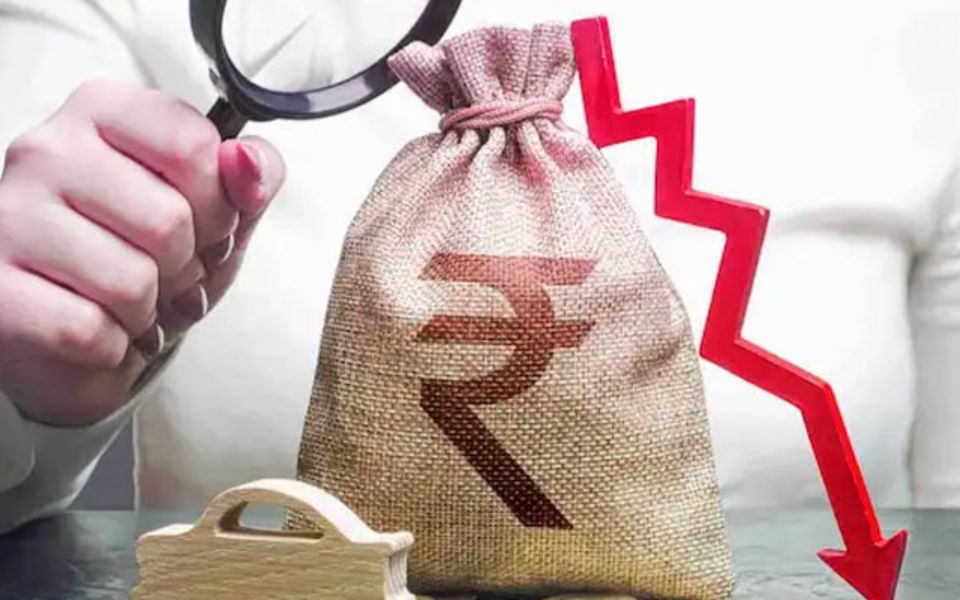
Mumbai (PTI): The rupee depreciated 28 paise to 94.77 against the US dollar in early trade on Thursday as market sentiment took a dramatic turn after reports emerged that the US and Iran are discussing a 14-point Memorandum of Understanding (MOU) aimed at reducing tensions and reopening negotiations.
Forex traders said Brent oil prices, which had fallen to USD 98 on the US-Iran peace deal, edged slightly higher to USD 101 per barrel after investors weighed the prospects for a Middle East peace deal.
Moreover, factors such as unabated foreign capital outflows amid rising geopolitical uncertainties further dented investor sentiment.
At the interbank foreign exchange market, the rupee opened at 94.77 against the US dollar, registering a fall of 28 paise over its previous close.
On Wednesday, the rupee appreciated 69 paise to close at 94.49 against the US dollar.
"Markets are currently focused on the critical 48-hour window during which the US expects Tehran’s formal response through Pakistani mediators," said CR Forex Advisors MD Amit Pabari.
US President Donald Trump on Wednesday threatened Iran with more bombing if it doesn't reopen the Strait of Hormuz, amid a report that the warring sides were nearing an agreement to end the war.
US media outlet Axios reported, quoting US officials and two other sources, that the US and Iran were getting close to a one-page memorandum of understanding to end the war and set a framework for more detailed nuclear negotiations.
The US expects Iranian responses on several key points over the next 48 hours, Axios reported, adding that nothing has been agreed yet. This was the closest the parties had been to an agreement since the war began.
Meanwhile, the dollar index, which gauges the greenback's strength against a basket of six currencies, was trading at 98.01, down 0.01 per cent.
Brent crude, the global oil benchmark, was trading higher by 0.65 per cent at USD 101.83 per barrel in futures trade.
On the domestic equity market front, the 30-share benchmark index Sensex declined 160.24 points to 77,798.28 in early trade, while the Nifty was down 30.25 points to 24,300.70.
Foreign Institutional Investors offloaded equities worth Rs 5,834.90 crore on Wednesday, according to exchange data.
On the domestic macroeconomic front, the country's goods and services exports rose 4.6 per cent to an all-time high of USD 863.11 billion during 2025-26, up from USD 825.26 billion in 2024-25, despite global economic uncertainties, according to revised commerce ministry data.
Merchandise exports grew 0.93 per cent to USD 441.78 billion in the last fiscal year from USD 437.70 billion in 2024-25, the data showed.