Cancer-causing chemicals found in Pani Puri samples across K'taka, 22% found unfit for consumption

Bengaluru: Recent food safety inspections in Karnataka have unveiled alarming findings regarding the popular street food, Pani Puri. Officials reported that 22% of the 260 Pani Puri samples collected from various outlets failed safety standards due to the presence of hazardous chemicals.
According to Srinivas K, Commissioner for Food Safety, complaints led to the investigation into Pani Puri quality statewide. The samples, ranging from roadside stalls to upscale eateries, revealed concerning levels of artificial colors and carcinogenic agents. Chemicals like brilliant blue, sunset yellow, and tartrazine, known to pose health risks, were detected in 41 samples. Additionally, 18 samples were deemed unfit for human consumption due to their stale condition.
In response to these findings, Karnataka Health Minister Dinesh Gundu Rao reiterated the government's commitment to food safety. Earlier actions included banning Rhodamine-B, a food coloring agent prevalent in dishes like gobi manchurian and cotton candy. Minister Gundu Rao also spoke on the importance of public awareness and restaurant accountability in maintaining food hygiene standards.
Let the Truth be known. If you read VB and like VB, please be a VB Supporter and Help us deliver the Truth to one and all.
Mumbai-Pune Expressway connecting link now fully operational
Mumbai (PTI): The Mumbai-bound carriageway of the Mumbai-Pune Expressway connecting link was opened to vehicular traffic on Saturday noon after a delay caused by the dismantling of inauguration infrastructure and cleaning work, a day after the Pune section became operational.
The 13.3 km-long "missing link", which bypasses a section of the Bhor Ghat stretch of the expressway and cuts travel time between Mumbai and Pune by 25 to 30 minutes, was inaugurated a day earlier by Chief Minister Devendra Fadnavis in the presence of Deputy CMs Eknath Shinde and Sunetra Pawar.
The Pune-bound carriageway of the corridor was opened to traffic immediately; however, the Mumbai-bound section remained closed to traffic for several hours after the inauguration.
An official of the Maharashtra State Road Development Corporation told PTI on Saturday that the opening of the Mumbai-bound carriageway was delayed mainly due to the dismantling of the inauguration infrastructure and cleaning work.
The removal of the stage and other decorations was completed in the morning. The work to load and transport the material slightly delayed the opening of the carriageway.
Vehicular movement on the carriageway began after all the remaining material was cleared and road cleaning was completed, the official added.
The expressway control room said that despite significant vehicular movement, the access-controlled highway has not witnessed any major traffic snarls since Friday evening, after the Pune-bound carriageway of the missing link was opened to traffic.
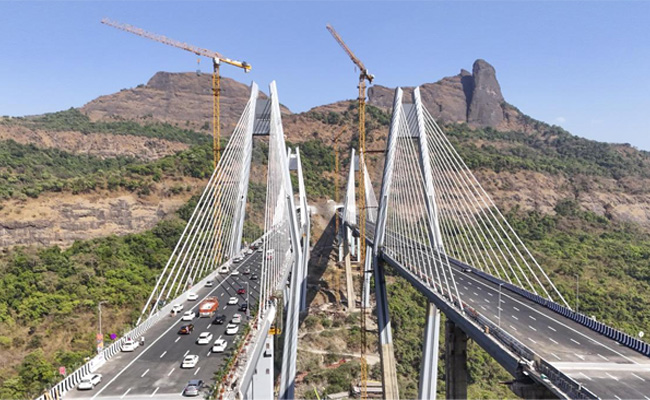
The Missing Link project connects Khopoli (in Raigad) on the Mumbai side to Kusgaon near Lonavala in Pune district and is expected to make the expressway fully access-controlled, easing congestion in the ghat section.
Developed by the MSRDC and dubbed an "engineering marvel", the project includes two tunnels, two viaducts and a cable-stayed bridge over Tiger Valley. It bypasses the steep, accident-prone ghat section, where frequent traffic snarls are reported during weekends and on public holidays.